
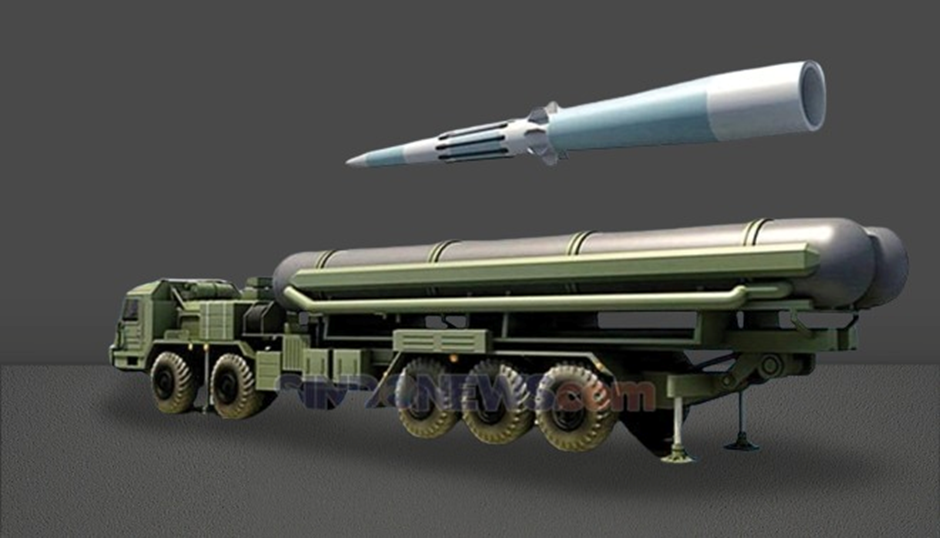
Defence Minister Rajnath Singh is scheduled to discuss the potential acquisition of the S-500 ‘Prometheus’ air defence system with his Russian counterpart on December 4.
1. S-500 ‘Prometheus’
The S-500 (Russian: Prometey), also known as 55R6M “Triumfator-M”, is a next-generation surface-to-air missile/anti-ballistic missile system designed to supplement the S-400.
- Primary Capabilities:
- Operational Range: Capable of intercepting ballistic missiles up to 600 km and airborne targets (aircraft/AWACS) up to 500 km.
- Altitude: Can engage targets at altitudes of 180–200 km (Near Space).
- Hypersonic Interception: Specifically designed to destroy hypersonic cruise missiles and other aerial threats flying at speeds exceeding Mach 5.
- Space Warfare: Unlike its predecessors, the S-500 can target Low Earth Orbit (LEO) satellites and space weapons.
- Technical Superiority over S-400:
- Response Time: The S-500 has a response time of 3-4 seconds, significantly faster than the S-400’s 9-10 seconds.
- Simultaneous Engagement: Capable of detecting and simultaneously engaging up to 10 ballistic hypersonic targets flying at speeds of 7 km/s.
- Radar: Utilizes the ‘Yenisei’ radar system, which offers superior detection against stealth aircraft (like F-22 and F-35) and electronic interference.
2. Current Arsenal: S-400 ‘Triumf’ Status
- Indian Service Name: Officially designated as ‘Sudarshan Chakra’.
- Status: 3 squadrons delivered; deployed during ‘Operation Sindoor’ (a recent air defence operation). Remaining 2 squadrons expected by 2026-27.
- Indigenisation: An Indian firm has been selected to establish a Maintenance, Repair, and Overhaul (MRO) facility for the S-400 domestically.
3. ‘Mission Sudarshan Chakra’
- Distinction: It is vital to distinguish between the weapon system (S-400 is named ‘Sudarshan Chakra’) and the strategic mission.
- Mission Definition: announced by the Prime Minister, ‘Mission Sudarshan Chakra’ is a broader, decade-long national security initiative.
- Objective: To establish an impenetrable “protective wall” integrating air defence, offensive capabilities, and surveillance around key national assets and industrial hubs by 2035.