
Why In the News?
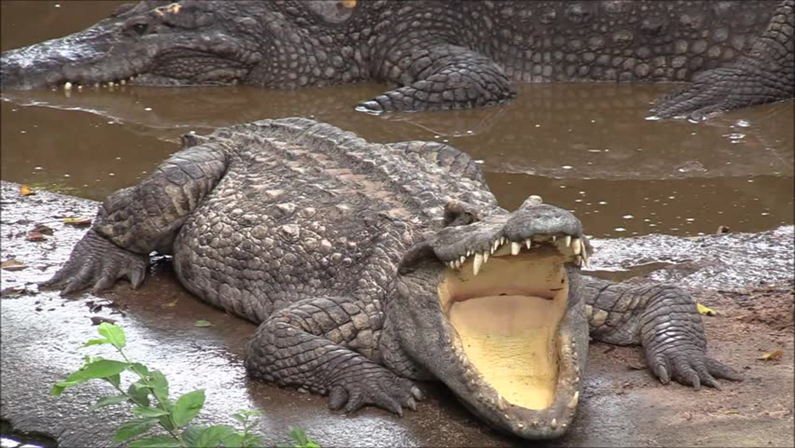
- Recently, the annual reptile census conducted in January 2026 at Bhitarkanika National Park, Odisha, revealed that the population of saltwater crocodiles has increased to 1,858 individuals, up from 1,826 in 2025.
- This follows recent reports from the Sundarban Biosphere Reserve in West Bengal, which also recorded a significant rise in sightings, particularly among the hatchling class, indicating a healthy and breeding population.
- Forest officials have noted that the population in Bhitarkanika has reached a saturation point, leading to increased instances of human-crocodile conflict in the surrounding riverside villages.
1. Biological Profile and Characteristics
The saltwater crocodile (Crocodylus porosus) is a biological marvel often referred to as a “living fossil” due to its ancient lineage.
- Size and Weight: It is the largest and heaviest living reptile in the world. Adult males can reach lengths of 6 to 7 meters and weigh over 1,000 kg, while females are significantly smaller, usually staying under 3 meters.
- Apex Predator: It is an opportunistic hyper carnivorous apex predator, meaning its diet consists of more than 70% meat.
- Adaptability: It is the most salt-tolerant of all crocodilians, possessing specialized salt glands that allow them to thrive in high-salinity environments like estuaries and open seas.
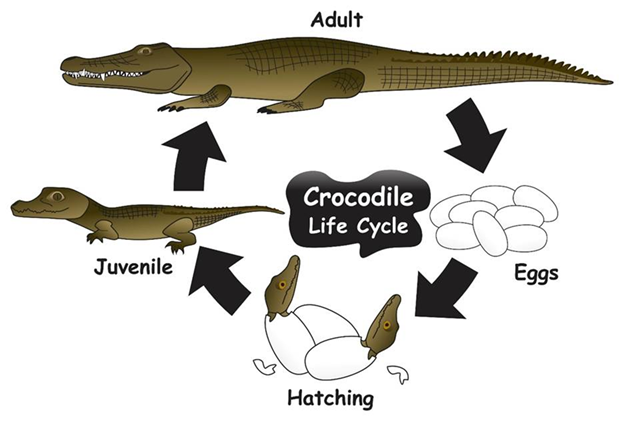
- Appearance: Adults are typically dark greenish-brown or grey with lighter flanks, while juveniles are pale tan with black stripes and spots that fade with age.
2. Habitat and Distribution
While the species is found globally from Southeast Asia to Northern Australia, its distribution in India is restricted to specific coastal pockets.
- India’s Primary Locations:
- Bhitarkanika National Park (Odisha): Home to the largest wild population in India. Odisha is uniquely the only state in India where all three species (Gharial, Mugger, and Saltwater) are found.
- Sundarbans (West Bengal): The world’s largest mangrove forest serves as a vital habitat.
- Andaman and Nicobar Islands: Widely distributed across the archipelago’s creeks and mangroves.
- Habitat Preference: They prefer mangrove swamps, salt marshes, brackish wetlands, and tidal rivers. They show a particular preference for creeks with high tide widths below 180 meters for nesting.
3. Conservation Status and Legal Protection
Saltwater crocodiles are afforded the highest level of legal protection in India to prevent poaching and habitat loss.
- IUCN Red List: Least Concern (LC). This status is due to its large global population (especially in Australia), though it remains locally threatened in many parts of Asia.
- Wildlife Protection Act (WPA), 1972: Schedule I. This grants it the same level of protection as the Tiger, with the harshest penalties for hunting or trade.
- CITES: Appendix I (except for populations in Australia, Indonesia, and Papua New Guinea, which are in Appendix II).
4. Conservation Initiatives in India
- Project Crocodile: Launched in 1975 with support from the UNDP and FAO, the project focused on “rear-and-release” techniques to revive populations from the brink of extinction.
- Baula Project: Specifically focused on the “Baula” (Oriya for saltwater crocodile) in Bhitarkanika, it is considered one of the most successful wildlife recovery programs in the country.
- Bhagabatpur Crocodile Project: A key hatchery and conservation center located in the Sundarbans, West Bengal.




5. Other Species of Crocodile Found in India
While the Saltwater Crocodile is a significant focus of conservation, India is uniquely home to two other distinct crocodilian species. Understanding their differences is crucial for the UPSC Prelims, as the exam often tests your ability to distinguish between their habitats and conservation statuses.
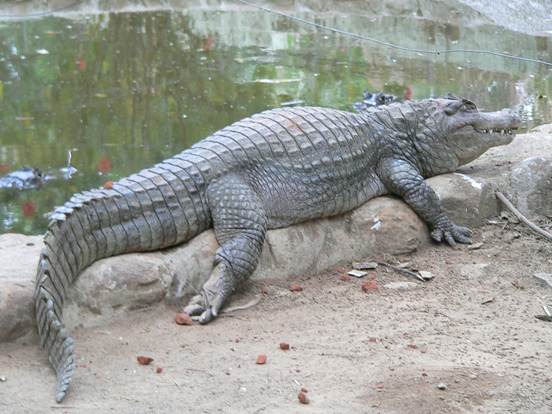
I. Mugger or Marsh Crocodile (Crocodylus palustris)
- Appearance: Known for its broad snout, the Mugger is a medium-sized crocodile that is often described as the most “alligator-like” of the Indian species.
- Habitat: It is primarily a freshwater species found in lakes, rivers, and marshes. However, it is highly adaptable and can also thrive in coastal saltwater lagoons and man-made reservoirs.
- Behavior: Muggers are hole-nesters and are known to dig burrows to escape extreme temperatures during the dry season.
- Distribution: They are the most widespread of the three species in India, found in over 15 states, including the Ganga River drainage and the Vishwamitri River in Gujarat.
- Conservation Status:
- IUCN Red List: Vulnerable.
- WPA 1972: Schedule I.
- CITES: Appendix I.
II. Gharial or Fish-Eating Crocodile (Gavialis gangeticus)
- Appearance: The Gharial is easily identified by its extremely long and thin snout, which is specifically adapted for catching fish. Mature males develop a bulbous nasal growth called a “Ghara” (meaning pot), used for vocalization and bubbles during mating.
- Habitat: They are the most aquatic of all crocodilians and prefer deep, fast-flowing freshwater rivers with high-quality water and sandy banks for basking and nesting.
- Distribution: Their range is highly fragmented. The National Chambal Sanctuary (covering MP, Rajasthan, and UP) holds the largest wild population. They are also found in the Girwa, Gandak, and Son rivers.
- Conservation Status:
- IUCN Red List: Critically Endangered.
- WPA 1972: Schedule I.
- CITES: Appendix I.
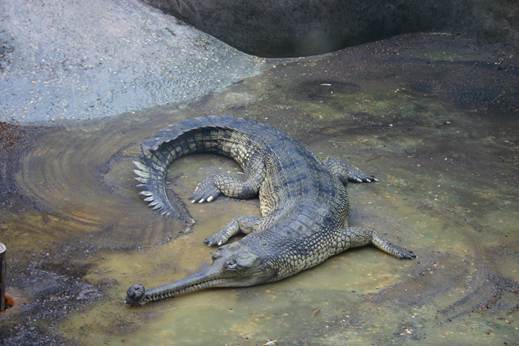
6. Comparison of Indian Crocodilians
| Feature | Saltwater Crocodile | Mugger Crocodile | Gharial |
| Scientific Name | Crocodylus porosus | Crocodylus palustris | Gavialis gangeticus |
| IUCN Status | Least Concern | Vulnerable | Critically Endangered |
| Primary Habitat | Estuaries, Mangroves | Lakes, Marshes | Deep Freshwater Rivers |
| Snout Type | Broad | Very Broad | Long & Narrow |
| Special Trait | Salt-tolerant glands | Digs burrows | “Ghara” on snout (males) |
Consider the following statements regarding the crocodilian species found in India:
I. The Gharial is the only crocodilian species in India that is considered an indicator of clean river health.
II. All three species of crocodiles found in India are listed under Schedule I of the Wildlife Protection Act, 1972.
III. The Mugger crocodile is endemic only to the Indian subcontinent.
IV. The National Chambal Sanctuary is the primary habitat for the largest wild population of Gharials.

Which of the statements given above are correct?
A) I, II, and IV only
B) II and III only
C) I and IV only
D) I, II, III, and IV

Correct Answer: (A)
Solution:
STATEMENT I CORRECT: The Gharial requires clean, fast-flowing water and is thus considered a key bio-indicator of a healthy river ecosystem.
STATEMENT II CORRECT: Despite having different IUCN statuses, all three species (Saltwater, Mugger, and Gharial) are protected under Schedule I of the WPA 1972.
STATEMENT III INCORRECT: While the Gharial is largely endemic to the Indian subcontinent, the Mugger crocodile is also found in parts of Iran, Pakistan, and Sri Lanka.
STATEMENT IV CORRECT: The National Chambal Sanctuary remains the most significant stronghold for the Critically Endangered Gharial.