
Why In News ?
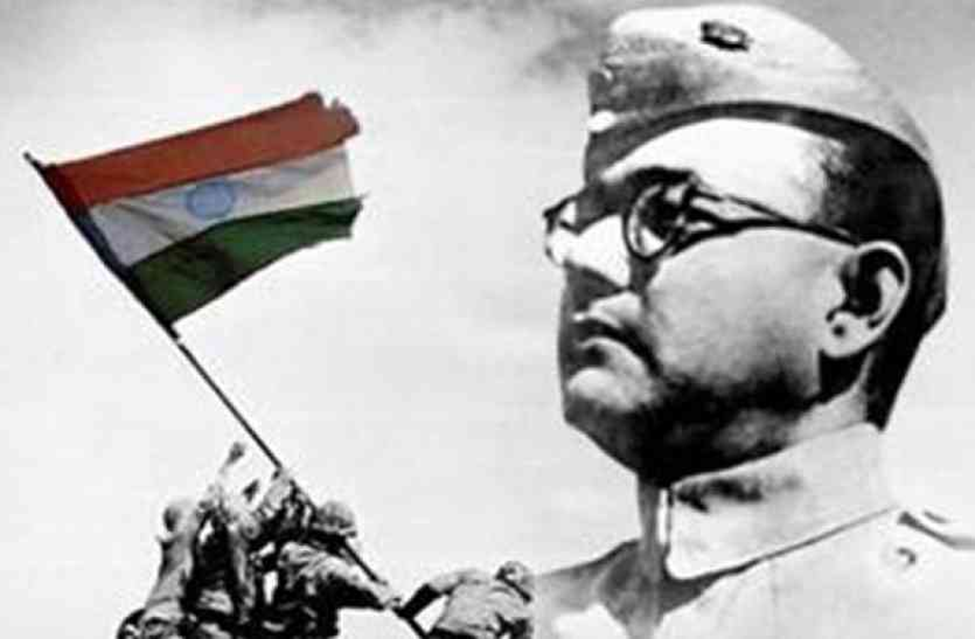
Recently, the nation celebrated the 129th birth anniversary of Netaji Subhash Chandra Bose on January 23, 2026, observed as Parakram Diwas (Day of Valour). The Ministry of Culture organized grand celebrations at the Barabati Fort in Cuttack, Odisha, Netaji’s birthplace, featuring AR/VR exhibitions of his life journey.
Additionally, the Subhash Chandra Bose Aapda Prabandhan Puraskar 2026 was announced to honor excellence in disaster management, continuing the tradition of linking Netaji’s legacy of service with modern national resilience.
1. Early Life and Career
- Birth: Born on January 23, 1897, in Cuttack, Orissa.
- Education: He secured the 4th rank in the Indian Civil Services (ICS) exam in 1920 but resigned in 1921 to join the freedom struggle.
- Mentorship: He considered Chittaranjan (C.R.) Das as his political guru and Swami Vivekananda as his spiritual preceptor.
- Literary Works: He wrote the famous book “The Indian Struggle” (covering 1920–1934) and his unfinished autobiography “An Indian Pilgrim”.
2. Political Journey in Congress
- Haripura Session (1938): Bose was elected President and advocated for the setting up of a National Planning Committee.
- Tripuri Session (1939): He defeated Pattabhi Sitaramayya (Gandhi’s candidate) but resigned due to ideological rifts with the Congress Working Committee.
- Forward Bloc: After resigning, he founded the All India Forward Bloc in 1939 as a left-wing faction within the Congress.
3. The Indian National Army (INA) and Azad Hind
I. Evolution of the INA
- Phase I: The idea was first conceived by Mohan Singh in Malaya with Japanese assistance in 1942.
- Phase II: Netaji took command in July 1943 in Singapore, following an invitation from Rash Behari Bose (President of the Indian Independence League).
- Slogans: He gave the iconic slogans “Delhi Chalo”, “Jai Hind”, and “Give me blood, and I will give you freedom”.
II. The Provisional Government (Azad Hind)
- Formed on October 21, 1943, in Singapore.
- It was recognized by Axis powers (Germany, Japan, Italy).
- Rani Jhansi Regiment: One of the world’s first all-women combat units, led by Captain Lakshmi Sahgal.
- Territory: Japan handed over the Andaman and Nicobar Islands to the Azad Hind government, which Netaji renamed as Shaheed and Swaraj Islands.
4. Military Campaigns and Trials
- Imphal and Kohima: The INA fought alongside Japanese forces in 1944 but was forced to retreat due to logistical failures and the monsoon.
- The Red Fort Trials (1945): Three INA officers—Shah Nawaz Khan (Muslim), Prem Kumar Sahgal (Hindu), and Gurbaksh Singh Dhillon (Sikh)—were tried for treason.
- Defense: The Congress organized the INA Defence Committee, comprising legal luminaries like Bhulabhai Desai, Tej Bahadur Sapru, and Jawaharlal Nehru.
Q. With reference to the Indian National Army (INA) and Subhash Chandra Bose, consider the following statements:
I. The idea of the INA was first conceived by Rash Behari Bose in Tokyo.
II. The Rani Jhansi Regiment was the women's wing of the INA, headed by Lakshmi Sahgal.
III. Subhash Chandra Bose was the first to address Mahatma Gandhi as the 'Father of the Nation' via Azad Hind Radio.
IV. The INA trials were held at the Red Fort, and the defense was led by Bhulabhai Desai.

Select the correct answer using the code given below:
(a) I, II, and III only
(b) II, III, and IV only
(c) I and IV only
(d) I, II, III, and IV

Solution: (b)
STATEMENT 1 INCORRECT: The idea of the INA was first conceived by Mohan Singh in Malaya, not Rash Behari Bose (though the latter played a crucial role in inviting Netaji).
STATEMENT 2 CORRECT: The Rani Jhansi Regiment was indeed an all-women unit led by Captain Lakshmi Sahgal.
STATEMENT 3 CORRECT: Netaji addressed Gandhi as the "Father of the Nation" in a broadcast from Singapore/Rangoon via Azad Hind Radio in July 1944.
STATEMENT 4 CORRECT: The Red Fort Trials (1945) saw the prosecution of INA officers, and the defense was famously led by Bhulabhai Desai along with Nehru and Sapru.