
Context
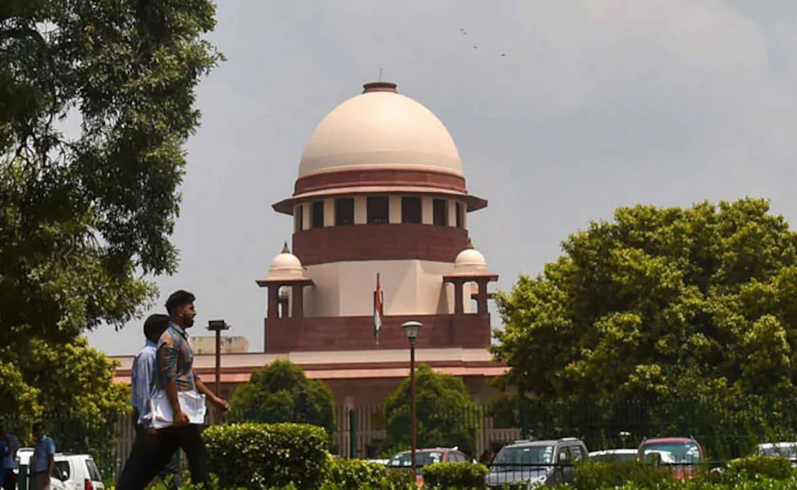
- Recently, in a landmark judgment delivered by the Supreme Court of India declared the Right to Menstrual Health as an integral part of the Right to Life and Dignity under Article 21 of the Constitution.
- The Court, while hearing a Public Interest Litigation (PIL) regarding menstrual hygiene in schools, observed that the lack of menstrual hygiene management (MHM) measures acts as a structural barrier that leads to school absenteeism and dropouts among adolescent girls.
- Consequently, the Bench issued a continuing mandamus directing the Centre and all States to ensure the provision of free sanitary pads and gender-segregated toilets in all educational institutions within three months.
1. Constitutional and Legal Dimensions
- Article 21 (Right to Life): The Supreme Court ruled that “dignity cannot be reduced to an abstract ideal” and must include access to menstrual hygiene management (MHM) measures to prevent humiliation and exclusion.
- Article 14 (Equality): Inaccessibility to menstrual products creates a “gendered disadvantage,” preventing girls from participating in education on equal terms with boys.
- Right to Education (RTE) Act, 2009: The Court interpreted Section 19 of the RTE Act to mean that separate, functional toilets for girls are a substantive requirement, not just an infrastructural one. Failure to provide these can lead to the de-recognition of private schools.
- Article 42 (DPSP): It mandates the State to make provisions for securing just and humane conditions of work and for maternity relief, which provides the bedrock for menstrual health policies.
2. The Draft National Menstrual Hygiene Policy (2023)
- Nodal Ministry: The Ministry of Health and Family Welfare (MoHFW) is the lead agency for formulating and implementing this policy.
- Vision: To foster a “menstrual-friendly environment” across homes, schools, workplaces, and public spaces.
- Target Population: It adopts a life-cycle approach (menarche to menopause) and specifically focuses on vulnerable groups, including Persons with Disabilities (PwDs), trans-men, and non-binary individuals.
- Environmental Sustainability: The policy emphasizes the transition to oxo-biodegradable sanitary napkins and environmentally compliant disposal mechanisms (like mini-incinerators) as per Solid Waste Management Rules.
3. Key Judicial Directions for Schools
- MHM Corners: Schools must establish dedicated “Menstrual Hygiene Management corners” equipped with spare innerwear, uniforms, and disposable bags.
- Free Sanitary Napkins: All government-run and private schools must provide oxo-biodegradable napkins (meeting ASTM D-6954 standards) free of cost, preferably through vending machines within toilets.
- Feedback Mechanism: District Education Officers (DEO) are mandated to conduct annual inspections and collect anonymous surveys from students to verify the quality of facilities.
- Inclusive Education: The Court directed NCERT and SCERTs to incorporate gender-responsive curricula to educate both boys and girls about the biological reality of menstruation.
4. Important Schemes and Concepts
- Menstrual Hygiene Scheme (2011): Centrally sponsored scheme to provide sanitary pads to rural adolescent girls (ages 10-19) at a nominal rate of ₹6 for a pack of six.
- Jan Aushadhi Suvidha: Provides oxo-biodegradable sanitary napkins at just ₹1 per pad through Pradhan Mantri Bhartiya Janaushadhi Kendras.
- Period Poverty: A term describing the lack of access to sanitary products, menstrual education, and hygiene facilities due to financial constraints.
- Menstrual Leave: While not yet a national law, states like Bihar (1992), Kerala (2023), and Karnataka (2025) have implemented varied forms of menstrual leave for students or employees.
Q. Under the Indian Constitution, the 'Right to Menstrual Health' is recognized as an integral part of the Fundamental Right under which one of the following Articles?
(a) Article 14
(b) Article 19
(c) Article 21
(d) Article 25
Correct Answer: (c)
Explanation:
The Supreme Court of India, through various landmark observations and specifically in cases involving the provision of menstrual hygiene products in schools, has affirmed that the Right to Menstrual Health is a facet of the Right to Life and Personal Liberty under Article 21.
This is because menstrual health is intrinsically linked to the right to health, the right to live with dignity, and the right to privacy. The court has noted that the state is obligated to provide basic menstrual hygiene facilities to ensure that menstruating individuals, particularly students, are not deprived of their educational rights (Article 21A) or their overall well-being.