
After Reading This Article You Can Solve This UPSC Mains Model Question:
India faces increasing global trade shocks and geoeconomic uncertainties. Critically examine how a calibrated approach involving fiscal prudence, public investment, and sectoral reforms can strengthen economic resilience and medium-term growth. 250 words (GS-3, Economy).
Context
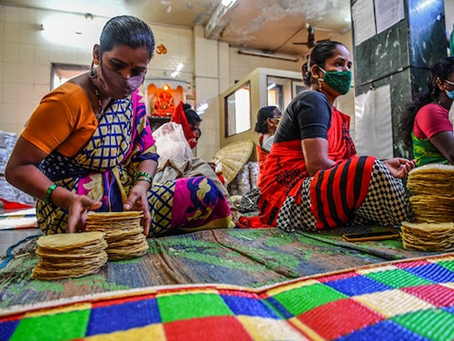
- The Deendayal Antyodaya Yojana-National Rural Livelihoods Mission (DAY-NRLM) has mobilized approximately 10 crore households into 91 lakh Self-Help Groups (SHGs), further organized into a tiered federal structure of Village Organizations and Cluster-Level Federations (CLFs).
- With over ₹11 lakh crore in bank credit leveraged and the emergence of more than 2 crore “Lakhpati Didis” (women earning over ₹1 lakh annually), the ecosystem is now poised for its next phase (2026-27 to 2030-31), shifting focus from group-based credit to individualized, high-growth entrepreneurship.
Background: Trajectory of Rural Women Entrepreneurship
- Early Phase – Financial Inclusion: The initial phase focused on thrift, savings, and microcredit, enabling poor rural women to access institutional finance and reduce dependence on informal moneylenders.
- Institutional Expansion under DAY–NRLM: The programme subsequently evolved into a structured ecosystem comprising 91 lakh SHGs, 5.35 lakh Village Organisations (VOs), and 33,558 Cluster-Level Federations (CLFs), thereby institutionalising collective action and governance.
- Economic Outcomes Achieved: SHGs have cumulatively leveraged over ₹11 lakh crore of bank credit, while maintaining low NPAs of about 1.7%, reflecting strong financial discipline and repayment capacity.
- Income Transformation: The emergence of more than two crore “Lakhpati Didis”, each earning over ₹1 lakh annually, signals a shift from subsistence activities to diversified and semi-commercial enterprises.
Significance of the Next Phase of Rural Women Entrepreneurship in India
The evolution of rural women’s entrepreneurship is critical for India’s goal of becoming a $5 trillion economy. Its significance lies in:
- Shift from Livelihood Support to Enterprise Expansion The next phase represents a transition from subsistence-based livelihoods to enterprise-driven economic activities, enabling rural women to scale businesses, diversify income sources, and move up the value chain.
- Strengthening Community-Owned Institutions: By revitalising Cluster-Level Federations (CLFs), this phase enhances institutional autonomy and leadership, allowing women to exercise collective decision-making and local economic governance.
- Deepening Financial Empowerment: The focus moves beyond access to microcredit towards financial empowerment, including higher loan dosages, individual credit histories, and the introduction of innovative and blended finance.
- Improving Income Stability and Productivity: Customised credit, professional support, and market integration improve enterprise productivity, income sustainability, and economic resilience of rural households.
- Formalisation of Women-Led Enterprises: Linking women entrepreneurs with banks, credit bureaus, and formal markets accelerates the formalisation of the rural informal economy.
- Alignment with Development Goals: The next phase aligns rural women entrepreneurship with broader national priorities such as inclusive growth, poverty reduction, demographic dividend utilisation, and Sustainable Development Goals (SDGs), especially SDG-1 (No Poverty), SDG-5 (Gender Equality), and SDG-8 (Decent Work and Economic Growth).
Key Impacts of the SHG Movement
The Deendayal Antyodaya Yojana-National Rural Livelihoods Mission (DAY-NRLM) has fundamentally altered the socio-economic fabric of rural India. Based on recent data and developments as of 2026, the key impacts of this movement are categorized below:
1. Economic Transformation and Wealth Creation
- Creation of “Lakhpati Didis”: The mission has successfully enabled over 2 crore women to cross the annual income threshold of ₹1 lakh. The government is currently targeting an expansion to 3 crore members, moving families from subsistence to surplus.
- Capital Formation: Around ₹56.69 lakh crore has been infused into community institutions as capitalization support (Revolving Funds and Community Investment Funds), providing the “seed capital” necessary for rural micro-enterprises.
- Diversified Livelihoods: Beyond traditional agriculture, women have entered high-value sectors such as drone piloting (Namo Drone Didi), LED bulb manufacturing, and solar panel maintenance, significantly increasing the rural household GDP contribution.
2. Financial Inclusion and Credit Discipline
- Massive Credit Leverage: SHGs have leveraged more than ₹11 lakh crore in bank credit. This has reduced reliance on predatory informal moneylenders by approximately 20%.
- Exemplary Repayment Rates: Despite the absence of collateral, the Non-Performing Asset (NPA) ratio for SHG loans is a mere 1.7%. This demonstrates a level of credit discipline that often surpasses the formal corporate sector.
- Banking at the Doorstep: Over 1.44 lakh SHG members serve as BC Sakhis (Business Correspondent Agents), bringing essential banking services (deposits, pensions, insurance) to the last mile.
3. Social and Institutional Capital
- Institutional Tiering: The movement has built a robust three-tier structure: 91 lakh SHGs at the base, 5.35 lakh Village Organizations (VOs), and 33,558 Cluster-Level Federations (CLFs). This hierarchy ensures that even the most marginalized women have an institutional platform for grievance redressal and collective bargaining.
- Community Resource Persons (CRPs): A cadre of over 6 lakh trained CRPs (Krishi Sakhis, Pashu Sakhis, etc.) provides specialized technical assistance in agriculture and livestock, ensuring the sustainability of rural ventures.
4. Political and Administrative Empowerment
- Emergence as a Political Constituency: With 10 crore households mobilized, SHG women have emerged as a decisive “vote bank,” compelling state governments to launch women-centric Direct Benefit Transfer (DBT) schemes like the Ladli Laxmi Yojana in Madhya Pradesh, Maiya Samman Yojana in Jharkhand, Mukhyamantri Mahila Rozgar Yojana in Bihar and Ladki Bahin Yojana in Maharashtra.
- Participation in Governance: The movement has acted as a nursery for leadership, with many SHG members successfully contesting Panchayati Raj Institution (PRI) elections and leading village-level developmental planning through the VPRP (Village Prosperity and Resilience Plan).
5. Impact on Human Development Indicators
- Investment in Human Capital: Increased household income has a direct correlation with improved nutritional intake and higher enrolment rates for girl children in secondary and higher education.
- Social Cohesion: SHGs have become effective “pressure groups” to tackle social issues such as alcoholism, domestic violence, and child marriage at the village level.
Key Challenges Facing Rural Women Entrepreneurship in India
Despite the successes, several structural bottlenecks impede the transition to the next level of entrepreneurship:
- Institutional Dependency: Many CLFs remain subservient to government functionaries rather than operating as independent, community-owned entities.
- Credit Ceiling and History: Individual entrepreneurs often struggle to scale because they lack personal CIBIL scores and credit histories, as most past lending was group-based.
- Idle Capital and Accountability: Large volumes of capital—estimated at ₹56.69 lakh crore in total capitalization support—remain underutilized or lack robust social and statutory audits.
- Marketing and Branding Gaps: Rural products often fail to compete in urban or global markets due to poor packaging, inconsistent quality, and the lack of a professional supply chain.
- Siloed Implementation: Livelihood schemes across various ministries (Agriculture, Food Processing, Animal Husbandry) often operate in isolation, leading to duplication and inefficiency.
Government Initiatives Supporting Rural Women Entrepreneurship in India
The Union Budget 2026-27 and recent policy shifts have introduced targeted interventions:
- DAY-NRLM Sub-schemes: Programs like Mahila Kisan Sashaktikaran Pariyojana (MKSP) focus on sustainable agriculture, while the Start-up Village Entrepreneurship Programme (SVEP) supports non-farm enterprises.
- Women-Centric Direct Benefit Transfer (DBT) Schemes: State schemes such as Ladli Laxmi Yojana, Maiya Samman Yojana, Ladki Bahin Yojana, and Mukhyamantri Mahila Rozgar Yojana enhance income security and entrepreneurial risk-taking.
- Technological Integration: The use of the Lakhpati Didi Mobile App for tracking income and the VPRP (Village Prosperity and Resilience Plan) for demand-driven planning.
- Individual Credit History Integration: A systematic push to generate CIBIL scores for individual SHG members, allowing them to bypass group-lending limits and access larger personal business loans.
- Market Access and Promotion of SHG Product: Platforms such as SARAS Aajeevika, GeM onboarding, and State-level marketing initiatives support branding, quality assurance, and market integration of SHG products.
- National Rural Economic Transformation Project (NRETP): Supported by the World Bank, NRETP strengthens enterprise promotion, cluster-based livelihoods, digital inclusion, and market access for rural women entrepreneurs.
Way Forward to Strengthen Rural Women Entrepreneurship in India
- Revitalizing Community Institutions: Transforming Cluster-Level Federations (CLFs) into independent business hubs. Inspired by models like Kudumbashree (Kerala) and Jeevika (Bihar), these will act as “business clinics” providing legal and technical consultancy free from administrative interference.
- Individual Financial Identity: Shifting from group-based credit to individual CIBIL scores. This allows “Lakhpati Didis” to access personal business loans (up to ₹50 lakh) and innovative financing like equity and venture capital through partnerships with SIDBI.
- Institutionalized Convergence: Establishing a Convergence Cell at NITI Aayog to synchronize efforts across ministries (Agriculture, MSME, Food Processing), ensuring a “single-window” support system for rural startups.
- Market and Digital Integration: Establish community-owned SHE Marts and a National Marketing Vertical to aggregate SHG products under a unified “Rural Brand”, ensuring standardised packaging and professional branding, while onboarding enterprises onto ONDC (Open Network for Digital Commerce) to directly connect village products with urban markets.
Conclusion
The next phase of rural women’s entrepreneurship in India marks a transition from micro-finance to micro-capitalism. By empowering Cluster-Level Federations as independent economic engines and bridging the gap between group credit and individual enterprise, the DAY-NRLM can catalyze a “Viksit Bharat” (Developed India) where rural women are leaders of industrial growth. The success of this phase hinges on the institutionalization of convergence, robust social audits, and relentless market integration.