
Context
Recently, the global space tourism industry has gained renewed momentum following the successful completion of several high-profile civilian missions by private aerospace firms like Blue Origin and Virgin Galactic, alongside the Government of India’s increased budgetary focus on IN-SPACe to regulate private space participation.
1. Defining Suborbital Flight
A suborbital flight is a spaceflight in which the spacecraft reaches outer space but its trajectory intersects the atmosphere or surface of the Earth, preventing it from completing one full orbital revolution.
- Mechanism: The vehicle is launched to a high altitude but does not reach the orbital velocity (approx. 28,000 km/h) required to stay in orbit around the Earth.
- Trajectory: It follows a parabolic path, looping up into space and then falling back down, similar to a high-toss ball.
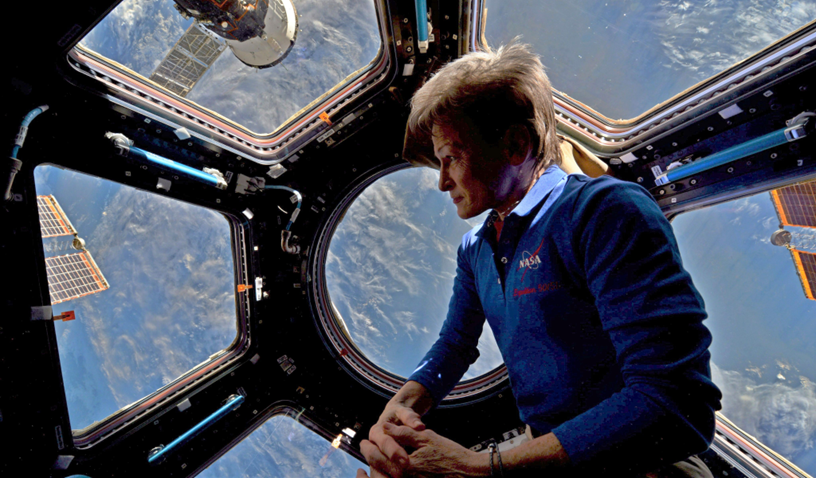
- Experience: Passengers experience 3 to 5 minutes of weightlessness (microgravity) and can view the curvature of the Earth against the blackness of space.
2. The Karman Line: The Boundary of Space
The Karman Line is an imaginary boundary located at an altitude of 100 km (62 miles) above mean sea level.
- Scientific Basis: It represents the altitude where the atmosphere becomes too thin to support traditional aeronautical flight (wings can no longer provide lift).
- Legal Significance: It is widely accepted by the Federation Aeronautique Internationale (FAI) as the boundary separating Earth’s atmosphere from outer space, used to distinguish between aircraft and spacecraft.
- Varying Standards: While the FAI uses 100 km, agencies like NASA and the US Air Force consider 80 km (50 miles) as the edge of space.
3. Comparison: Suborbital vs. Orbital
| Feature | Suborbital Flight | Orbital Flight |
| Velocity | Lower than Orbital Velocity | Must reach ~28,000 km/h |
| Duration | 10–15 minutes (Total) | Days to Months |
| Altitude | Reaches ~100 km (Edge of Space) | 400 km+ (Low Earth Orbit/ISS) |
| Cost | Relatively lower (Lakhs to Crores) | Very High (Hundreds of Crores) |
4. Major Players and Indian Perspective
- Global Players: Blue Origin (New Shepard) and Virgin Galactic (SpaceShipTwo) are the leaders in suborbital trips, while SpaceX focuses primarily on orbital missions.
- Indian Ambition: ISRO is reportedly working on its own space tourism module, aiming for a domestic capability by 2030.
- Commercial Arm: NewSpace India Limited (NSIL) and the regulator IN-SPACe are facilitating private Indian startups to enter the suborbital launch segment.
Q. With reference to ‘Suborbital Space Tourism’, consider the following statements:
1. A suborbital vehicle travels at a speed higher than the Earth's escape velocity to ensure it reaches the Karman line.
2. The Karman line is the internationally recognized boundary of space located approximately 100 kilometers above sea level.
3. Passengers on a suborbital flight experience weightlessness because they are in a region where Earth's gravity is zero.

How many of the statements given above are correct?
A) Only one
B) Only two
C) All three
D) None

Answer: A) Only one
Solution:
STATEMENT 1 IS INCORRECT: A suborbital vehicle travels at a speed lower than the orbital velocity (and much lower than escape velocity). If it reached escape velocity (11.2 km/s), it would leave Earth's gravity entirely and never return.
STATEMENT 2 IS CORRECT: The Karman Line is the most widely accepted conventional boundary (100 km) used to define where outer space begins.
STATEMENT 3 IS INCORRECT: Weightlessness is experienced not because gravity is zero (gravity at 100 km is still about 90% of that on the surface), but because the vehicle and passengers are in freefall while following the parabolic trajectory.