
Context
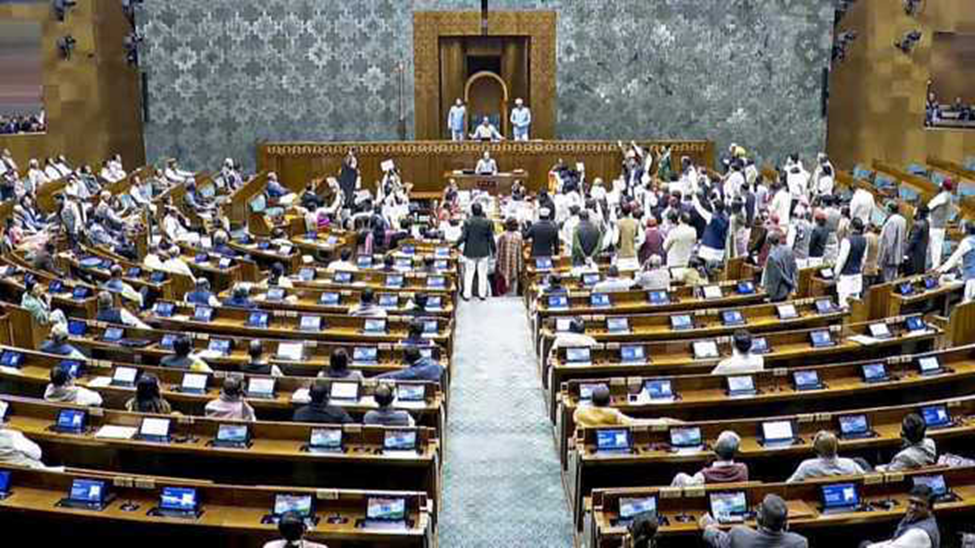
Recently, the Lok Sabha passed the Motion of Thanks on the President’s Address through a voice vote amidst significant procedural drama. For the first time since 2004, the motion was adopted in the Lower House without the customary reply by the Prime Minister, as Speaker Om Birla advised the PM to avoid the House due to intelligence regarding planned disruptions by the Opposition.
While the Lok Sabha passed the motion amid slogans and rejected all Opposition amendments, the Prime Minister successfully concluded his reply to the debate in the Rajya Sabha on the same day.
1. Constitutional Provisions
- Article 87(1): It mandates the President to deliver a “Special Address” to both Houses of Parliament assembled together at the commencement of:
- The first session after each general election to the Lok Sabha.
- The first session of each year (usually the Budget Session).
- Article 86(1): This article gives the President the right to address either House or both Houses at any time, but unlike Article 87, this is not a mandatory “special address.”
- Article 87(2): It requires that the rules of the House provide time for the discussion of the matters referred to in such an address.
2. Nature of the President’s Address
- The address is prepared by the Council of Ministers and approved by the Cabinet; hence, it is a statement of the government’s policy and programs.
- It reviews the government’s activities/achievements of the previous year and outlines the legislative and policy agenda for the upcoming year.
- No other business is transacted by the Parliament until the President has delivered this address.
3. The Motion and Debate
- The address is followed by a discussion in both Houses on a motion termed the “Motion of Thanks.”
- Proposer and Seconder: The motion is moved by a member and seconded by another, both of whom are selected by the Prime Minister.
- Scope of Debate: The discussion is very broad. Members can criticize the government’s policies or mention issues that were omitted from the address.
- PM’s Reply: At the end of the discussion, the Prime Minister (or any other Minister) replies to the points raised.
- Voting: After the reply, amendments are put to vote, followed by the main motion. It must be passed by a simple majority (majority of members present and voting).
4. Significance and Impact
- Accountability: It is a vital tool for the Parliament to examine and criticize the executive’s performance.
- Defeat of Government: If the Motion of Thanks is defeated in the Lok Sabha, it is viewed as a lack of confidence in the government and leads to the resignation of the Council of Ministers.
- Amendments in Rajya Sabha: Unlike the Lok Sabha, the Rajya Sabha has adopted the Motion of Thanks with amendments on rare occasions (e.g., 1980, 1989, 2001, 2015, and 2016). This does not lead to the government’s resignation but signifies a moral or political setback.
Q. With reference to the 'Motion of Thanks' in the Indian Parliament, consider the following statements:
1. The President’s Special Address is a constitutional obligation that must be delivered at the commencement of every session of Parliament.
2. The Motion of Thanks must be passed in both the Lok Sabha and the Rajya Sabha, and its defeat in either House necessitates the resignation of the government.
3. Amendments to the Motion of Thanks can be moved by members to highlight issues that were not mentioned in the President's Address.

How many of the statements given above are correct?
A) Only one
B) Only two
C) All three
D) None

Correct Answer: A (Only one)
Explanation
STATEMENT 1 IS INCORRECT: Under Article 87, the Special Address is mandatory only at the commencement of the first session after a general election and the first session of each year, not every session.
STATEMENT 2 IS INCORRECT: While the motion must be passed in both Houses, only its defeat in the Lok Sabha amounts to a lack of confidence requiring the government's resignation. Defeat/amendment in the Rajya Sabha does not force a resignation.
STATEMENT 3 IS CORRECT: Members of Parliament have the right to move amendments to the motion to include matters they believe the Address failed to mention or to criticize specific policies.