
Context
- Recently, the vibrant festivities of Rongali Bihu (also known as Bohag Bihu) have commenced across Assam, marking the onset of the Assamese New Year and the spring seeding season.
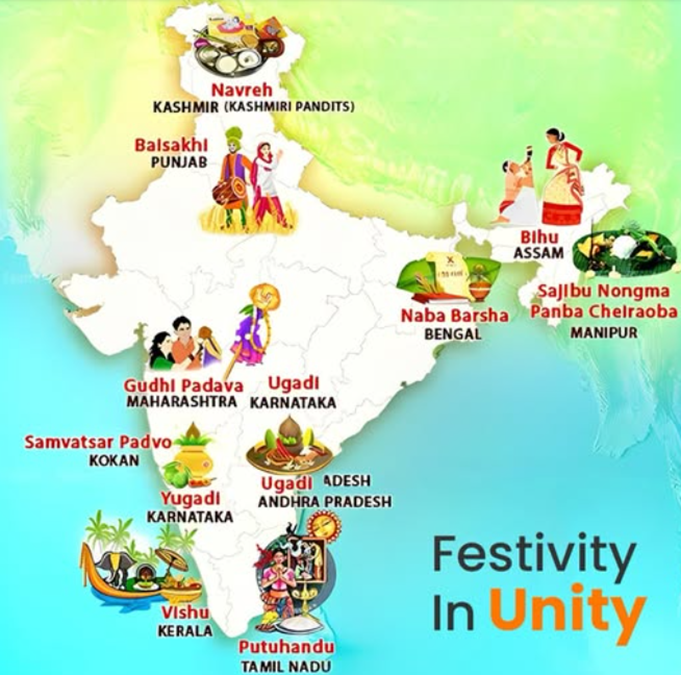
- This cultural milestone coincides with several other major harvesting and New Year festivals across India, such as Baisakhi in Punjab, Poila Boishakh in West Bengal, Puthandu in Tamil Nadu, and Vishu in Kerala, reflecting the diverse yet unified agricultural heritage of the nation.
1. Rongali Bihu: The Heart of Assam
Bihu is the most significant cultural festival of Assam, deeply rooted in the agrarian lifestyle of the Brahmaputra Valley. It is celebrated thrice a year to mark different stages of the paddy crop cycle.
The Three Types of Bihu
- Rongali or Bohag Bihu (April): This is the most important Bihu, marking the Assamese New Year and the beginning of the seeding season. It is a festival of joy (“Rong” means joy) and lasts for seven days (Saat Bihu).
- Goru Bihu: Dedicated to the health and safety of livestock.
- Manuh Bihu: People wear new clothes (including the traditional Gamosa) and seek blessings from elders.
- Kongali or Kati Bihu (October): A solemn occasion where lamps (Saaki) are lit in the paddy fields to pray for the protection of the standing crops during the growing stage.
- Bhogali or Magh Bihu (January): Marks the end of the harvesting season. It is characterized by feasting (“Bhoga” means eating). Community feasts are held in temporary thatched structures called Bhelaghar, and the festival concludes with the burning of the Meji (bonfire).
Cultural Elements
- Bihu Dance: An energetic folk dance performed by both men and women. In 2023, it was recognized by UNESCO for its unique Intangible Cultural Heritage.
- Instruments: Traditional music is played using the Dhol (drum), Pepa (buffalo horn pipe), Gogona (jaw harp), and Toka (bamboo clapper).
- Cuisine: Special delicacies like Pitha (rice cakes), Laru (sweet balls), and Jolpan are prepared.
2. Harvest Festivals Across India
Harvest festivals in India are generally celebrated when the sun enters the sign of Mesha (Aries) or during the transition of the sun into Makara (Capricorn), signifying the end of winter or the beginning of a new harvest cycle.
| Festival | Region / State | Key Significance |
| Baisakhi | Punjab & Haryana | Marks the harvest of Rabi crops and the formation of the Khalsa Panth (1699). |
| Vishu | Kerala | Characterized by the Vishukkani (first sight in the morning) and the yellow Kanikkonna flowers. |
| Puthandu | Tamil Nadu | The Tamil New Year; houses are decorated with Kolams (rice powder patterns). |
| Poila Boishakh | West Bengal | The Bengali New Year; starts with cleaning houses and traditional business accounting (Haal Khata). |
| Pana Sankranti | Odisha | Also known as Maha Bishuba Sankranti; marks the Odia New Year. |
| Gudi Padwa | Maharashtra | Marks the New Year; a Gudi (decorated pole) is hoisted outside homes to symbolize victory. |
| Ugadi | Andhra, Telangana, Karnataka | Known for Ugadi Pachadi, a dish with six tastes representing different emotions of life. |
| Nuakhai | Odisha (Western) | Celebration of the “New Rice” harvest, usually held in August/September. |
| Wangala | Meghalaya (Garo Tribe) | Known as the “100 Drums Festival”; a thanksgiving for a bountiful harvest. |
Q. With reference to the traditional festivals of India, consider the following statements:
1.	Rongali Bihu marks the completion of the harvesting season in Assam and is celebrated with community bonfires called Mejis.
2.	The festival of Vishu in Kerala involves the viewing of 'Vishukkani', which consists of auspicious items like rice, fruits, and flowers.
3.	Wangala, also known as the 100 Drums Festival, is a harvest festival celebrated primarily by the Garo tribe in Meghalaya.
Which of the statements given above are correct?
A) 1 and 2 only
B) 2 and 3 only
C) 1 and 3 only
D) 1, 2 and 3

Solution:
Correct Answer: B (2 and 3 only)
STATEMENT 1 IS INCORRECT: Rongali Bihu (or Bohag Bihu) marks the beginning of the seeding/sowing season and the New Year. It is Bhogali Bihu (Magh Bihu) that marks the completion of the harvest and involves the burning of Mejis.
STATEMENT 2 IS CORRECT: Vishu is the astronomical New Year in Kerala. The ritual of 'Vishukkani' (the first thing seen on waking up) is believed to bring luck for the entire year.
STATEMENT 3 IS CORRECT: Wangala is the post-harvest festival of the Garos in Meghalaya and parts of Assam, dedicated to Saljong, the Sun God of fertility. It is famous for the synchronized beating of a hundred drums.