
Context
- Recently, the Indian government has begun considering a proposal to restrict the export of sulphur to ensure domestic availability. This move comes in response to soaring global prices and severe supply disruptions from the Middle East, particularly due to the ongoing Iran war which has impacted shipping through the Strait of Hormuz.
- Additionally, the domestic industry has raised concerns as other major players, like China, are also set to restrict sulphuric acid exports, and Turkey has implemented similar bans, creating a tightening global market for this critical mineral.
1. Physical and Chemical Properties
- Element: Sulphur is a non-metallic chemical element (Atomic Number 16).
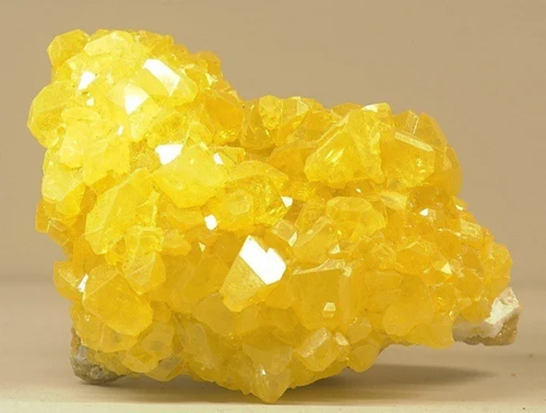
- Appearance: In its elemental form, it is a bright yellow, brittle solid at room temperature.
- Abundance: It is the 10th most abundant element by mass in the universe and the 5th most common on Earth.
- Biogeochemical Cycle: It follows a sedimentary cycle (Sulphur Cycle), primarily stored in rocks and salts or buried deep in the ocean.
2. Sources and Extraction
- Natural Deposits: Found near volcanoes and hot springs (native sulphur).
- By-product of Fossil Fuels: Most modern sulphur is obtained as a by-product of petroleum refining and natural gas processing to remove hydrogen sulphide.
- Frasch Process: A method used to extract elemental sulphur from underground deposits by using superheated water to melt the mineral.
- Industrial By-product: It is also recovered during the smelting of sulphide ores (like copper, zinc, and lead).
Applications of Sulphur
1. Agriculture (The “Fourth Major Nutrient”)
Sulphur is often considered the fourth major plant nutrient after Nitrogen (N), Phosphorus (P), and Potassium (K).
- Fertilizers: It is a key ingredient in Single Super Phosphate (SSP), Ammonium Sulphate, and Ammonium Phosphate Sulphate.
- Plant Physiology: It is essential for the synthesis of oils, vitamins, and chlorophyll. It is a constituent of three amino acids (methionine, cystine, and cysteine) which are the building blocks of proteins.
- Soil Health: Used as a soil conditioner to reduce the pH of highly alkaline soils.
2. Industrial Uses
- Sulphuric Acid: About 90% of sulphur is converted into sulphuric acid, the most widely used industrial chemical globally.
- Mining: Used in the leaching process for metals like copper and nickel.
- Refining: Critical in the manufacturing of detergents, plastics, and explosives.
India’s Sulphur Dynamics
- Import Dependency: India imports over 50% of its annual sulphur requirement (approx. 2 million metric tons), primarily from the Middle East (Qatar, UAE, Oman).
- Domestic Production: India produces sulphur as a by-product in its oil refineries.
- Policy Intervention: The government has recently prioritized the supply of refinery sulphur to domestic fertilizer companies to stabilize prices for farmers ahead of the Kharif season.
Q. With reference to Sulphur, consider the following statements:
1.	It is primarily obtained as a by-product from the processing of natural gas and the refining of crude oil.
2.	In the plant life cycle, it is a mobile nutrient, meaning deficiency symptoms first appear in older leaves.
3.	India is a net exporter of elemental sulphur and does not rely on imports from the Middle East.

Which of the statements given above is/are correct?
(a) 1 only
(b) 2 and 3 only
(c) 1 and 2 only
(d) 1, 2 and 3

Solution:
Correct Answer: (a) (1 only)
STATEMENT 1 IS CORRECT: Most elemental sulphur produced globally today is a by-product of removing sulphur-containing contaminants from natural gas and petroleum.
STATEMENT 2 IS INCORRECT: Sulphur is relatively immobile within the plant. Therefore, deficiency symptoms (like yellowing) typically appear first on younger leaves, unlike Nitrogen where symptoms appear on older leaves first.
STATEMENT 3 IS INCORRECT: India is heavily dependent on imports for sulphur, sourcing nearly 50% of its requirements from Middle Eastern countries like Qatar and the UAE. While it does export some quantities (mainly to China), it is currently considering restrictions to meet domestic shortages.