
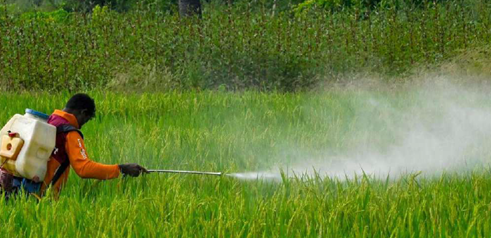
Context
- Recently, Telangana became the 3rd Indian state (after Kerala & Odisha) to ban paraquat — on March 31, 2026 via a 60-day state-wide ban.
- Telangana Legislative Assembly passed a unanimous resolution (March 30, 2026) urging the Central govt to impose a permanent nationwide ban.
Paraquat — What Is It?
- Chemical name: N,N’-dimethyl-4,4′-bipyridinium dichloride (Paraquat Dichloride 24% SL)
- Type: Contact herbicide — world’s most widely used non-selective weed killer
- Use in India: Widely used to kill weeds in paddy, tea, cotton, and plantation crops
- Status in India: Registered as ‘deemed to be registered’ under Insecticides Act, 1968 — never underwent mandatory safety evaluation
- Global status: Banned in 78 countries including EU, UK, Switzerland, South Korea, Vietnam, USA
Health Hazards — Key Facts
- Lethality: Kills 72.7–100% of those who consume it; NO specific antidote exists
- Routes of exposure: Ingestion, inhalation, and skin absorption — all toxic
- Organs affected: Lungs (fibrosis), kidneys, liver, heart; causes multi-organ failure
- Long-term risk: Linked to Parkinson’s disease from occupational exposure
- Other risks: Birth defects, developmental and learning disorders
- Suicide tool: Easy availability makes it the most common agent in farmer suicides
Regulatory Framework
| Law / Body | Key Provision |
| Insecticides Act, 1968 | Governs registration, manufacture, sale & use of pesticides; allows state to ban for 60 days (Section 27) + 30-day extension |
| CIBRC | Central Insecticides Board & Registration Committee — apex body for pesticide registration |
| Pesticide Management Bill, 2025 | Proposed replacement for 1968 Act; pending in Parliament; digital traceability, stricter penalties, state powers for 1-year bans |
International Conventions on Hazardous Chemicals
- Rotterdam Convention: An international treaty governing the Prior Informed Consent (PIC) procedure for certain hazardous chemicals and pesticides in international trade. Inclusion under this convention does not mean an outright ban, but mandates trade transparency.
- Stockholm Convention: A global treaty focused on protecting human health and the environment from Persistent Organic Pollutants (POPs).
- Kunming-Montreal Global Biodiversity Framework: Sets global targets for 2030, including the active reduction of pesticide-related environmental risks. High Total Applied Toxicity (TAT) presents compliance challenges for signatory nations like India.
Q. With reference to the regulation of agrochemicals in India, consider the following statements:
1. Under the Insecticides Act, 1968, state governments have the statutory power to permanently ban any hazardous pesticide within their territory.
2. Paraquat is a non-selective contact herbicide that has no specific medical antidote available globally.
3. The Rotterdam Convention mandates an immediate worldwide prohibition on any pesticide added to its hazardous list.
Which of the statements given above is/are correct?
(a) 1 and 2 only
(b) 2 only
(c) 2 and 3 only
(d) 1, 2 and 3
Correct Answer: B (2 only)
• Statement 1 is incorrect: Under Section 27 of the Insecticides Act, 1968, state governments can only impose a temporary ban lasting up to 60 days. Permanent or nationwide prohibitions can only be enacted by the Central Government.
• Statement 2 is correct: Paraquat is a highly toxic, non-selective herbicide with no known specific clinical antidote.
• Statement 3 is incorrect: Inclusion of a chemical under the Rotterdam Convention does not automatically ban it; rather, it mandates the Prior Informed Consent (PIC) procedure for international trade.