
Context
- Recently, experts highlighted the psychological and social challenges faced by children living with vitiligo, emphasizing the need to eliminate stigma and promote awareness in schools and communities.
- Although vitiligo is medically harmless and non-contagious, misconceptions continue to expose affected children to bullying, social exclusion, and emotional distress.
What is Vitiligo?
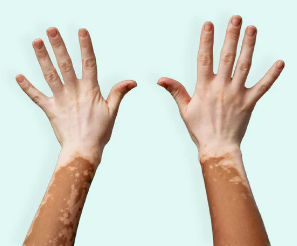
- Vitiligo is a chronic autoimmune skin disorder characterized by the loss of melanocytes (pigment-producing cells), resulting in depigmented white patches on the skin.
- It can affect individuals of all ages, genders, and ethnicities.
- The condition is non-infectious, non-contagious, and is not caused by poor hygiene.
Causes of Vitiligo
The exact cause remains unknown, but the condition is associated with:
- Autoimmune response, where the immune system mistakenly destroys melanocytes.
- Genetic predisposition.
- Environmental triggers, such as stress, skin injury, or sunburn in genetically susceptible individuals.
Key Clinical Features
- Well-defined white patches on the skin.
- May affect the face, hands, feet, lips, scalp, and genital region.
- Hair growing in affected areas may also turn white (leukotrichia).
- Usually painless and does not affect physical health.
Types of Vitiligo
- Non-segmental Vitiligo (NSV): Most common type; symmetrical distribution of patches.
- Segmental Vitiligo (SV): Affects one side of the body and usually appears at an earlier age.
- Universal Vitiligo: Extensive depigmentation covering most of the body.
Psychological and Social Impact
Children with vitiligo often experience:
- Low self-esteem and poor body image.
- Bullying, teasing, and social exclusion.
- Anxiety, chronic stress, and depression.
- Reluctance to participate in school activities.
- Emotional distress, particularly during adolescence due to concerns about appearance and peer acceptance.
Why Does Stigma Persist?
Common misconceptions include:
- Vitiligo is contagious.
- It results from poor hygiene.
- It is a communicable skin disease.
Fact: None of these beliefs are scientifically correct.
Diagnosis
Diagnosis is generally based on:
- Clinical examination.
- Wood’s lamp examination to highlight depigmented patches.
- Skin biopsy (rarely required).
- Screening for associated autoimmune disorders such as:
- Thyroid disorders
- Type 1 Diabetes
- Pernicious anemia
Treatment Options
- Although there is no permanent cure, treatment aims to restore pigmentation and prevent progression.
Medical Management
- Topical corticosteroids.
- Calcineurin inhibitors.
- Phototherapy (Narrowband UV-B).
- Excimer laser therapy.
- Oral immunomodulatory therapy in selected cases.
Surgical Options
- Skin grafting.
- Melanocyte transplantation (for stable vitiligo).
Supportive Care
- Sunscreen to protect depigmented skin.
- Cosmetic camouflage.
- Psychological counselling.
With reference to Vitiligo, consider the following statements:
1. It is a chronic autoimmune disorder resulting from the destruction of melanocytes.
2. It is a contagious disease transmitted through direct skin contact.
3. Narrowband UV-B phototherapy is one of the treatment options for vitiligo.
Which of the statements given above is/are correct?
(a)1 only
(b) 1 and 2 only
(c) 1 and 3 only
(d) 2 and 3 only
Answer: C
Explanation:
•  Statement 1 is correct: Vitiligo is a chronic, long-term skin condition. It is widely recognized as an autoimmune disorder where the body's immune system mistakenly attacks and destroys melanocytes—the cells responsible for producing skin pigment (melanin).
•  Statement 2 is incorrect: Vitiligo is not contagious or infectious. It cannot be transmitted from one person to another through direct skin contact, sharing personal items, or any other physical interaction.
•  Statement 3 is correct: Narrowband UV-B (NB-UVB) phototherapy is a highly common and effective clinical treatment option for vitiligo. It uses specific wavelengths of ultraviolet light to help stimulate melanocytes and encourage the repigmentation of affected skin patches.