
After Reading This Article You Can Solve This UPSC Mains PYQ (2023)
The expansion and strengthening of NATO and a stronger US-Europe strategic partnership works well in India.’ What is your opinion about this statement? Give reasons and examples to support your answer. [15 marks] (GS-2 International Relation )
Context
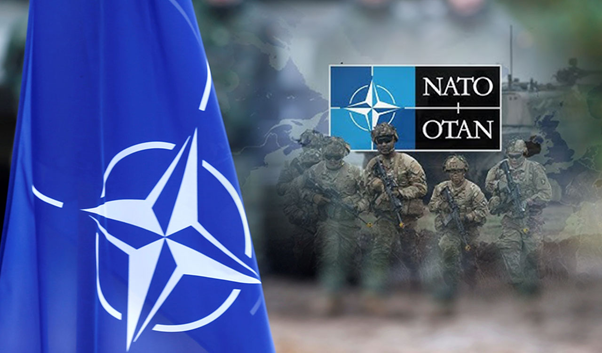
- The 2026 NATO Ankara Summit marked a pivot from a Euro-Atlantic mandate to long-term systemic rivalry, supply chain diversification, and tech integration.
- This impacts India by offering defense industrial opportunities while testing its traditional relationship with Russia.
Introduction
- NATO’s re-engineering into a globally interconnected, technology-driven framework heavily links European security with the Indo-Pacific.
- India faces a dual reality: integrating into Western defense chains while managing its strategic partnership with Moscow.
NATO and its Strategic Transformation
- An intergovernmental military alliance ensuring collective defense under Article 5.
- Expanded to 32 members as of 2026 (including the historic accession of Finland and Sweden).
- Commands a $38 trillion GDP and a unified military force of over 3 million troops.
The Ankara Strategic Shift
- Establishes permanent deterrence against Russia as the principal security challenge.
- Forces a redistribution of responsibility, urging much higher European defense spending.
- Elevates AI, cybersecurity, quantum computing, and space architecture to core strategic priorities.
- Expands focus outward, directly linking Euro-Atlantic security to Indo-Pacific and Arctic geopolitics.
Significance of NATO’s Evolution
- Opportunities for Defense Indigenization: Europe’s rearmament wave allows Indian defense firms to enter global Western supply chains.
- Strategic Alignment on Critical Technologies: Opens paths for deep technical partnerships in non-military domains like AI and quantum computing.
- Reinforcement of Maritime Security: Strengthens collaborative frameworks for freedom of navigation and anti-piracy in the Indian Ocean.
- Reshaping Polar Geopolitics: Nordic expansion directly impacts India’s Arctic Council scientific and resource exploration interests.
- Test of Pragmatic Multi-Alignment: Encourages issue-based, flexible diplomatic alignments over rigid Cold War-era military blocs.
Challenges Associated with NATO’s Expansion
- The Russia Dilemma: A permanent NATO-Russia confrontation places immense strain on India’s reliance on Moscow for military hardware and energy security.
- Defense Supply Chain Disruptions: Transatlantic rearmament may cause severe global bottlenecks in critical minerals and ammunition manufacturing.
- Pressure on Strategic Autonomy: Expanding Western partner networks threatens India’s independent decision-making and non-alignment principles.
- Technological Standard Exclusion: Closed NATO tech standards risk the systemic exclusion of non-members like India from advanced research ecosystems.
- Adversarial Counter-Coalitions: Expanding to the Indo-Pacific could rapidly accelerate a rigid China-Russia strategic axis.
Way Forward
- Leverage Rearmament: Position Indian DPSUs and private aerospace firms as trusted manufacturing hubs for European sub-assemblies and dual-use components.
- Institutionalize Issue-Based Interactions: Engage NATO bodies on maritime security, counter-terrorism, and cyber resilience without seeking formal alignment.
- Deepen Bilateral European Ties: Strengthen comprehensive, direct defense and technology partnerships with individual European powers (e.g., France, Germany).
- Build Technological Interoperability: Align India’s national standards in AI governance and cyber defense with global benchmarks to prevent isolation.
- Calibrate the Russia-West Equation: Maintain robust ties with Moscow while upgrading Western partnerships, emphasizing decisions dictated solely by national interest.
- Champion Inclusivity: Strengthen regional frameworks like the Quad and IORA to ensure an independent, state-led Indo-Pacific architecture.
Conclusion
- The Ankara Summit proves that NATO is evolving into an integrated matrix of defense, industrial resilience, and technological standards. For India, the policy of strategic autonomy must not mean passive isolation from these global shifts. Instead, New Delhi must actively engage with this security transformation to capture economic gains while preserving its sovereign flexibility.