
After Reading This Article You Can Solve This UPSC Mains Model Question:
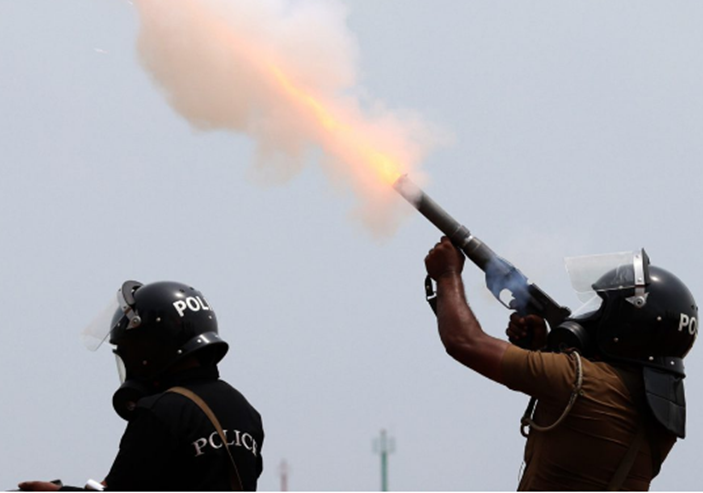
The use of force by police during protests must balance public order with constitutional rights, proportionality and accountability. Discuss in the context of the use of sophisticated weapons during civilian protests. 15 marks (GS 2, Governance)
Context
The Siwan incident, in which a police constable allegedly fired four rounds from an AK-47 during a protest, raises concerns over the deployment of sophisticated weapons, proportionality of police force, operational discretion and accountability. It highlights the need to balance effective maintenance of public order with Articles 19 and 21, human rights and democratic policing.
Introduction
Police must maintain public order while using force lawfully, necessarily and proportionately. As Police and Public Order are State subjects, weapon use is governed by State SOPs and police manuals. Thus, modernisation must go hand in hand with clear rules, de-escalation, human-rights safeguards and accountability.
Why is the Use of Sophisticated Weapons During Protests Significant?
1. Protection of Fundamental Rights
- Articles 19 and 21 protect peaceful assembly, expression, life and personal liberty.
- Police action must maintain public order without disproportionately restricting democratic dissent and civil liberties.
2. Proportionality and Necessity
- State coercive power must follow legality, necessity, proportionality and minimum-force principles.
- Sophisticated weapons demand strict controls as their use can cause disproportionate harm and escalation.
3. Public Order and Police Safety
- Police may face mob attacks, stone-pelting or imminent threats to life, requiring effective protection.
- The challenge is to balance citizen rights with the legitimate need to protect police personnel.
4. State Subject and Need for Uniform Standards
- Police and Public Order are State subjects, making weapon deployment largely dependent on State SOPs and manuals.
- Variation across States highlights the need for uniform minimum standards with operational flexibility.
5. Professional and Accountable Policing
- Sophisticated weapons require specialised training, clear rules of engagement, command protocols and weapon accountability.
- Police modernisation must therefore focus on professionalism and responsible use of force, not merely better weapons.
6. Rule of Law and Public Trust
- Every instance of police firing should be assessed for legality, authority, necessity, proportionality and accountability.
- Independent investigation, due process and effective remedies can prevent impunity and strengthen public trust in policing.
Challenges in Regulating Police Use of Force During Protests
1. Lack of Uniform Standards
- Police being a State subject leads to variations in SOPs, weapon deployment and crowd-control practices.
- This creates inconsistencies in rules of engagement and accountability across States.
2. Difficulty in Assessing Crowd Threats
- A peaceful protest can quickly turn into violence, rioting or a life-threatening attack.
- Police must accurately distinguish between different threat levels to ensure a proportionate response.
3. Split-Second Decision-Making
- During an imminent attack, officers may have little time to seek superior authorisation.
- This creates a dilemma between command control, operational discretion and emergency self-defence.
4. Risk of Excessive Force
- Sophisticated firearms can cause fatalities, collateral casualties and escalation of violence.
- Their disproportionate use can also undermine public confidence in law enforcement.
5. Inadequate Training
- Limited training in de-escalation, negotiation, crowd psychology and non-lethal methods can increase risks.
- Effective policing requires professional judgement and calibrated use of force, not merely weapon capability.
6. Weak Post-Incident Accountability
- Delayed or non-independent investigations can create perceptions of impunity and arbitrary use of power.
- Strong post-incident scrutiny is essential to protect citizens’ rights and institutional credibility.
Prakash Singh Recommendations Relevant to Police Use of Force
- State Security Commission: Insulate police from arbitrary political interference and ensure professional, impartial policing during protests.
- Fixed Tenure: Provide security of tenure to key police officers to enable independent, professional and accountable decision-making during law-and-order situations.
- Police Complaints Authority: Establish independent mechanisms to investigate excessive force, custodial abuse and other police misconduct, strengthening public accountability.
- Police Establishment Board: Ensure transparent decisions on transfers, postings and promotions, reducing external influence and promoting professional policing.
What Can Be Done to Strengthen Police Accountability?
1. Establish Uniform Minimum Standards
- Develop common national standards for use of force, authorisation, warnings and post-firing review.
- States can retain flexibility while ensuring consistency and accountability in policing.
2. Adopt a Graduated Response
- Follow dialogue → warning → containment → non-lethal measures → firearms as the last resort.
- Lethal force should be used only against an imminent and serious threat to life, as permitted by law.
3. Define Clear Rules of Engagement
- Clearly specify when sophisticated weapons may be carried, drawn or fired, including emergency exceptions.
- Differentiate ordinary protests from armed or life-threatening situations to guide police discretion.
4. Strengthen De-escalation Training
- Train personnel in negotiation, communication, crowd psychology, threat assessment and non-lethal methods.
- This promotes calibrated responses and reduces unnecessary escalation during protests.
5. Leverage Technology for Accountability
- Body-worn cameras and digital records can document warnings, crowd behaviour and use of force.
- Such evidence improves transparency, accountability and protection against false allegations.
6. Ensure Independent Post-Firing Investigation
- Fatal police firing should invite independent investigation, magisterial scrutiny and preservation of evidence.
- Violations must attract appropriate departmental and legal action, strengthening public trust.
7. Implement Police Reforms
- Strengthen professionalisation, operational autonomy and accountability, in line with Supreme Court-directed police reforms.
- Insulating policing from arbitrary external influence can improve neutrality, effectiveness and public confidence.
8. Ensure Weapon Accountability
- Maintain weapon registers, ammunition records, periodic audits and training certification for sophisticated firearms.
- This ensures that police modernisation strengthens security without weakening accountability.
Conclusion
Democratic policing requires a balance between authority and restraint. Sophisticated weapons must be used only when necessary, proportionate and accountable, ensuring public order without compromising constitutional freedoms.
| Important Current to Concept From This Article for UPSC Proportionality Principle Article 21 – Right to Life and Personal Liberty |