
Important for GS Prelims- Economy
Introduction
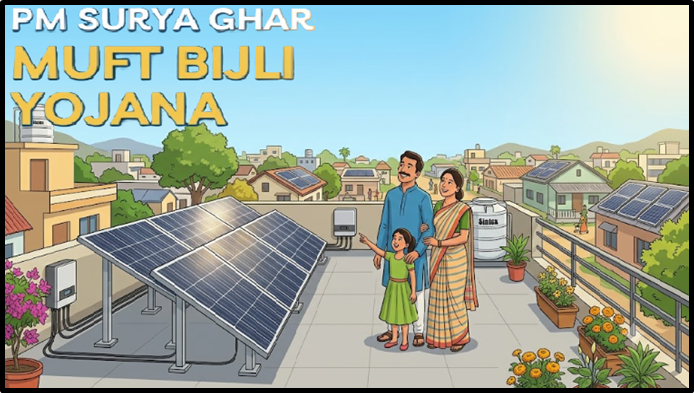
Initiated in 2024, the PM Surya Ghar: Muft Bijli Yojana is designed to supply complimentary electricity to homes across India by utilizing rooftop solar setups, thereby encouraging the use of green energy and reducing household energy expenses.
Key Features of PM Surya Ghar
- Subsidy: 60% subsidy for rooftop solar systems up to 2 kilowatt and 40% subsidy on the additional cost for systems between 2 and 3 kilowatt. Subsidy is available up to 3 kilowatt capacity.
- Model Solar Village: Establishment of one Model Solar Village in every district to promote community-level adoption of solar energy.
- Implementation: The scheme is implemented by the National Programme Implementation Agency at the national level and State Implementation Agencies at the State level. Power Distribution Companies act as the State Implementation Agencies.
- Performance Incentives: Urban Local Bodies, Panchayati Raj Institutions, and Power Distribution Companies receive incentives for promoting and expanding grid-connected rooftop solar installations.
Eligibility Requirements
- Applicants must be Indian citizens whose household owns a residential property with a roof suitable for solar panel installation, and the residence must have an active, legitimate electricity connection.
- Additionally, the household must not have previously availed any other solar panel subsidy scheme.
Recent Update on the Initiative
According to a recent announcement by the Union Minister, more than 3 million (30 lakh) residences have successfully installed rooftop solar systems under this central government program since February 2024.
Conclusion
The PM Surya Ghar: Muft Bijli Yojana marks a significant step towards making India’s households energy self-sufficient while advancing the country’s clean energy and net-zero goals. By combining financial subsidies with community-level initiatives like Model Solar Villages, the scheme aims to make rooftop solar a mainstream household choice across India.
| This CTC has been elaborately discussed in India Curtails 8,133 GWh of Solar Power to Maintain Grid Security |