
Relevance: GS Prelims – Health / Diseases / Government Schemes & Programmes / SDGs
About Viral Hepatitis
- Hepatitis refers to inflammation of the liver, most commonly caused by viral infection.
- There are five main types of hepatitis viruses: A, B, C, D, and E.
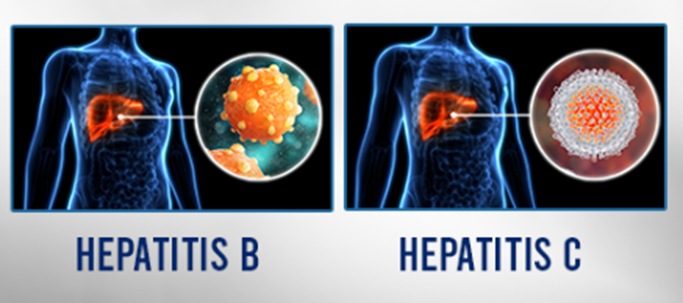
- Hepatitis B and C are the major causes of chronic liver disease, cirrhosis, and liver cancer globally and are the primary focus of India’s NVHCP.
- Both are often referred to as “silent killers” due to their largely asymptomatic progression, delaying diagnosis and treatment.
Hepatitis B — Key Facts
- Caused by the Hepatitis B Virus (HBV), a DNA virus.
- Transmitted through:
○ Blood and body fluids
○ Mother-to-child (perinatal) transmission
○ Unsafe sexual contact
○ Unsafe injections - A vaccine is available and was introduced under the Universal Immunization Programme (UIP) in 2011.
- India’s Hepatitis B birth-dose coverage has crossed 92%.
- Newborns of Hepatitis B-positive mothers are administered Hepatitis B Immunoglobulin (HBIG) within 24 hours of birth.
- Chronic infection can lead to cirrhosis and hepatocellular carcinoma (liver cancer).
- Under NVHCP, India provides free-of-cost management of Hepatitis B (not fully curable, but manageable through antivirals).
Hepatitis C — Key Facts
- Caused by the Hepatitis C Virus (HCV), an RNA virus.
- Transmitted primarily through:
○ Blood-to-blood contact
○ Unsafe injections and needle-sharing
○ Unscreened blood transfusions - No vaccine is currently available for Hepatitis C.
- High-risk groups include Injecting Drug Users (IDUs).
- India is among the few countries providing free-of-cost treatment for Hepatitis C.
- Treated using Direct-Acting Antivirals (DAAs); the disease is curable in most cases with short-course therapy.
- Cost of medicines under NVHCP has been reduced to less than one dollar.
Key Distinguishing Points
- Hepatitis B → vaccine-preventable, chronic but not typically curable, managed lifelong.
- Hepatitis C → no vaccine, but curable with DAA treatment.
- Hepatitis A and E (not covered under NVHCP) spread via the faecal-oral route (contaminated food/water) and are usually self-limiting.
Government Response
- Both Hepatitis B and C are covered under the National Viral Hepatitis Control Programme (NVHCP).
- NVHCP converges with the Reproductive and Child Health (RCH) Programme, National AIDS Control Programme (NACO), and Universal Immunization Programme.
- Patient tracking done via the Case-Based Management Information System (CPMIS), integrated with the Ayushman Bharat Digital Mission (ABDM).
SDG Linkage
- Elimination of Hepatitis B and C as public health threats by 2030 aligns with SDG Target 3.3.
Conclusion
While Hepatitis B and C share overlapping transmission routes and health consequences, they differ fundamentally in preventability (vaccine availability) and curability, shaping India’s differentiated public health strategy — vaccination-driven prevention for Hepatitis B and treatment-driven elimination for Hepatitis C — under the NVHCP framework.
| This concept has been elaborately discussed in the following article World Hepatitis Day 2026 & National Viral Hepatitis Control Programme (NVHCP). |