
Important for GS Prelims: GOVERNANCE
About CWMA
- Established: June 2018.
- Legal Basis: Constituted under Section 6A of the Inter-State River Water Disputes Act, 1956 through the Cauvery Water Management Scheme, 2018.
- Nature: Statutory, quasi-judicial body.
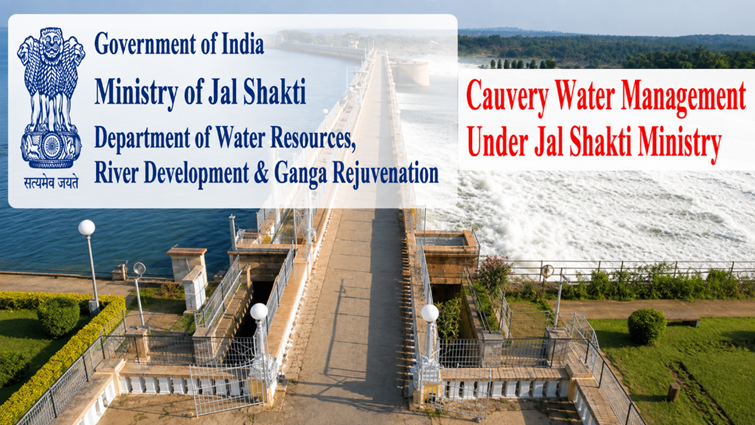
- Administrative Ministry: Ministry of Jal Shakti (Department of Water Resources, River Development & Ganga Rejuvenation).
- Headquarters: New Delhi.
- Objective: To implement the final award of the Cauvery Water Disputes Tribunal (CWDT) as modified by the Supreme Court judgment (2018).
Constitutional Background
- Article 262 empowers Parliament to provide for adjudication of disputes relating to inter-state river waters.
- The Inter-State River Water Disputes Act, 1956 provides the legal framework for resolving such disputes.
Composition
- Chairperson (appointed by the Central Government).
- Two Whole-time Members.
- Two Part-time Members from the Central Government.
- One representative each from: Karnataka, Tamil Nadu, Kerala, Puducherry
Functions
- Regulates the storage, apportionment and distribution of Cauvery river water.
- Supervises the operation of major reservoirs in the Cauvery basin.
- Ensures states release water according to the prescribed schedule.
- Monitors compliance with the Tribunal award and Supreme Court judgment.
- Coordinates among basin states to manage water during normal and distress years.
Cauvery Water Regulation Committee (CWRC)
- Constituted along with CWMA in 2018.
- Functions as the technical and implementing arm of the CWMA.
- Monitors reservoir levels, rainfall and water releases.
- Submits recommendations to the CWMA regarding monthly water releases.
Conclusion
- The CWMA is the statutory authority responsible for implementing the Cauvery water-sharing award and ensuring equitable distribution of Cauvery waters among the basin states.
| This concept has been elaborately discussed in the following article: Cauvery Water Dispute: CWMA, CWRC and the Water-Sharing Mechanism |