
After Reading This Article You Can Solve This UPSC Mains Model Question:
The latest Index of Industrial Production (IIP) data indicates strong industrial growth despite weak consumer demand. Examine the trends reflected in the IIP and discuss what they reveal about the changing nature of India’s economic growth. 15 Marks (GS 3, Economy)
Context
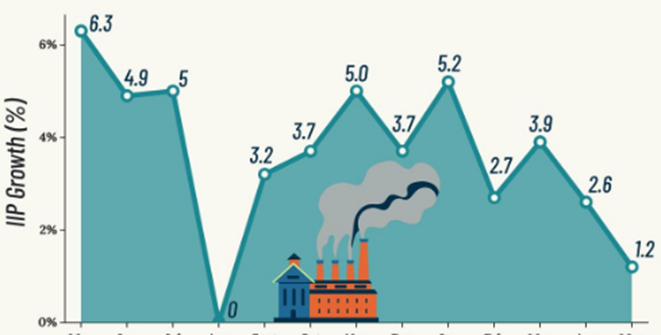
The Ministry of Statistics and Programme Implementation (MoSPI) reported that India’s Index of Industrial Production (IIP) grew by 7.3% (YoY) in June 2026, the highest in nearly two years. While industrial growth remains strong, it is largely driven by public investment and infrastructure, with consumer demand continuing to remain weak.
Introduction
The Index of Industrial Production (IIP) is a monthly indicator of industrial output in the manufacturing, mining and electricity sectors. The latest data indicates strong investment-led industrial growth, driven by infrastructure and capital expenditure, even as consumer demand remains subdued, pointing to structural imbalances in the economy.
What is the Index of Industrial Production (IIP)?
- IIP is a monthly indicator published by MoSPI.
- Measures changes in industrial production compared to a base year.
- Covers:
- Manufacturing
- Mining
- Electricity
- Acts as an important leading indicator of GDP and industrial performance.
Why is the Latest IIP Data Significant?
1. Indicates Strong Industrial Recovery
- India’s IIP grew by 7.3% (YoY) in June 2026, marking the highest growth in 23 months and the third consecutive month of accelerating industrial output.
- This reflects improving industrial momentum and resilience despite global economic uncertainties.
2. Investment-Led Growth
- Strong growth in Capital Goods, Infrastructure Goods and Intermediate Goods indicates rising investment in productive assets and infrastructure.
- It reflects higher government capital expenditure, capacity expansion and improved long-term growth potential.
3. Weak Consumer Demand
- Growth in Consumer Durables and Consumer Non-Durables remained subdued, signalling weak household demand despite higher industrial production.
- Persistent inflation, sluggish rural incomes and moderating urban consumption continue to weigh on private consumption.
4. Infrastructure Push Driving Manufacturing
- Increased public spending on infrastructure has boosted demand for steel, cement, machinery and engineering products, supporting industrial activity.
- This demonstrates that infrastructure investment is acting as a key driver of manufacturing growth and employment generation.
5. Global Factors Continue to Influence Industry
- Production of Primary Goods remained weak due to supply disruptions and elevated energy prices arising from geopolitical tensions in West Asia.
- This highlights India’s continued dependence on global commodity markets and vulnerability to external economic shocks.
6. Reflects Structural Transformation
- Recent IIP trends show consistently stronger growth in Capital Goods, Intermediate Goods and Infrastructure Goods, while Consumer Goods remain relatively weak.
- This suggests that India’s economic growth is increasingly investment-led, with public expenditure driving industrial expansion more than private consumption.
Challenges Highlighted by the IIP Data
1. Weak Private Consumption
- High inflation has eroded household purchasing power, limiting spending on consumer goods.
- Rural demand remains weak due to slower income growth, while urban discretionary spending has also moderated.
- As private consumption contributes nearly 60% of India’s GDP, its sluggishness poses a challenge to sustained economic growth.
2. Dependence on Government Capital Expenditure
- The recent industrial growth is largely driven by government-led infrastructure and capital expenditure rather than private sector investment.
- While public investment has supported manufacturing, private investment recovery remains uneven due to demand uncertainty.
- Excessive reliance on government spending may not be sustainable in the long run without stronger private sector participation.
3. External Vulnerabilities
- Global tariff uncertainties and geopolitical tensions, particularly in West Asia, continue to disrupt supply chains and trade.
- Rising energy and commodity prices increase production costs and reduce industrial competitiveness.
- These external shocks expose India’s industrial sector to global economic and geopolitical risks.
4. Uneven Industrial Growth
- Growth has been concentrated in capital goods, infrastructure and intermediate goods, while consumer-oriented industries continue to lag.
- This indicates that industrial expansion is not broad-based across all sectors of the economy.
- A balanced recovery requires stronger growth in both investment and consumption-driven industries.
5. Slow Recovery in Consumer Industries
- Sectors such as pharmaceuticals, electronics, apparel and leather have recorded relatively weak production growth.
- Subdued domestic demand, global trade uncertainties and export-related challenges have constrained their performance.
- Reviving these labour-intensive industries is essential for boosting employment, exports and inclusive industrial growth.
What Can Be Done to Achieve Broad-Based Industrial Growth?
1. Strengthen Domestic Consumption
- Boost rural incomes through higher agricultural productivity, better wage opportunities and targeted welfare measures to stimulate demand.
- Generate quality employment and maintain price stability to improve household purchasing power.
- Stronger domestic consumption will support sustainable industrial growth and reduce overdependence on public investment.
2. Encourage Private Investment
- Improve the ease of doing business by simplifying regulations, reducing compliance costs and ensuring policy certainty.
- Facilitate faster project approvals and create a stable investment climate to boost business confidence.
- Greater private investment will expand industrial capacity, enhance productivity and complement government capital expenditure.
3. Support MSMEs
- Improve MSMEs’ access to affordable finance, technology and digital infrastructure to enhance their competitiveness.
- Strengthen their integration with domestic and global supply chains through skill development and market linkages.
- A vibrant MSME sector will promote innovation, employment generation and balanced industrial growth.
4. Sustain Infrastructure Investment
- Continue public capital expenditure on transport, energy, logistics and urban infrastructure to strengthen industrial ecosystems.
- Encourage Public-Private Partnerships (PPP) to mobilise private capital for infrastructure development.
- Better infrastructure reduces logistics costs, improves competitiveness and attracts long-term investment.
5. Diversify Export Markets
- Expand trade with emerging markets and reduce dependence on a limited number of export destinations.
- Strengthen India’s participation in Global Value Chains (GVCs) by improving quality standards and export competitiveness.
- A diversified export base will enhance industrial resilience and reduce vulnerability to external shocks.
6. Promote Labour-Intensive Manufacturing
- Encourage sectors such as textiles, food processing, leather and electronics through targeted incentives and skill development.
- Strengthen labour-intensive industries to create large-scale employment while boosting manufacturing output.
- This will support inclusive growth by linking industrial expansion with higher incomes and job creation.
Conclusion
The latest IIP data indicates that India’s industrial sector is witnessing strong investment-driven growth supported by infrastructure spending. However, weak consumer demand highlights that the recovery remains uneven. Sustaining high economic growth will require complementing public investment with stronger private consumption, private investment and employment generation to ensure inclusive and durable industrial development.
| Important Current to Concept From This Article for UPSC Ministry of Statistics and Programme Implementation (MoSPI) Capital Goods |