
After Reading This Article You Can Solve This UPSC Mains Model Question:
Examine the rationale behind introducing the Merchant Discount Rate (MDR) on UPI transactions. How can policymakers balance digital infrastructure sustainability with consumer inclusion? 15 Marks (GS 3, Economy)
Context
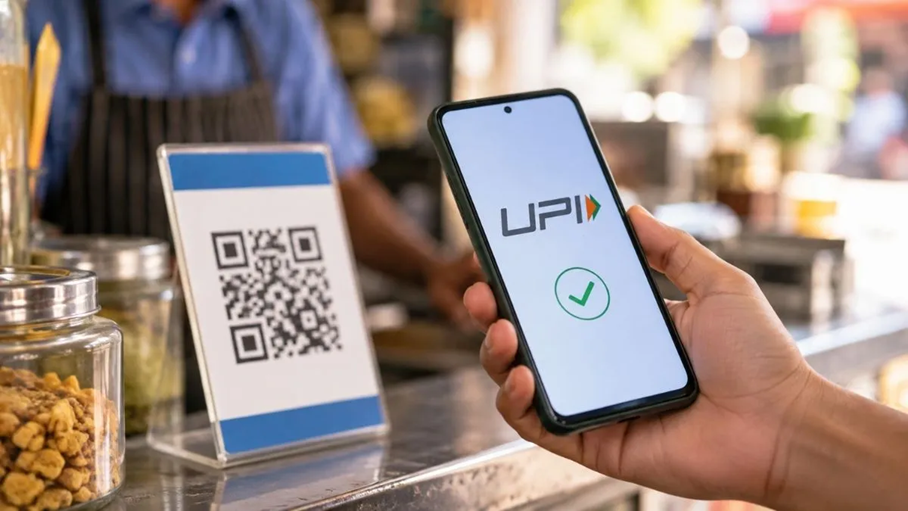
The government and NPCI have mandated a 0.4% Merchant Discount Rate (MDR) on person-to-merchant (P2M) UPI transactions exceeding ₹2,000, shifting from a complete zero-charge regime to a self-sustaining payment architecture.
Introduction
The Unified Payments Interface (UPI) is India’s foundational Digital Public Infrastructure (DPI) for instant payments. Transitioning from public subsidies to a commercial revenue model ensures the long-term operational health, capacity scaling, and security of payment operators.
NPCI and UPI Merchant Discount Rate (MDR)
1. NPCI: Institutional Framework
- Premier umbrella organisation for India’s retail payment and settlement systems.
- Incorporated in 2008 as a Section 8 non-profit company under the joint initiative of RBI and IBA.
- Promoted by a consortium of major commercial banks.
2. Key Digital Payment Infrastructure
- Operates major payment platforms such as UPI, RuPay, IMPS, Bharat BillPay, FASTag (NETC) and AePS.
- Supports the development of accessible, interoperable and nationwide digital payment infrastructure.
3. UPI MDR: Meaning & Applicability
- Merchant Discount Rate (MDR) is the transaction fee charged to merchants for processing digital payments.
- It is applicable to merchant (P2M) transactions, while P2P UPI transactions generally do not attract MDR.
- The rate and applicable limits depend on the payment instrument and prevailing regulatory framework.
4. Purpose & Revenue Distribution
- MDR compensates participants in the payment ecosystem, including acquiring banks, payment intermediaries and network/payment infrastructure providers.
- It is a payment-processing/network fee, not a government tax, intended to support the functioning of the digital payments ecosystem.
Why has NPCI Introduced MDR on UPI Transactions?
- Escalating Operational Demands: Processing billions of monthly transactions requires continuous heavy capital for cloud storage, server bandwidth, and low-latency networks.
- Cybersecurity Mitigations: Advanced threat landscapes and AI-driven fraud vectors consume over a fifth of annual budgets, requiring dedicated defense funding.
- Subsidy Unsustainability: Long-term reliance on state budgetary incentives is fiscally inadequate to finance future hardware and software capacity upgrades.
- Market Incentivization: A predictable commercial revenue model attracts private sector innovation and encourages healthy market competition.
Significance of MDR on UPI Transactions
- Financial Viability: Secures a dependable revenue stream to cover the structural maintenance costs of participating financial institutions.
- Consumer Protection: Safeguards everyday users and micro-vendors by keeping low-ticket retail purchases up to ₹2,000 completely charge-free.
- Technological Resilience: Injects vital capital to upgrade real-time anti-fraud architectures against automated cyber attacks.
- Commercial Viability: Replaces unviable zero-cost mandates with a self-sustaining business framework that spurs tech development.
- DPI Strengthening: Fortifies the structural resilience of India’s Digital Public Infrastructure against outages during peak transaction volumes.
Challenges
- Cost Pass-Through: The persistent risk that merchants may unlawfully add covert surcharges onto retail buyers despite official advisories.
- Behavioral Friction: Potential consumer resistance causing a temporary contraction in large digital payments or a reversion to cash.
- Regulatory Enforcement: Administrative hurdles in auditing millions of dispersed semi-urban merchants against unauthorized fees.
- Intermediary Margin Compression: Heavy operational and compliance costs impacting the profitability of mid-sized fintech aggregators.
- Inclusion Trade-Off: Navigating the complex policy balance between revenue generation and sustaining universal digital adoption.
Way Forward
- Strict Statutory Penalties: Enforce strict punitive actions against merchants who unlawfully transfer MDR costs to retail consumers.
- Turnover-Based Safeguards: Retain explicit fee exemptions for micro-enterprises with annual turnovers below the ₹50 crore threshold.
- Transparent Digital Receipts: Mandate payment aggregators to display itemized transaction invoices to prevent hidden markups.
- Dedicated Security Pooling: Channel a fixed portion of collected MDR into a national cybersecurity and anti-fraud fund.
- Hybrid Technical Support: Provide targeted public grants to assist regional and cooperative banks with core processing upgrades.
- Targeted Awareness Drives: Conduct nationwide literacy campaigns clarifying that P2P transfers and essential daily purchases remain charge-free.
Conclusion
The calibrated implementation of the UPI MDR balances commercial sustainability with consumer affordability. By establishing a transparent, self-funded ecosystem, policymakers guarantee that India’s digital public infrastructure remains resilient, secure, and financially inclusive.
| Important Current to Concept (CTC) from this Article for UPSC : Merchant Discount Rate (MDR) National Payments Corporation of India (NPCI) |