
Context
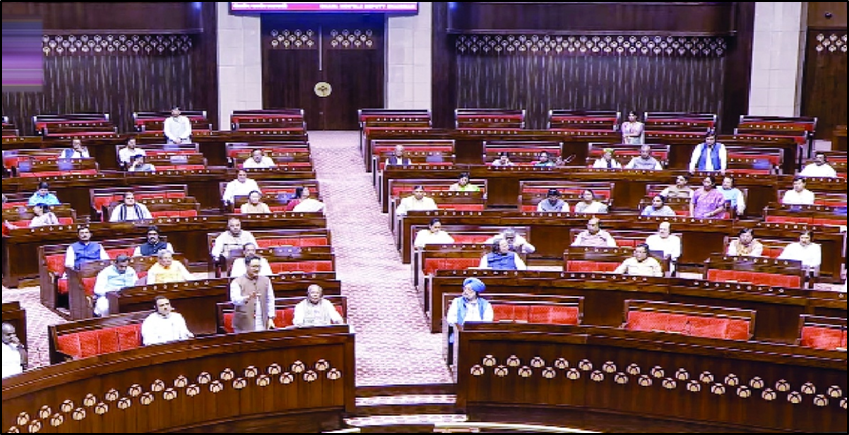
- The Rajya Sabha has passed the Micro, Small and Medium Enterprises Development (Amendment) Bill, 2026, after it was earlier approved by the Lok Sabha.
- The Bill aims to improve the liquidity of Micro, Small and Medium Enterprises (MSMEs) by making it easier for them to receive timely payments through the Trade Receivables Discounting System (TReDS).
What is the MSME Development (Amendment) Bill, 2026?
- It amends the MSME Development Act, 2006.
- It empowers the Central Government to notify a wider category of buyers who must procure goods and services from MSMEs through the Trade Receivables Discounting System (TReDS).
- The objective is to reduce payment delays and improve working capital availability for MSMEs.
Why was the Amendment Needed?
MSMEs often face:
- Delayed payments from buyers.
- Cash flow shortages affecting production and employment.
- Dependence on costly short-term loans.
The amendment seeks to ensure faster realization of invoices, thereby strengthening the financial health of MSMEs.
Trade Receivables Discounting System (TReDS)
What is TReDS?
- TReDS is an electronic invoice financing platform regulated by the Reserve Bank of India (RBI).
- It enables MSMEs to convert their trade receivables (invoices) into immediate cash by discounting them through financiers.
Participants
- MSME Sellers
- Buyers (Corporate entities, Government Departments, PSUs, CPSEs, etc.)
- Banks and NBFC Factors
Working Mechanism
- MSME supplies goods/services.
- Invoice is uploaded on TReDS.
- Buyer accepts the invoice.
- Banks/NBFCs bid to finance it.
- MSME receives immediate payment after discounting.
- Buyer pays the financier on the due date.
Objectives of the Bill
- Ensure timely payments to MSMEs.
- Improve liquidity and working capital.
- Reduce dependence on informal borrowing.
- Enhance ease of doing business.
- Promote digital financing.
Significance for MSMEs
- Faster access to funds.
- Lower financing costs.
- Improved cash flow.
- Increased production and exports.
- Greater financial inclusion.
About MSMEs in India
Classification
| Enterprise | Investment | Annual Turnover |
| Micro | Up to ₹2.5 crore | Up to ₹10 crore |
| Small | Up to ₹25 crore | Up to ₹100 crore |
| Medium | Up to ₹125 crore | Up to ₹500 crore |
Importance of MSMEs
- Contribute around 30% of India’s GDP.
- Account for nearly 45% of exports.
- Generate employment for over 26 crore people (direct and indirect).
- Promote balanced regional development.
- Support the Make in India initiative.
Key Constitutional & Institutional Linkages
- Ministry: Ministry of Micro, Small and Medium Enterprises.
- Regulator of TReDS: Reserve Bank of India (RBI).
- Parent Law: MSME Development Act, 2006.
| Important Current To Concept (CTC) from this article for UPSC MSME ReDS |
Q. With reference to the recently passed MSME Development (Amendment) Bill, 2026 and related provisions, consider the following statements:
I. The Reserve Bank of India (RBI) regulates the Trade Receivables Discounting System (TReDS).
II. The MSME Development (Amendment) Bill, 2026 amends the MSME Development Act, 2006.
III. As per the current MSME classification, a Medium enterprise is one with investment up to ₹75 crore.
Which of the statements given above is/are correct?
(a) I and II only
(b) II and III only
(c) I and III only
(d) I, II and III
Answer: (a)
Explanation:
• Statement I is Correct: TReDS is an electronic invoice-financing platform regulated by the RBI.
• Statement II is Correct: The 2026 Amendment Bill amends the MSME Development Act, 2006, empowering the Central Government to notify a wider category of buyers required to procure via TReDS.
• Statement III is Incorrect: Under the current classification, a Medium enterprise is one with investment up to ₹125 crore (and annual turnover up to ₹500 crore), not ₹75 crore.