
Important for GS Prelims: Environment & Ecology
Introduction
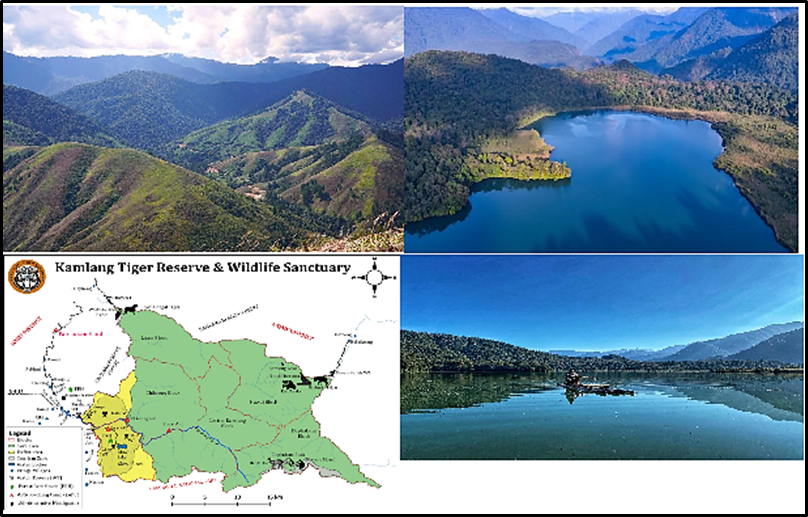
Kamlang Tiger Reserve is a protected area in Lohit district, Arunachal Pradesh, first notified as Kamlang Wildlife Sanctuary in 1989 and later declared India’s 50th Tiger Reserve, forming a contiguous conservation landscape with the neighbouring Namdapha Tiger Reserve.
Why is Kamlang Tiger Reserve Important?
- Kamlang forms part of a relatively undisturbed landscape for the conservation of:
- Tiger, Clouded leopard, Leopard cat ,Asiatic dhole ,Golden jackal ,Yellow-throated marten
- The presence of multiple carnivore species makes the area important for maintaining the ecological balance of the Eastern Himalayas.
- The reserve supports several important and endangered species, including: Hoolock gibbon, Slow loris, Leopard cat, Himalayan palm civet ,Royal Bengal Tiger ,Clouded Leopard
- Glaw Lake is a freshwater wetland in the Eastern Himalayas. It is fed by perennial mountain streams and supports rich aquatic and terrestrial biodiversity. The wetland and its catchment support more than 150 tree species and 49 orchid species.
Key Facts
Establishment & Location
| Particular | Details |
| Location | Lohit district, Arunachal Pradesh, near the international border with Myanmar |
| Established as Wildlife Sanctuary | 1989 |
| Declared Tiger Reserve | 2017 (India’s 50th Tiger Reserve) |
| Area | Approximately 783 sq km |
| Named after | Kamlang River, which joins the Lohit River (a Brahmaputra tributary) |
| Headquarters | Wakro |
Ecological Profile
| Particular | Details |
| Biodiversity region | Part of the Eastern Himalayan Biodiversity Hotspot |
| Adjoining protected area | Namdapha Tiger Reserve / National Park (southern boundary) |
| Northern boundary | Lang River |
| Notable water body | Glow (Glaw) Lake |
| Big cat species | Tiger, Leopard, Clouded Leopard, Snow Leopard (4 species) |
| Local inhabitant communities | Mishmi group — Digaru and Miju Mishmi |
Conclusion
Kamlang, established as a wildlife sanctuary in Arunachal Pradesh’s Lohit district in 1989, was declared India’s 50th Tiger Reserve in 2017 and forms a contiguous conservation landscape with the Namdapha Tiger Reserve within the Eastern Himalayan Biodiversity Hotspot.
| This topic has been elaborately discussed in Glaw Lake Declared Arunachal Pradesh’s First Ramsar Site |