
Context
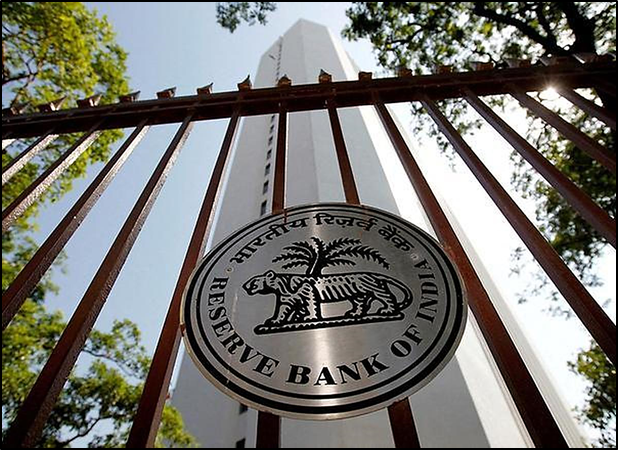
- The Reserve Bank of India (RBI) has stated that it has adequate financial resources to bear the cost of operating the Unified Payments Interface (UPI) without imposing charges on merchants or customers. The statement comes amid the introduction of the Taxation Laws (Amendment) Bill, 2026, which enables the government to notify certain digital transactions that may attract charges in the future.
Why is this in News?
- RBI Governor Sanjay Malhotra stated that the RBI’s annual surplus is sufficient to finance UPI operational costs.
- The government has introduced the Taxation Laws (Amendment) Bill, 2026, allowing future notification of chargeable digital transactions.
- The issue has revived the debate over the long-term financial sustainability of India’s digital payment ecosystem.
UPI (Unified Payments Interface)
- Launched: 2016
- Developed by: National Payments Corporation of India (NPCI)
- Regulated by: Reserve Bank of India (RBI)
- Nature: Real-time, interoperable digital payment system enabling instant bank-to-bank fund transfers using mobile devices.
- Features:
- 24×7 instant fund transfer
- QR code-based payments
- Virtual Payment Address (VPA)
- Supports P2P and P2M transactions
How is UPI Currently Funded?
- Customers: No transaction charges.
- Merchants: No Merchant Discount Rate (MDR) on most UPI transactions.
- Operational costs are currently supported through:
- Government incentives
- Banks and payment service providers
- RBI’s broader financial ecosystem
What is Merchant Discount Rate (MDR)?
- MDR is a fee paid by merchants to banks/payment service providers for processing digital transactions.
- It is generally charged on card-based transactions.
- Since January 2020, zero MDR has been applicable on RuPay debit cards and UPI transactions to promote digital payments.
Key Findings from RBI
- RBI earns significant annual surplus through:
- Interest income
- Foreign exchange operations
- Investments
- The annual cost of operating the UPI platform is only a small fraction of RBI’s surplus.
- Therefore, RBI believes public digital payment infrastructure can continue without imposing direct charges on users.
Taxation Laws (Amendment) Bill, 2026 – Key Provision
- Empowers the Central Government to notify categories of digital transactions that may attract charges in future.
- The Bill does not immediately impose charges on UPI transactions.
- It only creates an enabling legal framework for future policy decisions.
Why is UPI Important for India?
- Promotes a cashless and less-cash economy.
- Supports Digital India and financial inclusion.
- Reduces transaction costs and increases transparency.
- Facilitates seamless digital commerce for individuals, MSMEs and businesses.
- Strengthens India’s digital public infrastructure (DPI).
| Important CTC from this article for UPSC: RBI UPI |
Q. With reference to the Unified Payments Interface (UPI) in India, consider the following statements:
1. UPI is developed and operated by the National Payments Corporation of India (NPCI).
2. The Reserve Bank of India (RBI) regulates the UPI payment system.
3. Merchant Discount Rate (MDR) is currently applicable on all UPI transactions.
Which of the statements given above is/are correct?
A. 1 and 2 only
B. 2 and 3 only
C. 1 and 3 only
D. 1, 2 and 3
Answer: A. 1 and 2 only
• Statement 1 is Correct: UPI was developed by the National Payments Corporation of India (NPCI).
• Statement 2 is Correct: UPI operates under the regulatory oversight of the Reserve Bank of India (RBI).
• Statement 3 is Incorrect: Since January 2020, zero Merchant Discount Rate (MDR) has been applicable on UPI and RuPay debit card transactions to promote digital payments; hence, MDR is not applicable on all UPI transactions.