
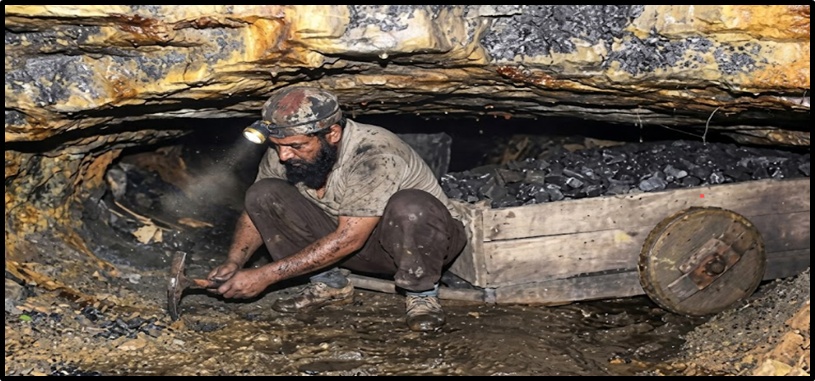
About Rat-Hole Mining
- Rat-hole mining is a small-scale, manual method of coal mining in which miners dig very narrow tunnels to extract thin coal seams using simple tools like pickaxes and shovels.
- It is mainly associated with Meghalaya, especially the Jaintia, Khasi and Garo Hills, where coal seams are thin and scattered, making large-scale mechanised mining difficult.
Two broad forms of Rat-Hole Mining:
- Side-cutting mining: Narrow horizontal tunnels are driven into hill slopes to access thin coal seams.
- Box-cut mining: A rectangular or circular pit is dug vertically, from which horizontal tunnels are excavated in different directions.
- The technique became particularly associated with Meghalaya, where coal seams are often thin, discontinuous and difficult to exploit through large mechanised mines.
Associated Hazards with Rat-Hole Mining
- Mine collapse: unsupported roofs and sidewalls can cave in without warning.
- Flooding: underground water and abandoned workings can inundate tunnels.
- Lack of ventilation: toxic gas accumulation and falling oxygen levels.
- Single narrow entrances: limit escape routes and conventional rescue access.
- Environmental damage: acid mine drainage, river and groundwater pollution, deforestation, land subsidence, and harm to karst/limestone ecosystems.
Why is Rat-hole Mining Restricted/Banned?
- Rat-hole mining is restricted because it is a highly unsafe and environmentally damaging form of mining, involving narrow tunnels, frequent accidents, land degradation and water pollution. Therefore, mining must comply with safety, environmental and legal regulations.
- Mines and Minerals (Development and Regulation) Act, 1957 (MMDR Act) and Mines Act, 1952 govern lawful mineral extraction and mine safety nationally.
- Environment (Protection) Act, 1986 forms the basis for environmental-clearance requirements applicable to mining.
- Supreme Court (2019) held that Sixth Schedule land/mineral ownership does not exempt mining from central mining and environmental laws; lawful mining must comply with the complete statutory and environmental framework.
Conclusion
- Rat-hole mining highlights the need to balance livelihoods and resource use with worker safety and environmental protection. The way forward lies in strict enforcement, lawful scientific mining, alternative livelihoods and ecological restoration.
| This concept has been elaborately discussed in the following article – Rat-Hole Mining in Meghalaya: Environmental Governance and the Legal Framework |