
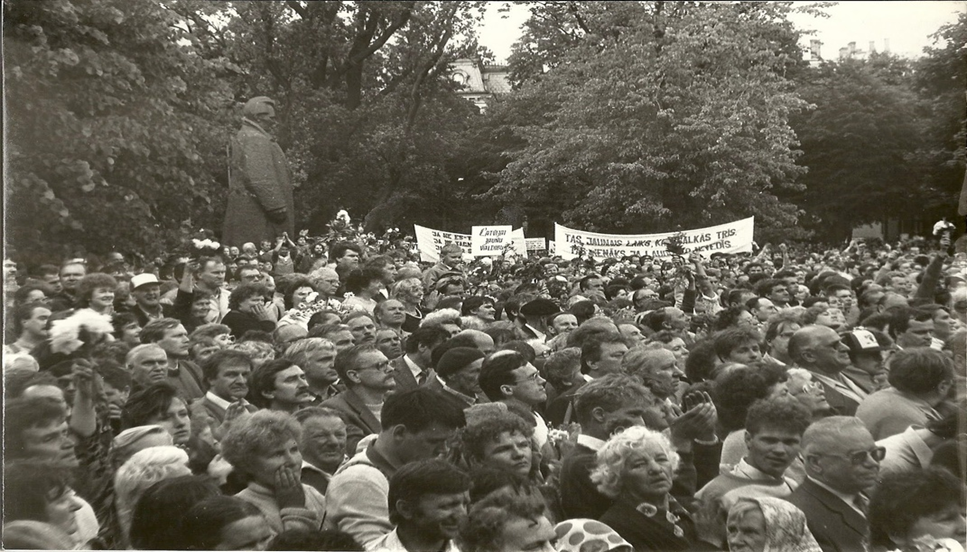
About the Singing Revolution
- It was a peaceful resistance movement between 1986 and 1991 in the three Baltic nations. Rather than taking up arms, millions of citizens gathered in public squares to sing banned national songs, express their culture, and demand an end to Soviet occupation.
Key Political Triggers
- Gorbachev’s Reforms: Soviet leader Mikhail Gorbachev introduced Glasnost (political openness) and Perestroika (economic restructuring). This gave Baltic citizens the legal space to organize and voice dissent.
- Protest Against the 1939 Secret Pact: The movement aimed to expose the Molotov-Ribbentrop Pact—a secret deal between Nazi Germany and the USSR that enabled the Soviet annexation of the Baltic states in 1940.
Major Milestones of Singing Revolution
- Night Song Festivals (1988): Mass gatherings, particularly in Tallinn (Estonia), where crowds openly sang illegal patriotic songs and raised pre-Soviet national flags.
- The Baltic Way (1989): On August 23, 1989—the 50th anniversary of the Nazi-Soviet pact—around 2 million people joined hands from Tallinn through Riga to Vilnius, creating the longest human chain in history.
The Gandhian Connection
Lacking their own traditions of peaceful resistance, Baltic leaders turned to Mahatma Gandhi’s framework:
- They adopted mass civil disobedience and non-cooperation as primary strategies.
- State television broadcast Richard Attenborough’s 1982 film Gandhi to teach citizens how to face armed Soviet troops without resorting to violence.
Conclusion
The Singing Revolution stands out as a clear example where non-violent resistance and cultural identity proved stronger than military power, offering a modern real-world proof of Gandhian strategy.
| This concept has been discussed elaborately in the following article: The Baltic Way: Gandhian Ideas and the Baltic Freedom Movement |