
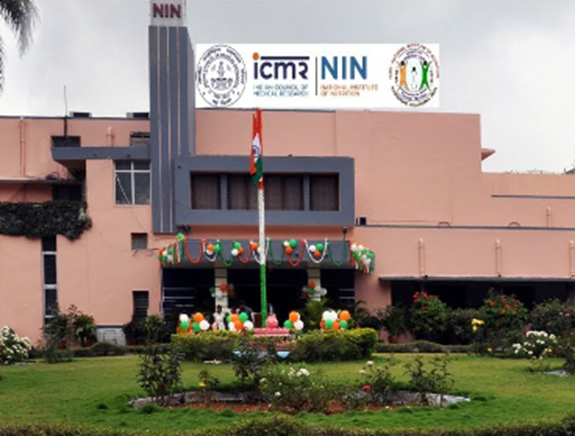
ICMR–NIN (What is it?)
- ICMR–NIN refers to the Indian Council of Medical Research – National Institute of Nutrition.
- It is a premier Indian institution involved in nutrition research, public health nutrition and dietary guidance.
- It provides scientific inputs for understanding nutritional requirements, dietary patterns and nutrition-related health issues in India.
- Its recommendations are important for shaping nutrition policies and dietary guidelines in the country.
ICMR (Indian Council of Medical Research)
- ICMR is India’s apex body for the formulation, coordination and promotion of biomedical research.
- It functions under the Ministry of Health and Family Welfare.
- Its research covers areas including:
- communicable diseases;
- non-communicable diseases;
- nutrition;
- public health;
- maternal and child health;
- biomedical research.
NIN (National Institute of Nutrition)
- The National Institute of Nutrition (NIN) is located in Hyderabad, Telangana.
- It is one of India’s leading institutions for nutrition research and public health nutrition.
- Its work includes:
- dietary and nutritional assessment;
- nutrient requirements;
- nutrition-related diseases;
- dietary guidelines;
- nutrition education;
- public health interventions.
Role of ICMR–NIN in Nutrition
1. Dietary Guidelines
- ICMR–NIN develops scientific dietary guidelines tailored to the nutritional needs and dietary patterns of the Indian population.
- These guidelines promote balanced, diversified and nutritionally adequate diets to prevent both nutrient deficiencies and diet-related diseases.
- They also provide a scientific basis for improving food choices and healthy dietary practices among different sections of the population.
2. Nutrient Requirements
- ICMR–NIN provides evidence-based recommendations on the daily requirements of essential nutrients for Indians.
- These recommendations cover proteins, carbohydrates, fats, vitamins and minerals, helping determine the nutritional needs of different population groups.
- Such standards are important for diet planning, nutrition programmes, public-health interventions and assessment of nutritional adequacy.
3. Public Health Nutrition
- ICMR–NIN contributes to addressing major nutrition-related public-health challenges, including malnutrition, micronutrient deficiencies, obesity, lifestyle diseases and other nutrition-related disorders.
- Its scientific inputs help policymakers design interventions aimed at improving nutritional status and reducing the burden of diet-related diseases.
- Thus, its work supports India’s transition from addressing only undernutrition to tackling the emerging double burden of malnutrition.
4. Nutrition Research
- ICMR–NIN undertakes research on the relationship between diet, nutrition and health, generating evidence on how dietary patterns and nutrient intake affect health outcomes.
- Such research provides an evidence base for policymaking, nutrition guidelines and public-health programmes.
- It therefore serves as an important scientific institution for translating nutrition research into public-health policy and practice.
Protein Recommendation
According to the recommendations cited in the context of the article:
- A healthy Indian adult requires approximately 0.83 g of protein per kg body weight per day.
- For a 60-kg adult, this corresponds to approximately 50 g of protein per day.
- Requirements can vary depending upon:
- age;
- growth;
- pregnancy and lactation;
- physical activity;
- illness;
- recovery from disease.
Why is ICMR–NIN Important?
- Provides an evidence-based foundation for nutrition policy.
- Helps move nutrition discourse beyond social-media trends and commercial claims.
- Supports India’s efforts to address the double burden of malnutrition:
- undernutrition and micronutrient deficiencies;
- overweight, obesity and lifestyle-related diseases.
- Promotes the principle that a healthy diet should be adequate, diverse, balanced and appropriate to individual needs.
Conclusion
The role of ICMR–NIN extends beyond prescribing individual nutrients. Its larger contribution lies in providing scientific and India-specific evidence for healthy dietary patterns, making it an important institution in India’s fight against both malnutrition and emerging lifestyle-related health challenges.
| This Concept has been Elaborately Discussed in the following Article: Protein in India: From Nutritional Need to Social-Media Fad |