
Introduction
The BRICS Summit is the annual meeting of BRICS leaders that provides a platform for Global South cooperation, economic coordination and reform of global governance institutions.
MEMBERS OF BRICS
- Founding members:
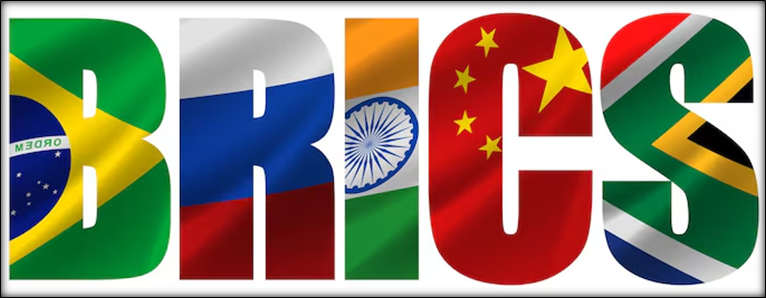
BRICS originally comprised Brazil, Russia, India and China, with South Africa joining in 2010. - Expanded membership:
The 2023 Johannesburg Summit decided on major expansion, bringing countries such as Egypt, Ethiopia, Iran and the UAE into the grouping from 2024, with Saudi Arabia’s participation evolving separately. - Current expanded BRICS:
The grouping has subsequently expanded further and now represents a diverse coalition of major emerging economies and Global South countries. - Significance of expansion:
Expansion has increased BRICS’s economic weight, geographical reach and political diversity, but also makes consensus-building more challenging.
Evolution of BRICS
- 2001 – BRIC concept:
Economist Jim O’Neill coined the term BRIC to describe Brazil, Russia, India and China as major emerging economies. - 2006 – Political grouping:
The four BRIC countries began institutionalising political cooperation through meetings of their foreign ministers. - 2009 – First BRIC Summit:
The first BRIC Leaders’ Summit was held at Yekaterinburg, Russia, marking the emergence of BRIC as a formal political platform. - 2010 – Inclusion of South Africa:
South Africa joined BRIC, transforming it into BRICS and strengthening its representation of the Global South. - 2014 – Creation of NDB and CRA:
The Fortaleza Summit established the New Development Bank (NDB) and Contingent Reserve Arrangement (CRA), giving BRICS tangible financial institutions. - 2023 – Major expansion:
The Johannesburg Summit decided to expand BRICS, reflecting its ambition to become a broader platform for Global South cooperation. - 2024 onwards – Expanded BRICS:
New members increased the grouping’s geographical, economic and geopolitical diversity, while simultaneously creating greater challenges of coordination. - 2026 – India’s BRICS Chairship:
India’s chairship provides an opportunity to emphasise Global South priorities, inclusive multilateralism, development cooperation and strategic autonomy.
Functional frameworks of BRICS
1. BRICS Leaders’ Summit
The annual summit provides the highest political decision-making platform where leaders discuss global governance, development and strategic issues.
2. BRICS Foreign Ministers’ Mechanism
Foreign ministers coordinate positions on international security, multilateral institutions and major geopolitical developments.
3. New Development Bank (NDB)
The NDB finances infrastructure and sustainable-development projects in BRICS and other developing countries, strengthening South–South development finance.
4. Contingent Reserve Arrangement (CRA)
The CRA provides a financial safety net against short-term balance-of-payments and liquidity pressures, thereby reducing vulnerability to external financial shocks.
5. BRICS Business Council
The Business Council promotes business-to-business cooperation, investment and trade among member countries.
6. BRICS Interbank Cooperation Mechanism
It facilitates cooperation among member-country development and commercial banks, particularly in financing and cross-border economic activities.
Key Features and Significance
- Platform for Global South cooperation:
The summit enables emerging economies to coordinate on development, finance, trade, climate change and global governance. - Promotes a multipolar world order:
BRICS seeks to strengthen multipolarity by giving developing and emerging economies a greater voice in international decision-making. - Advocates reform of global institutions:
Members support greater representation of developing countries in institutions such as the UN, IMF and World Bank to reflect contemporary economic and geopolitical realities. - Strengthens economic cooperation:
The summit promotes trade, investment, development finance, local-currency transactions and supply-chain cooperation among member countries. - New Development Bank (NDB):
BRICS established the New Development Bank to finance infrastructure and sustainable-development projects in emerging and developing economies, providing an alternative source of development finance.
Conclusion
The BRICS Summit is important not merely as an economic forum but as an instrument of Global South diplomacy and multipolarity. For India, it provides an opportunity to engage China, shape global governance and preserve strategic autonomy simultaneously.
| This concept has been elaborately discussed in this article : India–China Relations Amid Strategic Competition: Xi Jinping’s Visit, BRICS and India’s Strategic Autonomy |