
Context
- The Dryland Congress 2026 in New Delhi commemorated 50 years of collaboration between the Indian Council of Agricultural Research (ICAR) and the International Crops Research Institute for the Semi-Arid Tropics (ICRISAT).
Key Focus Areas
- Resilient Dryland Farming Systems: Climate-smart and integrated approaches for smallholder farmers.
- Seed Systems: Strengthening seed delivery systems and promoting public–private partnerships across Asia and Africa.
- Agrobiodiversity: Conservation and utilisation of agrobiodiversity to enhance resilience and sustainability of dryland agriculture.
- Gender & Youth: Greater participation of women and youth through leadership, innovation and enterprise.
- South–South Cooperation: Strengthening collaboration and scaling agricultural innovations across developing regions.
- Viksit Bharat 2047: Translating scientific research into scalable solutions and greater impact for dryland regions.
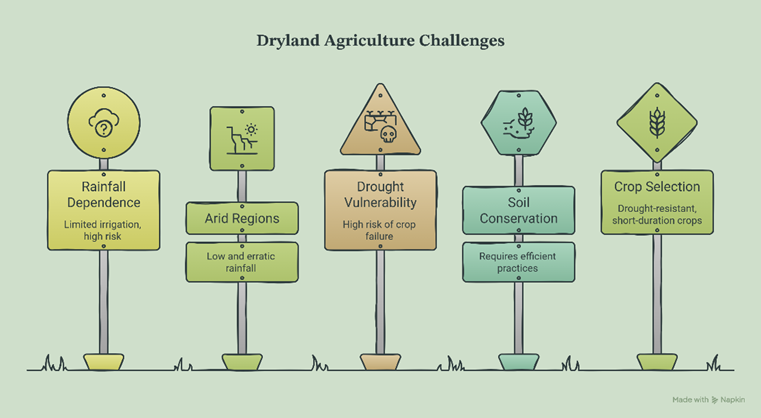
| About ICRISAT Full Form: International Crops Research Institute for the Semi-Arid Tropics (ICRISAT). Established: 1972 as an international agricultural research organisation. Headquarters: Patancheru, Hyderabad, Telangana, India. Core Focus: Research on dryland and semi-arid agriculture, particularly improving food security and livelihoods in vulnerable regions. Major Mandate Crops: Sorghum, pearl millet, finger millet, chickpea, pigeonpea and groundnut. Genebank: ICRISAT hosts a major Genebank at Hyderabad, conserving 129,000+ crop germplasm accessions from 144 countries. Climate Resilience: It develops drought-, heat- and climate-resilient crops and promotes sustainable farming and water-management practices. India Collaboration: ICRISAT works with ICAR, government institutions, universities and state governments on agricultural research and development. Major Programme: ICRISAT’s three major programmes are Accelerated Crop Improvement (ACI), Resilient Farming Systems (RFS), and Transforming Agrifood Systems (TAS). |
| Important CTC from this article- ICRISAT |