
After Reading This Article You Can Solve This UPSC Mains Model Question:
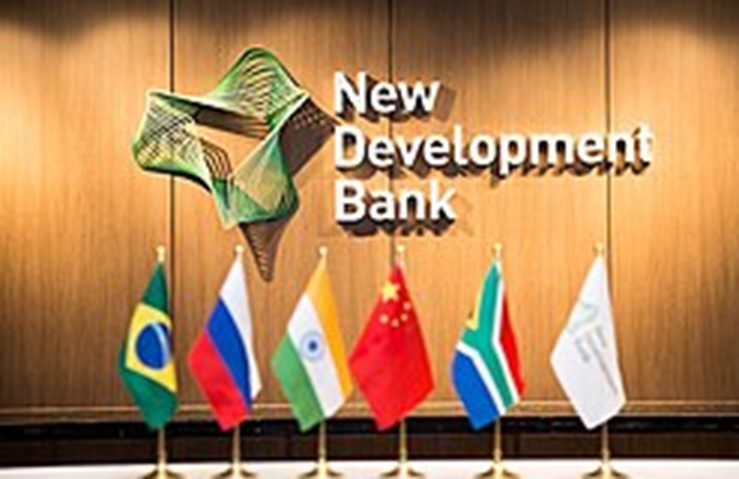
The New Development Bank can provide India a way to deepen BRICS cooperation without turning the grouping into an anti-Western bloc. Discuss. 10 Marks (GS 2, International Relation)
Context
BRICS has gained substantial economic and membership weight but remains under-represented in global financial governance, while internal divisions persist between an anti-Western bloc-oriented approach and India’s preference for non-Western multipolarity.
Introduction
BRICS embodies the changing world order—growing economic weight but limited geopolitical cohesion. For India, its value lies in leveraging the NDB for development, financial diversification and Global South cooperation, rather than anti-Western bloc politics.
Why BRICS Matters: World & India
For the World
- Global Governance: Pushes for greater representation of emerging economies in IMF, World Bank and other institutions.
- Global South: Provides a platform for collective voice on development, trade and finance.
- Development Finance: NDB expands financing for infrastructure and sustainable development.
- Multipolarity: Promotes a more diversified global economic order beyond traditional Western dominance.
For India
- Strategic Autonomy: Enables India to engage with both Western and non-Western powers.
- Economic Gains: Access to NDB financing, markets and investment opportunities.
- Global South Leadership: Strengthens India’s role as a bridge between developed and developing countries.
- China Balancing: Provides space to shape BRICS from within, rather than allowing it to become China-centric.
Structural & Geopolitical Challenges Confronting BRICS
- Geopolitical Divergence: China–Russia–Iran favour an anti-Western orientation, while India–Brazil–South Africa advocate non-Western multipolarity.
- De-dollarisation Dilemma: Aggressive moves away from the dollar may conflict with India’s strategic and economic interests.
- China-Centricity: China’s economic and institutional weight risks giving Beijing disproportionate influence within BRICS.
- Institutional Weakness: Limited consensus and weak coordination can reduce BRICS’ ability to translate declarations into outcomes.
- Expansion–Cohesion Trade-off: Rapid membership expansion increases economic and political diversity, making consensus and collective action more difficult.
NDB: A Practical Solution for BRICS
- Development over Geopolitics: NDB can make BRICS more relevant through infrastructure and sustainable-development finance, rather than anti-Western politics.
- Financial Multipolarity: Local-currency lending can reduce excessive dollar dependence without pursuing abrupt de-dollarisation.
- Global South Financing: Expanding NDB membership and lending can provide alternative development finance to emerging and developing economies.
- India’s Strategic Leverage: Strengthening NDB allows India to benefit from BRICS while limiting China-centric financial dominance.
- Untapped Potential: NDB needs more capital, faster disbursement, wider membership and diversified currency financing to match institutions like AIIB.
Key Structural & Strategic Challenges of the NDB
1. Capital Constraint
- Limited capital base restricts NDB’s lending capacity.
- Equal voting shares require proportionate capital contribution by founders.
- Russia’s sanctions and financial constraints make fresh capital mobilisation difficult.
2. Governance–Capital Dilemma
- New members can bring fresh capital, but founding BRICS members must retain at least 55% collective voting power.
- Hence, expanding membership must balance capital needs with founder control.
3. Sanctions & Credit-Rating Constraint
- NDB halted new lending to Russia after March 2022 to protect its credit rating and access to global funding.
- Shows that NDB remains constrained by the global financial and sanctions architecture.
4. De-dollarisation Contradiction
- BRICS advocates reduced dollar dependence, but NDB itself remains dependent on dollar funding and global capital markets.
- Lesson: India should promote currency diversification, not abrupt de-dollarisation.
5. China-centricity Risk
- Excessive reliance on RMB-based financing could increase China’s financial influence.
- India should push for greater use of the rupee and other member currencies.
Way Forward: Strengthening NDB & BRICS
- Strengthen NDB’s Capital Base: Increase paid-up capital and induct creditworthy developing economies to expand lending capacity without weakening governance.
- Fast-track Rupee Financing: Operationalise the rupee bond and promote local-currency lending to deepen India’s bond market and reduce currency risks.
- Ensure Currency Diversification: Promote a multi-currency NDB—Rupee, Real, Rand, Renminbi, etc.—rather than replacing dollar dependence with RMB dependence.
- Improve Lending Efficiency: Reduce the gap between project approval and disbursement through faster appraisal, stronger project pipelines and better implementation monitoring.
- Safeguard Institutional Credibility: Maintain prudent lending standards and creditworthiness, while navigating sanctions and global financial-market constraints.
- Expand Global South Outreach: Increase financing for infrastructure, climate action and sustainable development across emerging and developing economies.
- Pursue Strategic Autonomy: India should use BRICS and NDB to advance multipolarity and Global South representation, while avoiding both Western bloc politics and China-centric financial dominance.
Conclusion
India should seek neither a Western-dominated nor a China-dominated financial order. By transforming the NDB into a well-capitalised, efficient and genuinely multi-currency development bank, India can turn BRICS from a platform of geopolitical contestation into an instrument of constructive multipolarity.
| Important Current to Concept (CTC) from this Article for UPSC Asian Infrastructure Investment Bank (AIIB) New Development Bank (NDB) |