
After Reading This Article You Can Solve This UPSC Mains Model Question:
Examine the constitutional safeguards and statutory provisions governing the independence and removal of the Chief Election Commissioner. Discuss the delicate balance between institutional autonomy and accountability in India’s electoral governance. 15 Marks (GS 2 Indian Polity)
Context
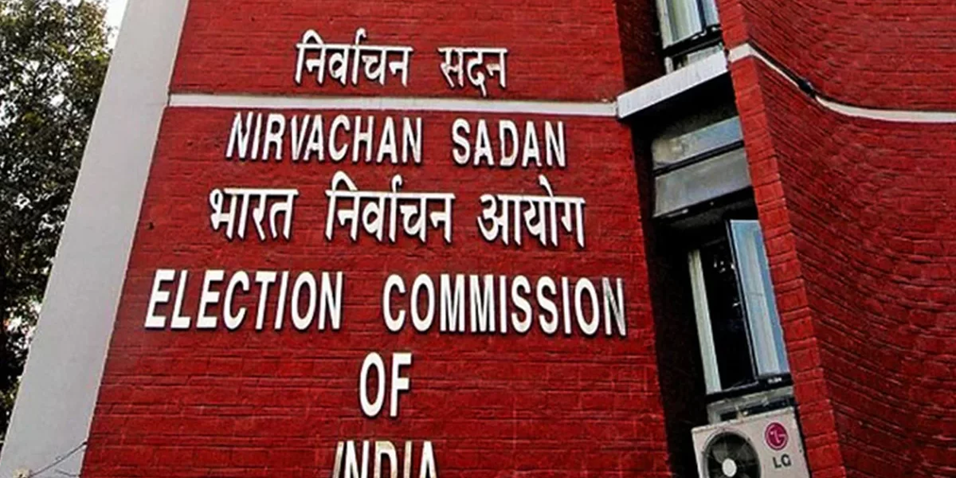
Recent parliamentary discussions regarding a potential impeachment motion against the Chief Election Commissioner (CEC) have brought the constitutional safeguards and internal administrative functioning of the Election Commission of India (ECI) into focus.
Introduction
The Election Commission of India is a vital constitutional body mandated to conduct free and fair elections. To insulate the institution from executive pressure and partisan politics, the Constitution deliberately sets an extraordinarily high bar for the removal of the CEC, granting the office procedural parity with a Judge of the Supreme Court to ensure operational autonomy.
Structure of the Election Commission
- Composition: The Commission operates as a multi-member body comprising three members: the Chief Election Commissioner and two Election Commissioners.
- First Among Equals: The CEC does not hold a hierarchically superior rank over the other Commissioners; the office functions as “first among equals,” possessing equal voting power in all institutional decisions.
- Consensus-Driven Governance: Statutory conventions mandate that institutional decisions be taken unanimously as far as possible, making any formal internal dissent administratively significant.
Appointment Process
- Statutory Baseline: Appointments are governed under Article 324 of the Constitution and the CEC and Other Election Commissioners (Appointment, Conditions of Service and Term of Office) Act, 2023.
- Selection Architecture: The President appoints the CEC and ECs upon the binding recommendation of a three-member Selection Committee consisting of the Prime Minister, the Leader of the Opposition (LoP) in the Lok Sabha, and a Union Cabinet Minister.
- Eligibility & Tenure: Candidates must be persons of integrity who have previously held Secretary-level positions in the Government. Appointees serve for a fixed term of six years or until reaching 65 years of age, whichever occurs earlier.
- Judicial Parity in Service: The CEC enjoys the same monetary compensation and service benefits extended to Supreme Court Judges.
Grounds for Removal
- Constitutional Parity: Under Article 324(5) of the Constitution and Section 11(2) of the 2023 Act, the CEC can be removed from office only “in like manner and on the like grounds as a Judge of the Supreme Court.”
- Grounds for Removal: Borrowed directly from Article 124(4), removal can occur exclusively on the grounds of “proved misbehaviour” (corrupt practices, abuse of authority) or “incapacity” (physical or mental inability to perform duties).
- Asymmetric Protection: While the CEC enjoys judicial-style protection, other Election Commissioners or Regional Commissioners can be removed by the President solely on the recommendation of the CEC.
Impeachment Steps
- Notice of Motion: A motion alleging proved misbehaviour or incapacity must be formally submitted, requiring the signatures of at least 100 MPs in the Lok Sabha or 50 MPs in the Rajya Sabha.
- Presiding Officer’s Discretion: The Speaker of the Lok Sabha or the Chairman of the Rajya Sabha evaluates the motion and holds absolute discretion to either admit or reject the notice.
- Statutory Investigation: Upon admission, a three-member inquiry committee is constituted to investigate the charges and formulate an evidentiary report.
- Parliamentary Special Majority: If the committee establishes misbehaviour or incapacity, the motion must be passed in each House by a two-thirds majority of members present and voting, along with a majority of the total membership.
- Mandatory Presidential Order: Once passed by Parliament, the President formally issues the removal order.
Historical Precedent
- Historical Precedent: No Chief Election Commissioner has ever been impeached or removed from office in India’s constitutional history.
- Previous Attempts: Past parliamentary motions aiming to initiate the removal process have historically been rejected at the admission stage by the respective Presiding Officers.
The Strategic Significance of Constitutional Removal Safeguards
- Insulation from Political Pressures: The rigorous removal procedure prevents incumbent governments from using the threat of arbitrary dismissal to compromise electoral neutrality.
- Preservation of Electoral Integrity: Security of tenure enables the CEC to make unbiased decisions during high-stakes elections without fear of executive retribution.
- Equivalence to Judicial Stature: Aligning the removal threshold with that of the higher judiciary underlines that free and fair elections are an essential part of the Constitution’s basic structure.
- Safeguard Against Partisan Majorities: The requirement for special majorities across both Houses prevents a simple legislative majority from removing an inconvenient constitutional regulator.
- Institutional Stability: A near-insurmountable removal barrier shields the election machinery from frequent disruptions, maintaining institutional continuity.
Key Challenges Confronting the Impeachment Framework
- Absolute Discretion of Presiding Officers: The ability of Speakers and Chairpersons to reject impeachment motions without stating formal reasons can preempt legitimate parliamentary debate.
- Insurmountable Voting Threshold: The requirement of a special two-thirds majority makes actual removal nearly impossible in politically fractured legislatures.
- Definitional Ambiguity: The Constitution leaves terms like “proved misbehaviour” uncodified, creating room for subjective, politically driven interpretations.
- Intra-Commission Asymmetry: Denying the other two Election Commissioners the same constitutional removal safeguards leaves them more vulnerable to external influence.
- Risk of Politicization: Impeachment motions run the risk of being utilized primarily for partisan posturing, which can erode public confidence in the electoral system.
Strategic Way Forward for Institutional Reform
- Codify Presiding Officers’ Discretion: Introduce statutory guidelines that require Presiding Officers to state objective, recorded reasons when deciding on impeachment notices.
- Equalize Constitutional Protections: Amend Article 324(5) to extend judicial-style removal protections to all Election Commissioners, ensuring the entire multi-member bench operates fearlessly.
- Institutionalize Internal Dissent Protocols: Formulate clear procedural rules for multi-member deliberations, establishing transparent mechanisms to record and resolve internal administrative differences.
- Codify ‘Proved Misbehaviour’: Enact precise statutory rules defining specific ethical violations and administrative abuses that constitute “proved misbehaviour.”
- Establish Transparent Inquiry Timelines: Mandate fixed timeframes for inquiry committees to prevent removal notices from lingering unresolved during active election cycles.
- Depoliticized Accountability: Position parliamentary impeachment strictly as an extraordinary measure of last resort, utilizing independent administrative reviews to address operational disputes.
Conclusion
The constitutional mechanism for removing a Chief Election Commissioner is deliberately arduous, serving as a critical safeguard for democratic stability. Balancing this highly stringent threshold with transparent, consensus-driven internal governance remains essential for preserving public faith in the neutrality and unimpeachable credibility of India’s electoral machinery.
| Important Current to Concept (CTC) from this Article for UPSC: The CEC and Other Election Commissioners Act, 2023: |