
Context
Recently, the Tamil Nadu State Department of Archaeology (TNSDA) has unearthed 12th-century bronze alloy idols of Lord Nataraja and Goddess Sivagami in Nagapattinam, highlighting the religious traditions and advanced metallurgical skills of the Chola period.
About the Archaeological Discovery
- Location: Nagapattinam district, Tamil Nadu.
- Discovering Agency: Tamil Nadu State Department of Archaeology (TNSDA).
- Period: Chola period (approximately 12th century AD).
- Depth of Discovery: The idols were unearthed at a depth of approximately one metre.
- Material: Bronze alloy.
- Associated Objects: Both idols were discovered along with their respective pedestals.
- Historical Significance: The discovery provides evidence of the religious practices, artistic excellence and metal-sculpture traditions of the Chola period.
Iconographic Features of the Discovered Idols
The dating of these idols to the 12th century AD was established by analyzing their specific physical structure, iconographic features, and ornamental designs.
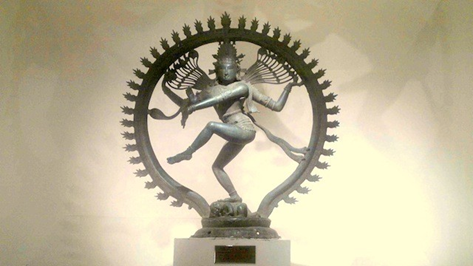
- Lord Nataraja: The 110 cm tall bronze sculpture is depicted in the dynamic ‘Ananda Tandava’ (dance of bliss) posture, prominently featuring four arms.
- Goddess Sivagami: The accompanying 82 cm tall idol is gracefully portrayed in the ‘Tribhanga’ (three-bend) posture, featuring two arms.
- Pedestals: Both idols were unearthed at a depth of one metre along with their original, intricately designed bronze pedestals.
About Chola Bronze Sculptures
- Historical Period: Bronze sculpture reached remarkable artistic refinement under the Chola dynasty (approximately 9th–13th centuries CE).
- Material: Chola bronzes were primarily produced using copper-based alloys.
- Lost-Wax Technique (Cire Perdue): The traditional method of bronze casting involved creating a wax model, covering it with clay, heating it to remove the wax and pouring molten metal into the resulting mould.
- Iconography: These sculptures commonly represented Hindu deities, particularly Shiva, Vishnu and their associated forms.
- Religious Use: Bronze images were used in temple rituals and carried in religious processions, allowing devotees to worship deities outside the sanctum.
- Artistic Features: Chola bronzes are renowned for their graceful postures, intricate ornamentation, balanced proportions and detailed craftsmanship.
Significance of Nagapattinam in the Chola Era
- Maritime Hub: Nagapattinam served as a crucial port city and commercial center for the Chola Empire, facilitating robust international trade.
- Religious Syncretism: The region is historically celebrated for its religious tolerance, hosting a rich Buddhist heritage (e.g., the royal-patronized Chudamani Vihara) alongside vibrant Shaivite and Vaishnavite traditions.
- Cultural Gateway: It acted as a primary launching pad for the export of Chola art, culture, and naval expeditions to Southeast Asia.
| Important CTC from This Article : Bronze Art Of India |
Q. With respect to the recently excavated Chola-era idols and their historical context, consider the following statements:

I. The idol of Lord Nataraja is uniquely depicted in the ‘Tribhanga’ posture to showcase dynamic movement.
II. The Tamil Nadu State Department of Archaeology (TNSDA) is the nodal agency responsible for this excavation in Nagapattinam.
III. Chola bronze sculptures were traditionally manufactured using the lost-wax casting technique.

How many of the statements given above are correct?
(a) Only one
(b) Only two
(c) All three
(d) None

Answer: B

Explanation:
 Statement I is incorrect: The idol of Lord Nataraja is depicted in the dynamic ‘Ananda Tandava’ posture, whereas it is the Goddess Sivagami idol that is portrayed in the gracefully curved 'Tribhanga' posture.
 Statement II is correct: The ongoing excavations in Nagapattinam are being actively conducted by the Tamil Nadu State Department of Archaeology (TNSDA).
 Statement III is correct: The world-renowned Chola bronzes were traditionally crafted using the intricate lost-wax casting technique (Cire Perdue).