
Context
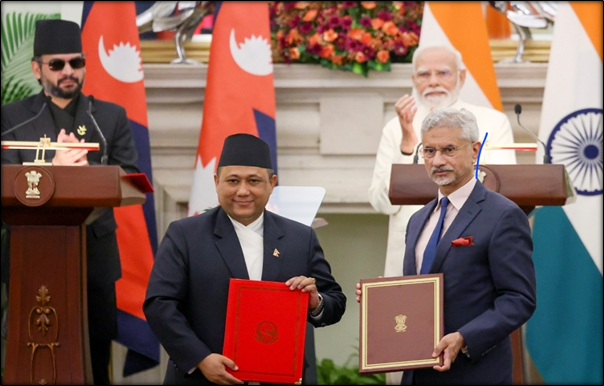
During the first official visit of Nepalese Prime Minister Balendra Shah to India, Prime Minister Narendra Modi announced a ₹15,000-crore development assistance package to support Nepal’s post-flood reconstruction and long-term development, comprising concessional credit and direct grants to strengthen infrastructure and enhance disaster resilience.
Key Components of India’s ₹15,000-Crore Assistance Package
- Concessional Line of Credit (₹11,500 crore): The amount will be provided through a rupee-denominated concessional line of credit, entirely dedicated to energy projects in Nepal.
- Direct Grants (₹3,500 crore): The amount will be provided as direct grants for reconstruction projects, particularly infrastructure development.
- Long-Term Development: The overall package aims to support Nepal’s post-disaster reconstruction and strengthen its capacity to manage future natural disasters.
Major Outcomes of the India–Nepal Bilateral Talks
- Development Cooperation: Nepal welcomed Indian investments and tourists, highlighting opportunities for strengthening economic and people-to-people ties.
- Disaster Management Cooperation: India expressed condolences over the loss of lives caused by the devastating August floods and extended financial assistance to support Nepal’s reconstruction and disaster resilience.
- Resolution of Boundary Issues: Both countries instructed their respective Foreign Secretaries to work on outstanding boundary issues, reflecting their commitment to a forward-looking approach to bilateral relations.
Significance of India–Nepal Development Cooperation
- Neighbourhood First Policy: Financial assistance reinforces India’s commitment to maintaining close developmental and strategic ties with its neighbouring countries.
- Regional Connectivity and Energy Cooperation: Dedicated financial support for energy projects can strengthen cross-border economic and infrastructure cooperation.
- Disaster Resilience: Reconstruction assistance can help Nepal strengthen its infrastructure and preparedness against future natural disasters.
- Regional Stability: Constructive diplomatic engagement on boundary disputes can strengthen mutual trust and contribute to regional stability.
| Important CTC from this Article: Eminent Persons Group (EPG) |
                                         MCQ


Q. With reference to India–Nepal relations, consider the following statements:

I. India's ₹15,000-crore assistance package to Nepal includes a ₹11,500-crore concessional line of credit dedicated entirely to energy projects.
II. The Eminent Persons Group (EPG) was established in 2016 during the visit of former Nepal Prime Minister K. P. Sharma Oli.
III. The EPG report has been officially made public by both countries.

Which of the statements given above is/are correct?

(a) I and II only
(b) II and III only
(c) I and III only
(d) I, II and III

Correct Answer: (a) I and II only

Explanation:
• Statement I is correct: India's ₹15,000-crore development assistance package includes ₹11,500 crore in a rupee-denominated concessional line of credit entirely for energy projects and ₹3,500 crore in direct grants for infrastructure reconstruction.
• Statement II is correct: The Eminent Persons Group (EPG) was established in 2016 during the visit of former Nepal Prime Minister K. P. Sharma Oli to examine bilateral relations and outstanding issues.
• Statement III is incorrect: Although the EPG submitted its report several years ago, the report has not been made public.