
Context
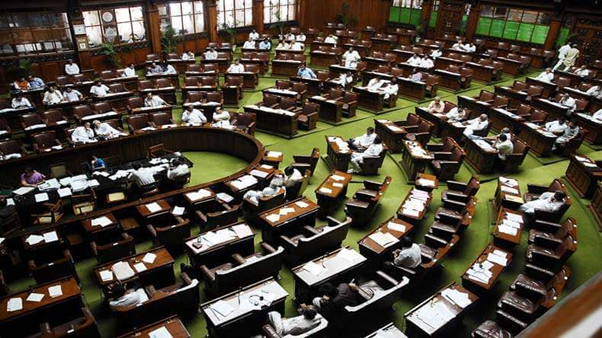
Parliament’s Monsoon Session (July 20 to August 13, 2026) was adjourned sine die on August 13, 2026, but has not yet been prorogued by the President—marking a 100-day unprorogued period, the longest in Indian constitutional history.
Key Constitutional Provisions
- Article 85: Governs the summoning, prorogation, and dissolution of Parliament.
- Summoning: The President, acting on the advice of the Council of Ministers, summons each House of Parliament from time to time.
- Maximum Gap: The gap between two sessions cannot exceed six months, mandating at least two sessions per year (though three sessions—Budget, Monsoon, and Winter—are held by convention).
- No Fixed Deadline: The Constitution does not prescribe a specific time frame for proroguing a House after adjournment sine die, nor does it mandate a minimum notice period for summoning a session.
Adjournment vs. Prorogation
- Adjournment: Temporarily suspends proceedings during a session; exercised by the presiding officer (Speaker in Lok Sabha, Chairman in Rajya Sabha).
- Adjournment Sine Die: Terminates a sitting indefinitely without fixing a date for the next sitting; exercised by the presiding officer, typically on the final day of a session.
- Prorogation: Formally terminates a session; exercised by the President on the advice of the Council of Ministers, usually within a few days of adjournment sine die.
- Notice Period & Recall: By convention, summoning a new session requires at least 14 days’ notice. However, under Rule 15 of the Lok Sabha Rules (and corresponding Rajya Sabha rules), the presiding officer can reconvene an unprorogued House at any time—by convention, with as little as two days’ notice.
Precedents & Structural Implications
- Past Instances: Parliament previously remained unprorogued for 87 days in 2008, and for 41 to 76 days on multiple occasions between 1963 and 1987; the 7th Legislative Assembly of NCT of Delhi (2020–25) also followed extended unprorogued sessions.
- Parliamentary Privileges: Members of Parliament and State Legislatures continue to enjoy their parliamentary privileges during unprorogued periods.
- Declining Sitting Days: Average annual sitting days of Parliament have dropped sharply from about 135 days in the First Lok Sabha to around 55 days at present, raising concerns over legislative scrutiny.
| Important CTC from this Article- Article 85 |
                                      MCQ

Q. With respect to the sessions of the Indian Parliament, consider the following statements:
I. Article 85 of the Constitution mandates that the President must prorogue both Houses of Parliament within 14 days of adjournment sine die.
II. The Speaker of the Lok Sabha is empowered to reconvene the House after an adjournment sine die, provided it has not been prorogued.

Which of the statements given above is/are correct?
(a) I only
(b) II only
(c) Both I and II
(d) Neither I nor II

Correct Answer: (b) II only

Explanation:
• Statement I is incorrect: While Article 85 empowers the President to prorogue the Houses of Parliament on the advice of the Council of Ministers, the Constitution does not prescribe any mandatory time limit for prorogation following an adjournment sine die.
• Statement II is correct: Under Rule 15 of the Rules of Procedure and Conduct of Business in the Lok Sabha, the Speaker can call a sitting of the House at any time after it has been adjourned sine die, provided the House has not yet been prorogued.

                                      PYQ (2024)

Q. With reference to the Parliament of India, consider the following statements :
1.	Prorogation of a House by the President of India does not require the advice of the Council of Ministers.
2.	Prorogation of a House is generally done after the House is adjourned sine die but there is no bar to the President of India prorogating the House which is in session.
3.	Dissolution of the Lok Sabha is done by the President of India who, save in exceptional circumstances, does so on the advice of the Council of Ministers.

Which of the statements given above is/are correct?
(A) 1 only
(B) 1 and 2
(C) 2 and 3
(D) 3 only