
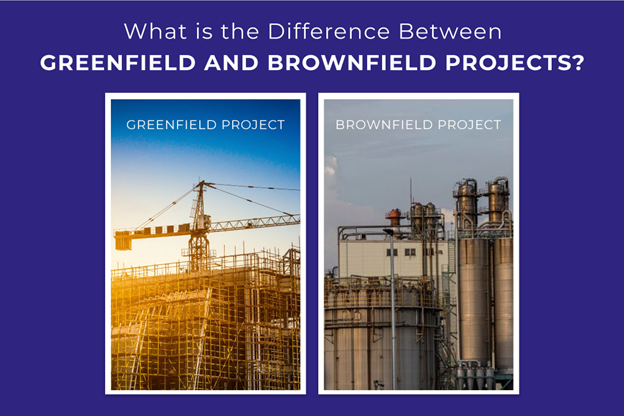
About Greenfield Projects
- A greenfield project is an infrastructure, industrial, or business venture built entirely from scratch on undeveloped land, with no prior existing facilities or structures.
- The term originates from the concept of constructing a new facility on a literal “green field” (open, unused land) without constraints imposed by legacy infrastructure.
- In Foreign Direct Investment (FDI), greenfield investment occurs when a parent company establishes a new subsidiary and builds operations from the ground up in a host country.
- Common examples in India include new expressways, greenfield airports (e.g., Jewar Airport, Mopa Airport), newly planned industrial corridors, and brand-new manufacturing plants.
Key Characteristics of Greenfield Projects
- Complete Design Flexibility: Offers full freedom in architectural layout, technology integration, and operational planning without needing to adapt to outdated structures.
- High Capital and Gestation Period: Requires substantial upfront capital expenditure, land acquisition, environmental clearances, and longer timelines before becoming operational.
- Job Creation and Capacity Addition: Directly adds new productive capacity to the economy and generates fresh employment opportunities during both construction and operational phases.
- Regulatory and Environmental Scrutiny: Typically involves extensive statutory approvals, including Environmental Impact Assessments (EIA), land-use conversion, and rehabilitation frameworks.
Greenfield vs. Brownfield Projects
| Parameter | Greenfield Project | Brownfield Project |
| Nature of Work | Built entirely from scratch on undeveloped land. | Involves upgrading, expanding, or modifying an existing facility. |
| Cost and Time | Higher upfront investment and longer gestation period. | Lower initial cost and faster operational turnaround. |
| Design Flexibility | High flexibility to adopt modern standards and technology. | Constrained by existing layout, structural limits, and legacy systems. |
| Clearances | Requires fresh land acquisition and full environmental clearances. | Often benefits from existing land titles and prior statutory approvals. |
Major Significance and Challenges
- Significance: Drives long-term infrastructure modernisation, attracts foreign capital and technology transfer, fosters balanced regional development in underserved areas, and strengthens global industrial competitiveness.
Conclusion
Greenfield projects play a pivotal role in expanding India’s core economic capacity and building modern, future-ready infrastructure. While they entail higher upfront costs and regulatory complexities, effective planning and streamlined clearances enable them to serve as powerful engines of sustained economic growth and job creation.
| This concept has been mentioned in the following article – Centre Clears Six Brownfield Gas-Based Urea Projects Worth ₹54,000 Crore |