
Context
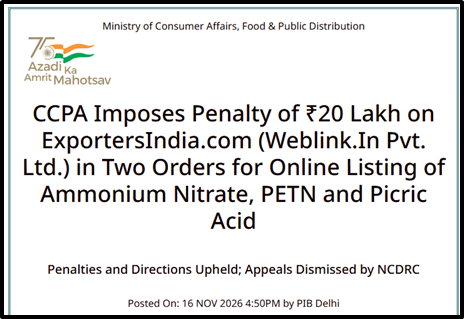
Recently, the CCPA penalised e-commerce platforms for illegally listing hazardous explosive substances specifically Ammonium Nitrate, PETN, and Picric Acid.
About the Regulated Substances
- Ammonium Nitrate: A chemical compound widely used as an agricultural fertilizer, but strictly regulated under the Ammonium Nitrate Rules, 2012, due to its high potential for misuse in improvised explosive devices (IEDs).
- PETN (Pentaerythritol Tetranitrate): One of the most powerful and highly sensitive high explosives, primarily restricted for commercial mining and military applications.
- Picric Acid: A highly reactive organic compound historically used in munitions, legally declared as a restricted explosive in India via a 1983 notification.
- Statutory Framework: The possession, sale, and distribution of these substances are strictly regulated or prohibited under the Explosives Act, 1884.
Major Highlights
- Regulatory Violation: E-commerce platforms displayed these restricted explosives as ordinary commodities without mandating valid PESO (Petroleum and Explosives Safety Organisation) licenses from sellers or buyers.
- Unfair Trade Practice: The Central Consumer Protection Authority (CCPA) classified these listings as misleading advertisements and unfair trade practices under the Consumer Protection Act, 2019.
- Violation of Consumer Rights: The unchecked listing violated consumers’ statutory right to be protected from the marketing of goods hazardous to life and property.
Significance
- Rejection of Safe Harbour Immunity: The ruling established that e-commerce platforms cannot claim blanket intermediary protection under Section 79 of the Information Technology Act, 2000. Safe harbour is strictly conditional on proactive due diligence.
- Platform Accountability: Platforms are independently responsible for verifying statutory licenses when facilitating trade in hazardous goods; post-detection content removal is insufficient.
- Internal Security: Enforces strict compliance with the Consumer Protection (E-Commerce) Rules, 2020, ensuring digital B2B and B2C marketplaces do not become conduits for internal security threats.
Conclusion
The upholding of the CCPA’s penalties establishes a vital precedent that e-commerce intermediaries must exercise rigorous statutory due diligence regarding restricted commodities, ensuring that digital trade facilitation does not compromise national security or consumer safety.
| Important CTC From This Article : Ammonium Nitrate PETN (Pentaerythritol Tetranitrate) Picric Acid |