Context
India recently opened an anti-dumping investigation into ethyl chloroformate imports from China after a domestic producer alleged the chemical, used in pharmaceutical and agrochemical manufacturing, was being sold at unfairly low prices.
Key Aspects of Anti-Dumping Investigations
- Anti-dumping investigations are trade remedies initiated by governments to protect domestic industries from unfair competition, where foreign firms sell goods below their home market price or production cost.
- In India, the Directorate General of Trade Remedies (DGTR) investigates these cases.
- The World Trade Organization (WTO) permits anti-dumping measures as a tool for ensuring fair competition, which is typically imposed for five years.
About Ethyl Chloroformate
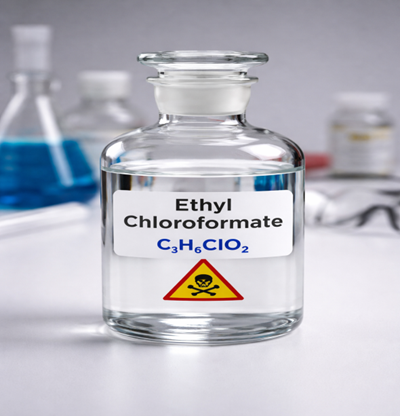
Ethyl chloroformate is an organic chemical intermediate widely used in pharmaceutical and agrochemical manufacturing
- Appearance: It is a colorless to light yellow liquid.
- Odor: It possesses a pungent, irritating odor.
- Volatility: It is a highly flammable liquid and vapor.
- Solubility: It decomposes in water to form toxic and corrosive fumes, including Hydrogen Chloride.
- Uses: In Pharmaceuticals, Pesicides
Health Hazards and Safety
- Toxicity: It is fatal if swallowed or inhaled.
- Corrosivity: Causes severe skin burns and eye damage.
- Respiratory Impact: Inhalation leads to severe irritation of the respiratory tract and can cause pulmonary edema.
- Environmental Impact: It is toxic to aquatic life with long-lasting effects
In India, the use of carbofuran, methyl parathion, Ethyl Chloroformate, Hexamine is viewed with apprehension. These chemicals are used as:

(a) Insecticides and pesticide intermediates used in agriculture and chemical industries.

(b) Food preservatives used to enhance shelf life of packaged foods.

(c) Bio-fertilizers used to improve soil nitrogen content.

(d) Industrial refrigerants used in cooling systems.

Answer: A

Explanation:
•  Carbofuran: A potent broad-spectrum carbamate insecticide and acaricide. It is one of the most toxic pesticides used on crops like rice, corn, and soybeans. It is notorious for its high toxicity to birds and non-target wildlife, leading to its restricted use or ban in many countries.
•  Methyl Parathion: An organophosphate insecticide used to control insects on a wide variety of crops. It is highly toxic to humans and bees. Like Carbofuran, it is often viewed with apprehension due to its potential for accidental poisoning and environmental persistence.
•  Ethyl Chloroformate: As seen in your provided chemical safety article, this is a highly reactive chemical intermediate. In the context of this question, it is used in the synthesis of carbamate-based pesticides and herbicides. It is "apprehended" because it is fatal if inhaled and highly corrosive.
•  Hexamine (Hexamethylenetetramine): In agriculture and industry, it is used as a stabilizer for certain pesticide formulations. It is also a precursor in the manufacture of explosives and resins, leading to regulatory scrutiny regarding its diversion.