
Introduction
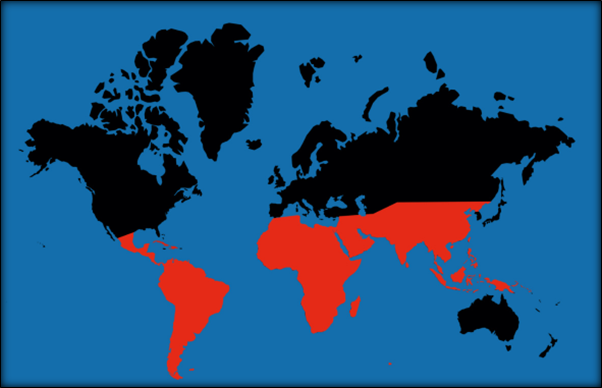
Global South refers broadly to developing and emerging countries, particularly in Asia, Africa, Latin America and parts of the Middle East, seeking greater voice, equity and development opportunities in global governance.
Meaning and Evolution
- Global South is not a purely geographical concept, as it includes countries located in the Northern Hemisphere, such as India, China and Mexico.
- The term has gradually replaced the older “Third World” terminology and focuses more on shared developmental challenges and demands for a more equitable international order.
- It broadly represents countries that have historically experienced colonialism, economic dependency, developmental inequalities and under-representation in global institutions.
Key Characteristics of the Global South
- Developmental challenges: Many countries face poverty, unemployment, inequality, infrastructure deficits and limited access to quality healthcare and education.
- Economic vulnerability: Developing economies remain vulnerable to commodity-price fluctuations, external debt, capital-flow volatility and global economic shocks.
- Climate vulnerability: Several Global South countries face disproportionate impacts of climate change despite having historically contributed less to cumulative global emissions.
- Demographic significance: The Global South contains a large and growing share of the world’s population, creating substantial markets and human-resource potential.
- Resource and market importance: Countries of the Global South possess significant energy resources, critical minerals, agricultural resources and expanding consumer markets.
Major Demands of the Global South
1. Reform of Global Governance
Global South countries demand greater representation in institutions such as the UN Security Council, IMF and World Bank, whose structures largely reflect the geopolitical realities of the post-World War II period.
2. Development Finance
They seek affordable and accessible development finance for infrastructure, poverty reduction, healthcare, education and sustainable development.
3. Climate Justice
Developing countries demand greater climate finance, technology transfer and recognition of the principle of Common but Differentiated Responsibilities and Respective Capabilities (CBDR-RC).
4. Technology Democratisation
The Global South seeks affordable access to digital technologies, AI, vaccines, clean technologies and critical technological infrastructure.
5. Fairer International Trade
Developing countries seek a more equitable trading system with reduced protectionism, better market access and greater policy space for development.
Importance of the Global South for India
1. Diplomatic leadership
India seeks to project itself as a voice of developing countries and strengthen its leadership in multilateral forums.
2. Strategic autonomy
Engagement with the Global South supports India’s objective of pursuing multi-alignment and strategic autonomy rather than dependence on any single power bloc.
3. Economic opportunities
Developing countries provide India with expanding markets for pharmaceuticals, digital services, infrastructure, agriculture and manufactured goods.
4. Development partnership
India’s development cooperation through capacity building, Lines of Credit, digital public infrastructure and disaster assistance strengthens its developmental diplomacy.
5. Multilateral support
A stronger Global South coalition can support India’s positions on UNSC reform, climate finance, counter-terrorism and reform of international financial institutions.
Platforms Representing Global South Interests
- G77: Provides a major negotiating platform for developing countries within the UN system.
- BRICS: Provides an important platform for cooperation among major emerging economies and increasingly represents broader Global South interests.
- G20: Provides developing and emerging economies with a major platform for shaping global economic governance.
- India’s Voice of Global South Summit: India used this initiative to facilitate consultations with developing countries and incorporate their priorities into international discussions.
- South-South Cooperation: Promotes development cooperation among developing countries through technology sharing, capacity building, trade and investment.
Conclusion
The Global South represents an emerging force for a more representative global order. India can strengthen this movement by combining its developmental partnerships and strategic autonomy with efforts to reform global institutions and promote equitable, inclusive and sustainable development.
| This Concept Has Been Elaborately Discussed In The Following Article: BRICS POWER: India’s Presidency and the Emerging Global Order |