Context
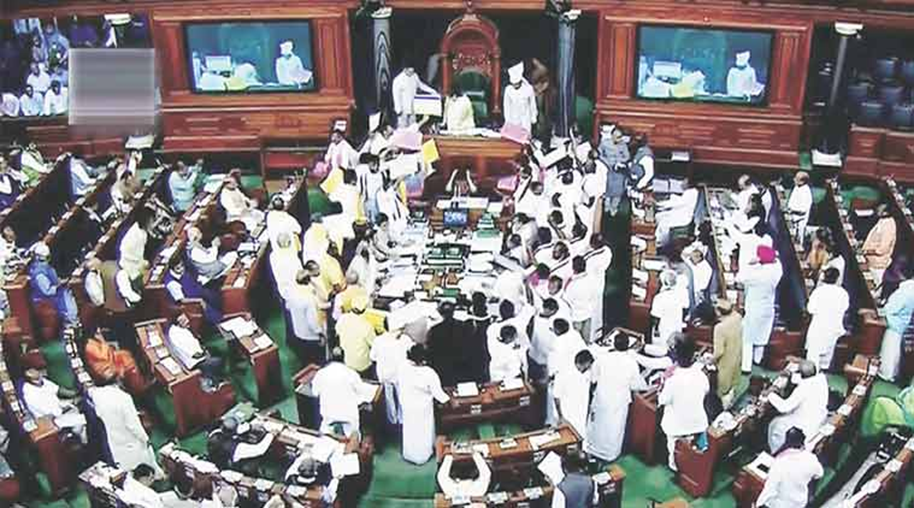
Lok Sabha Speaker is expected to apply the guillotine to fast-track the passage of the outstanding Demands for Grants for the Union Budget 2026-27. This procedural move follows a period of frequent disruptions in the House, which limited the time available for detailed discussions on various ministerial expenditures. By invoking this measure, the remaining budgetary demands will be put to a vote simultaneously to ensure the Finance Bill is passed within the constitutional deadline.
1. What is the Guillotine?
In legislative parlance, to “guillotine” means to bunch together and fast-track the passage of financial business or clauses of a bill. It is a procedural tool used primarily in the Lok Sabha during the Budget Session to ensure that the government meets its financial deadlines.
2. The Budgetary Process and Guillotine
The application of the guillotine is the final stage of the discussion on the Demands for Grants:
- Presentation & Recess: After the Budget is presented, the House goes into a recess for about three weeks. During this time, Departmentally Related Standing Committees (DRSCs) examine the Demands for Grants of various ministries.
- Discussion: When the House reassembles, the Business Advisory Committee (BAC) schedules discussions for specific ministries (usually high-stakes ones like Defence, Home, and External Affairs).
- The Deadline: On the last day allotted for the discussion on Demands for Grants, the Speaker puts all the remaining undiscussed demands to vote, whether they have been debated or not. This specific act is called “applying the guillotine.”
3. Classification as a Closure Motion
The guillotine is one of the four types of Closure Motions used to cut short the debate on a matter before the House:
- Simple Closure: A member moves that the matter has been sufficiently discussed and should be put to vote.
- Closure by Compartments: Clauses of a bill are grouped into parts; the debate occurs on the whole part, and the entire group is put to vote.
- Kangaroo Closure: Only important clauses are taken up for debate, and the intervening clauses are skipped and taken as passed.
- Guillotine Closure: Undiscussed clauses of a bill or resolution are put to vote along with the discussed ones due to a lack of time.
4. Constitutional and Functional Necessity
- Article 113: Mandates that any expenditure from the Consolidated Fund of India (other than charged expenditure) must be submitted to the Lok Sabha in the form of Demands for Grants.
- Financial Year Deadlines: The government must have the Appropriation Bill and Finance Bill passed before the new financial year begins on April 1st to ensure it has the legal authority to spend money.
Q. With reference to the 'Guillotine' procedure in the Indian Parliament, consider the following statements:

1. It is a procedural exercise that can be invoked in both the Lok Sabha and the Rajya Sabha during the Budget Session.

2. It is applied only to those Demands for Grants that have been discussed but not yet voted upon.

3. It is a form of closure motion intended to ensure the timely passage of the Finance Bill.

How many of the above statements are correct?
(a) Only one
(b) Only two
(c) All three
(d) None

Solution: A (Only one)

•	STATEMENT 1 IS INCORRECT: The Rajya Sabha has no power to vote on Demands for Grants; it can only discuss them. Therefore, the guillotine, which involves putting demands to a vote, is a procedure exclusive to the Lok Sabha.
•	STATEMENT 2 IS INCORRECT: The guillotine is applied specifically to undiscussed demands for grants (along with discussed ones) to ensure they are all passed together before the time limit expires.
•	STATEMENT 3 IS CORRECT: The guillotine is indeed a specialized form of Closure Motion used to conclude the financial business of the House within the allotted timeframe.