Context
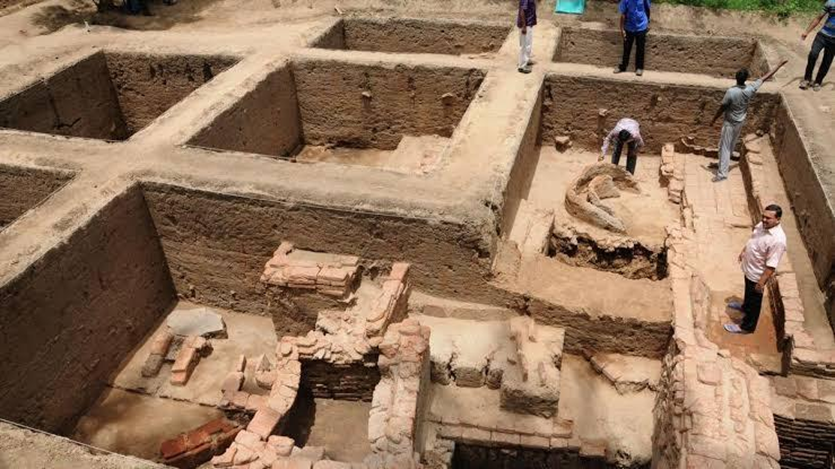
The Archaeological Survey of India (ASI) has officially granted permission to the Tamil Nadu State Department of Archaeology (TNSDA) to begin excavations at eight historical sites across the state. This follows a period of administrative delays and is crucial because the primary excavation window in Tamil Nadu is limited (January to July) due to the monsoon cycle.
1. Key Excavation Sites and Locations
| Archaeological Site | District | Significance / Note |
| Keeladi (and its clusters) | Sivaganga | Entering its 11th phase of excavation; evidence of an urban civilization on the banks of the Vaigai River. |
| Pattanamarudhur | Thoothukudi | Coastal/Interior research potential. |
| Karivalamvanthanallur | Tenkasi | Expansion of the Sangam era footprint. |
| Manikollai | Cuddalore | Located in the northern coastal belt. |
| Adichanur | Villupuram | Note: Not to be confused with Adichanallur in Thoothukudi. |
| Vellalore | Coimbatore | Historic trade hub known for Roman coin finds. |
| Telunganur-Mangadu | Salem | Research into Iron Age/Megalithic cultures. |
| Nagapattinam | Nagapattinam | Significant for maritime history and Buddhist influence. |
2. About Keeladi
Location: Tamil Nadu, on the banks of the Vaigai River.
Period: Carbon dating suggests 6th century BCE to 1st century CE, roughly overlapping with Sangam Age.
Significance: Confirms urban settlement and advanced culture in Tamilakam much earlier than previously thought.
3. Material Culture and Daily Life
- Artifacts found: Pottery, beads, iron tools, graffiti on pots, terracotta figurines.
- Indicates trade, craft specialization, and literacy—like other ancient Indian regions:
- Similar to Northern Iron Age settlements (like Ujjain, Mathura) in use of iron tools.
- Script resemblance to Tamil-Brahmi, which links to early Indian scripts evolution
4. Urbanization in Ancient India
- Traditionally, urbanization is associated with Indus Valley Civilization (c. 3300–1300 BCE).
- Keeladi shows continuity of urban settlements in South India post-Harappan decline, implying:
- Advanced urban planning (brick structures, street layouts)
- Drainage and water management systems
5. Trade and External Contacts
- Beads, pottery styles, and semi-precious stones suggest:
- Internal trade within Tamilakam
- Possibly maritime contacts (like Roman trade with South India, 1st century BCE onward)
Which of the following statements correctly places Keeladi in the context of Ancient Indian history?

(a) It was the first urban settlement in India
(b) It shows South India had urbanization, trade, and literacy alongside North India after Harappan decline
(c) It proves Indus Valley Civilization extended to Tamil Nadu
(d) It was primarily a Roman colony in South India

Answer: B

Explanation:
Previously, it was believed that urbanization in South India occurred much later than in the Gangetic plains (North India). Keeladi’s findings (dated to 6th century BCE) prove that a highly developed, literate (Tamil-Brahmi script), and urban society existed in the Vaigai river valley contemporary to the Mahajanapada period in the North.