
Context
Recently, the League of Arab States (LAS) and India successfully concluded the second India-Arab Foreign Ministers’ Meeting in New Delhi, resulting in the adoption of the “New Delhi Declaration.”
1. Overview of the League of Arab States (LAS)
- Establishment: The League was founded on March 22, 1945, in Cairo, Egypt, following the signing of the Alexandria Protocol (1944).
- Headquarters: It is permanently headquartered in Cairo, Egypt.
- Nature of Organization: It is a voluntary intergovernmental association of Arabic-speaking nations designed to strengthen ties, coordinate political activities, and safeguard the sovereignty of member states.
- Charter: The Pact of the League of Arab States serves as the founding treaty, stipulating that only independent Arab states may join.
2. Membership and Geography
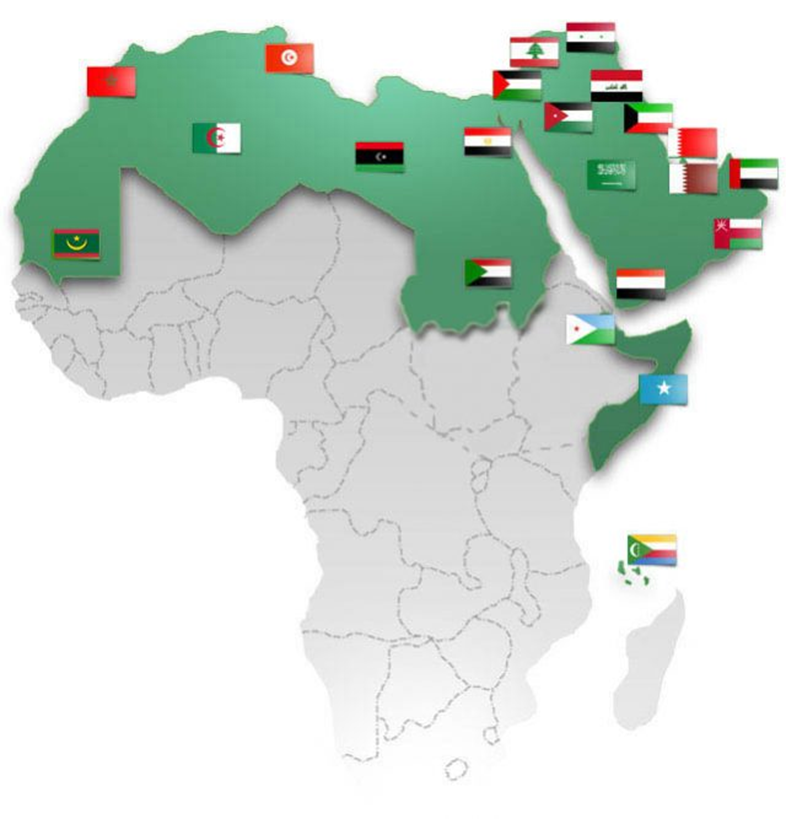
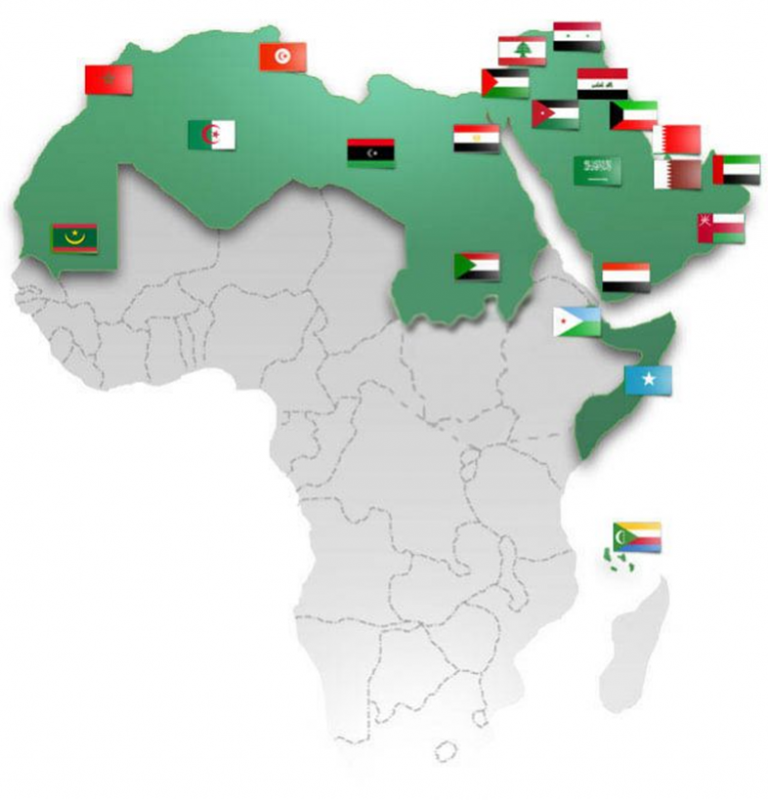
- Current Members: There are 22 member states spanning North Africa, the Horn of Africa, and West Asia.
- Founding Members: Egypt, Iraq, Jordan, Lebanon, Saudi Arabia, Syria, and Yemen (North Yemen at the time).
- Geographic Reach: The region extends from the Atlantic Ocean in the west to the Arabian Sea in the east, and from the Mediterranean Sea in the north to the Indian Ocean in the southeast.
- Observation Status: India is one of the five official Observer States, a status it has held since 2002 to facilitate closer diplomatic and economic coordination.
3. India and the League of Arab States
- Institutional Framework: Engagement is primarily conducted through the Arab-Indian Cooperation Forum (AICF), established in 2008.
- Strategic Ties: India views the LAS as a critical partner for energy security (sourcing over 50% of its crude oil) and as a destination for its 9 million-strong diaspora.
- New Delhi Declaration (2026): The latest summit emphasized a “Zero Tolerance” policy toward terrorism and sought a just solution for the Palestinian people based on the 1967 borders.
- Economic Corridors: The League is a central stakeholder in the proposed India-Middle East-Europe Economic Corridor (IMEC), aimed at enhancing global supply chain resilience.
Q. With reference to the League of Arab States (LAS), consider the following statements:
1. Every member state has one vote in the Council, and decisions are binding on all members regardless of whether they voted in favor.
2. India holds the status of a Permanent Observer in the League of Arab States.
3. The "Alexandria Protocol" of 1944 provided the foundational framework for the establishment of the League.
4. All member states of the Gulf Cooperation Council (GCC) are also members of the League of Arab States.

Which of the statements given above are correct?
(a) Only one statement
(b) Only two statements
(c) Only three statements
(d) All four statements

Correct Answer: (c) Only three statements
Explanation:
STATEMENT 1 IS INCORRECT: According to the LAS Charter, decisions made by the Council are binding only on those states that have voted for them. If a decision is made by consensus, it is binding on all.
STATEMENT 2 IS CORRECT: India was granted Observer Status in 2002, making it the first non-Arab country to have such a formal link with the organization.
STATEMENT 3 IS CORRECT: The Alexandria Protocol signed in 1944 by Egypt, Iraq, Lebanon, Syria, and Transjordan (Jordan) laid the groundwork for the formal Pact signed in 1945.
STATEMENT 4 IS CORRECT: All six members of the GCC (Saudi Arabia, UAE, Qatar, Kuwait, Oman, and Bahrain) are integral members of the 22-nation League of Arab States.

Context Recently, the “Gorilla Conservation Action Plan 2026-2030” was discussed at a…

Context Recently, the Union Finance Minister announced the development of “Turtle…
Context Recently, the Union Finance Minister announced a dedicated mission for cocoa and cashew in…
Context Recently, the League of Arab States (LAS) and India successfully concluded the second…
Context Recently, the Union Finance Minister tabled the report of the 16th Finance Commission in…

After Reading This Article You Can Solve This UPSC Mains Model Question: Discuss the major…
After Reading This Article You Can Solve This UPSC Mains Model Question: India faces increasing…
Context Recently, the nation observed the 649th birth anniversary of Sant Guru Ravidas on February…

Context Recently, while presenting the Union Budget 2026–27, Finance Minister Nirmala Sitharaman…