
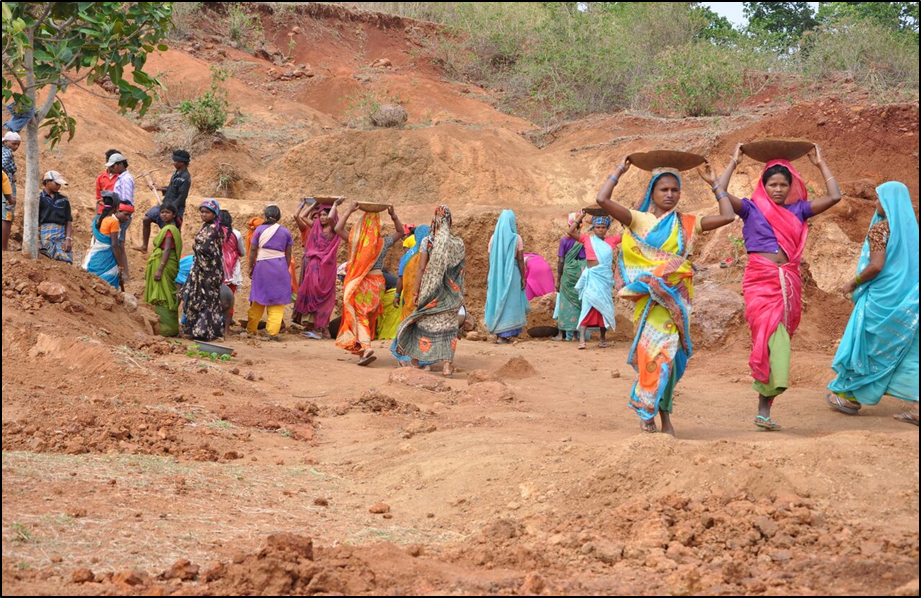
About MGNREGA
- Originally enacted as the National Rural Employment Guarantee Act (NREGA), 2005 and renamed MGNREGA in 2009.
- It is a rights-based, demand-driven wage employment programme.
- It provides a statutory guarantee of at least 100 days of unskilled manual work in a financial year to every eligible rural household whose adult members volunteer to work.
Constitutional Connection
- Article 21: Guarantees the Right to Life and Personal Liberty, including life with dignity through judicial interpretation.
- Article 41: Directs the State to provide for the Right to Work, Education and Public Assistance, subject to its economic capacity.
- MGNREGA employment is a statutory entitlement, not a Fundamental Right.
Key Features
1. Eligibility
- Available to rural households.
- Adult members aged 18 years and above can seek employment.
- Employment is provided for unskilled manual work.
2. Employment Guarantee
- Employment should be provided within 15 days of demand.
- Failure to provide employment may entitle the applicant to an unemployment allowance.
3. Worksite Proximity
- Work should ordinarily be provided within a 5 km radius of the applicant’s village.
- If work is provided beyond 5 km, the worker is entitled to additional wages to meet transportation and living expenses.
4. Role of Panchayati Raj Institutions
- MGNREGA follows a decentralised planning and implementation framework.
- Gram Sabha plays an important role in recommending and monitoring works.
- Gram Panchayats are responsible for implementing at least 50% of the works.
5. Social Audit
- Section 17 of the MGNREGA Act provides for social audit of all works executed under the scheme.
- It promotes transparency, accountability and community participation.
6. Wage Payment
- Wages should ordinarily be paid on a weekly basis and, in any case, within 15 days.
- Delayed payments may attract compensation, as per the prescribed rules.
Conclusion
MGNREGA remains a key rural employment and livelihood security programme, combining a statutory employment guarantee with decentralised planning, social audit and asset creation. Its effective implementation is crucial for ensuring timely employment, wage payments and inclusive rural development.
| This concept has also been mentioned in the following article: MGNREGA: Supreme Court Calls It a “Good, Effective Scheme” |