
Why In the News?
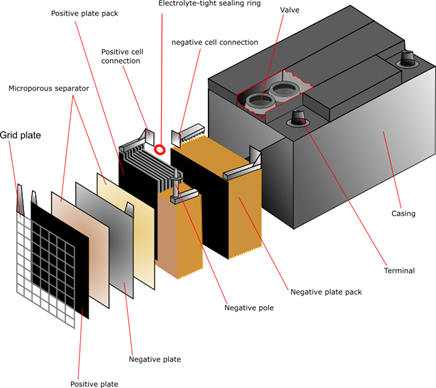
Recently, reports from organizations like the Institute for Energy Economics and Financial Analysis (IEEFA) have highlighted that only 2.8% (1.4 GWh) of the targeted 50 GWh manufacturing capacity for Advanced Chemistry Cells has been commissioned.
This underscores significant implementation challenges four years after the scheme’s launch by the Ministry of Heavy Industries.
- Key Features of the Advanced Chemistry Cells PLI Scheme
- Objective: To establish Giga-scale manufacturing facilities in India for Advanced Chemistry Cells to reduce import dependence (primarily from China) and support the electric vehicle (EV) transition.
- Implementing Ministry: The scheme is administered by the Ministry of Heavy Industries (MHI).
- Total Outlay: A budgetary allocation of ₹18,100 crore.
- Capacity Target: The program aims to achieve a total manufacturing capacity of 50 GWh of ACC, along with an additional 5 GWh for “Niche” ACC technologies.
- Technology Agnostic: The scheme does not favor any specific battery chemistry (e.g., Lithium-ion, Sodium-ion, or Solid-state). Instead, it provides higher incentives for technologies that offer better performance parameters like energy density and cycle life.
- Domestic Value Addition (DVA): Beneficiary firms must achieve a minimum DVA of 25% within two years and escalate it to 60% within five years.
- Investment Commitment: Bidders are required to invest a minimum of ₹225 crore per GWh of committed capacity.
- Implementation Mechanism
- Selection Process: Beneficiaries are selected through a transparent Quality and Cost Based Selection (QCBS) mechanism via a global tender.
- Incentive Disbursement: Incentives are not given upfront; they are disbursed over five years based on actual sales and the level of domestic value addition achieved.
- Gestation Period: A two-year window is provided for setting up the manufacturing facility before the five-year performance period begins.
- Challenges and Recent Progress
- Commissioning Status: As of late 2025, Ola Electric is the primary firm to have commissioned capacity (1.4 GWh). Other winners like Reliance New Energy and Rajesh Exports are in various stages of project execution.
- Bottlenecks: Major hurdles include the lack of domestic technical expertise, delays in securing visas for international equipment specialists, and the high cost of raw materials like Lithium and Cobalt which are still largely imported.
Q. With reference to the ‘National Programme on Advanced Chemistry Cell (ACC) Battery Storage’ PLI scheme, consider the following statements:
1. It is a Central Sector Scheme implemented by the Ministry of New and Renewable Energy.
2. The scheme is technology-agnostic, allowing manufacturers to choose any advanced battery chemistry.
3. To claim incentives, beneficiary firms must achieve at least 60% domestic value addition within the first year of production.

How many of the statements given above are correct?
(a) Only one
(b) Only two
(c) All three
(d) None

Correct Answer: A (Only one)
Explanation:
STATEMENT 1 INCORRECT: While it relates to renewable energy storage, it is implemented by the Ministry of Heavy Industries, not MNRE.
STATEMENT 2 CORRECT: The scheme is indeed technology-agnostic to encourage the latest innovations in battery science.
STATEMENT 3 INCORRECT: The target is to reach 25% DVA within two years and 60% DVA within five years, not within the first year.





Context Recently, the “Gorilla Conservation Action Plan 2026-2030” was discussed at a…

Context Recently, the Union Finance Minister announced the development of “Turtle…

Context Recently, the Union Finance Minister announced a dedicated mission for cocoa and cashew in…

Context Recently, the League of Arab States (LAS) and India successfully concluded the second…
Context Recently, the Union Finance Minister tabled the report of the 16th Finance Commission in…

After Reading This Article You Can Solve This UPSC Mains Model Question: Discuss the major…

After Reading This Article You Can Solve This UPSC Mains Model Question: India faces increasing…

Context Recently, the nation observed the 649th birth anniversary of Sant Guru Ravidas on February…
Context Recently, while presenting the Union Budget 2026–27, Finance Minister Nirmala Sitharaman…