
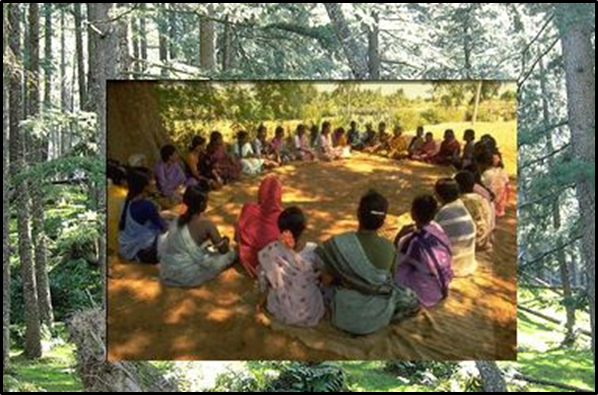
About PESA Act, 1996
- The PESA Act, 1996 extends the provisions of Part IX of the Constitution relating to Panchayats to Scheduled Areas with certain exceptions and modifications.
- It was enacted on 24 December 1996 as Act No. 40 of 1996.
- It seeks to strengthen self-governance and participatory democracy in tribal areas by giving greater powers to Gram Sabhas.
- It applies to the Scheduled Areas under Article 244(1), i.e. areas covered by the Fifth Schedule.
- The Ministry of Panchayati Raj is the nodal ministry for PESA implementation.
I. Gram Sabha & Self-Governance
- Gram Sabha: Recognises the Gram Sabha as the key institution for traditional self-governance and community decision-making.
- Customary Practices: State laws must be consistent with customary law, social and religious practices, and traditional management of community resources.
- Community Resources: Gram Sabha and Panchayats are empowered to safeguard community resources and traditional practices.
- Development Plans: Gram Sabha is empowered to approve plans, programmes and projects for social and economic development.
- Beneficiary Selection: Gram Sabha is responsible for identifying or selecting beneficiaries under poverty alleviation and other programmes.
- Fund Utilisation: Panchayats at the village level must obtain Gram Sabha certification of utilisation of funds for approved plans and programmes
II. Powers over Natural Resources & Economy
- Minor Forest Produce: Gram Sabha/Panchayats are empowered to exercise control over minor forest produce.
- Village Markets: Gram Sabha/Panchayats have powers over village markets.
- Money Lending: Gram Sabha/Panchayats have powers to regulate money lending to Scheduled Tribes.
- Intoxicants: Gram Sabha/Panchayats have powers to enforce prohibition or regulate the sale and consumption of intoxicants.
- Land Alienation: Gram Sabha/Panchayats are empowered to prevent alienation of tribal land and take appropriate action to restore unlawfully alienated land.
- Minor Minerals: Recommendations of the Gram Sabha or Panchayats at the appropriate level are mandatory before granting prospecting licences or mining leases for minor minerals and before auctioning minor mineral concessions.
III. Land Acquisition & Rehabilitation
- Land Acquisition: Gram Sabha or Panchayats at the appropriate level must be consulted before acquisition of land in Scheduled Areas and before resettling or rehabilitating affected persons.
- Development Projects: PESA seeks to ensure community participation in decisions affecting tribal land and resources.
IV. Political Representation
- Reservation of Seats: Reservation in Panchayats in Scheduled Areas must be in proportion to the population of the relevant communities.
- ST Reservation: Reservation for Scheduled Tribes shall not be less than one-half of the total seats.
- Chairpersons: All seats of Chairpersons at all levels of Panchayats in Scheduled Areas are reserved for Scheduled Tribes.
- Nomination: State Governments may nominate members belonging to Scheduled Tribes that have no representation at the intermediate or district Panchayat level.
V. Significance of PESA, 1996
- Tribal Self-Governance: Strengthens Gram Sabha-based self-governance in Scheduled Areas.
- Democratic Decentralisation: Extends Panchayati Raj while protecting tribal customs and traditional institutions.
- Resource Rights: Enhances community control over land, forests, minor forest produce, markets and natural resources.
- Tribal Empowerment: Provides greater participation of Scheduled Tribes in local decision-making.
- Protection of Tribal Land: Provides institutional mechanisms to prevent alienation of tribal land.
- Participatory Development: Gives Gram Sabhas a greater role in development planning, beneficiary selection and monitoring of public funds.
| This concept has been elaborately discussed in the Pradhan Mantri Janjatiya Vikas Mission (PMJVM). |