
Context :
The global AI landscape is transitioning toward domain-specific computing. Google’s Ironwood TPU represents the pinnacle of this shift, offering a specialized alternative to traditional silicon to meet the massive computational demands of Generative AI.
About Tensor Processing Units (Tpus):
- Specialization: A TPU is a custom Application-Specific Integrated Circuit (ASIC) engineered exclusively for machine learning (ML) and deep learning.
- Origin: Developed by Google (2016) to optimize internal services like Search, Translate, and Photos.
- Current Role: Serves as a fundamental pillar in global AI infrastructure, particularly within data centers and cloud computing environments.
Why “Tensors” Matter?
- Mathematical Core: AI models utilize Tensors—multidimensional arrays of numbers—to process vast data and generate predictions.
- Computational Optimization: TPUs are architecturally tuned for high-speed tensor computations through:
- Massive Parallelism: Executing thousands of simultaneous calculations per clock cycle.
- Energy Efficiency: Delivering high performance with significantly lower power consumption compared to GPUs.
- Task-Specific Circuitry: Dedicated hardware paths eliminate redundant operations found in general-purpose chips.
Comparative Framework: CPU Vs. GPU Vs. TPU
| Feature | CPU | GPU | TPU |
| Primary Design | General-purpose logic | Graphics & parallel tasks | AI/ML specific (ASIC) |
| Execution | Serial (one-by-one) | Parallel (many at once) | Matrix-based parallelism |
| Best Use Case | OS tasks, daily apps | Gaming, 3D, diverse ML | LLMs, Deep Learning |
| Power Profile | High flexibility | High consumption | Optimized/Efficient |
Q. With respect to Tensor Processing Units (TPUs), consider the following statements:
1. They are classified as Application-Specific Integrated Circuits (ASICs) designed to optimize deep learning workloads.
2. TPUs are less energy-efficient than Graphics Processing Units (GPUs) when processing massive datasets.
3. The architecture of a TPU is specifically optimized for tensor computations and matrix-heavy operations.

Which of the statements given above are correct?
(a) 1 and 2 only
(b) 2 and 3 only
(c) 1 and 3 only
(d) 1, 2, and 3

Solution
Statement 1 is correct: A TPU is a custom Application-Specific Integrated Circuit (ASIC). Unlike general-purpose chips, ASICs are hardwired for a specific task—in this case, accelerating the stages of machine learning (training and inference).
Statement 2 is incorrect: TPUs are generally more energy-efficient than GPUs for massive AI datasets. Because they are stripped of the hardware required for non-AI tasks (like graphics rendering or general logic), they achieve a significantly higher performance-per-watt ratio.
Statement 3 is correct: The TPU architecture features specialized Matrix Multiplication Units (MXUs). It uses a "systolic array" design that allows it to process tensors (multidimensional arrays) with high throughput and minimal memory access.
Practice Today’s MCQs





Why In News? Recently, Lok Sabha Speaker Om Birla announced that starting from the Budget Session…
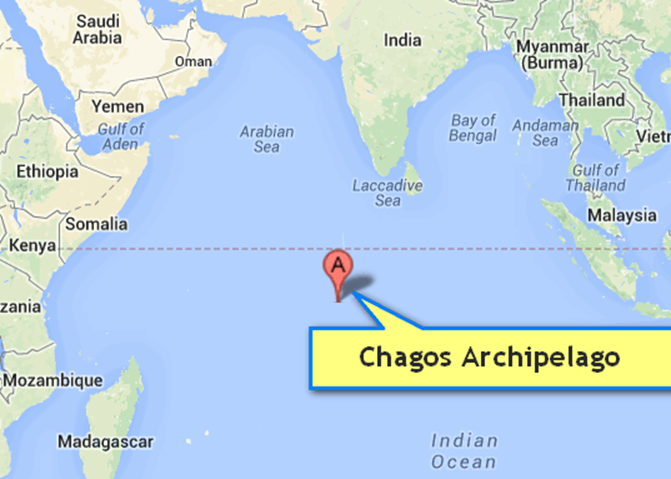
Why In News? 1. Geographical Profile 2. Historical Background 3. The Diego Garcia Base 4. Legal and…
Why In the News? 1. Meaning of Constitutional Tort 2. Legal Basis of Constitutional Tort in India…

Why In the News? 1. Overview of Industry 5.0 Industry 5.0, also known as the Fifth Industrial…

After Reading This Article You Can Solve This UPSC Mains Model Question: Discuss the significance of…

After Reading This Article You Can Solve This UPSC Mains Model Questions: Examine the significance…
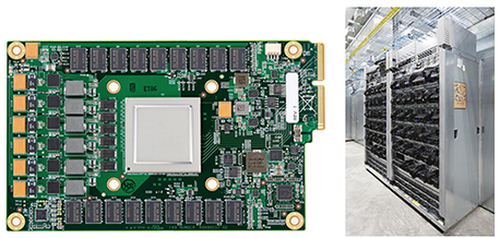
Context : The global AI landscape is transitioning toward domain-specific computing. Google’s…

After Reading This Article You Can Solve This UPSC Mains Model Question: In a “changing world…

Why In the News? 1. Geographical Profile: Yemen For the UPSC Prelims, mapping is the most critical…