
Context
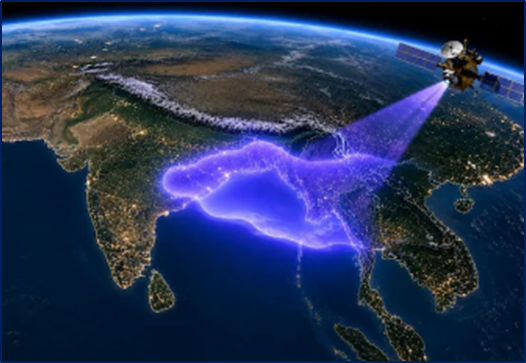
- Recently, Scientists have detected an unusually high concentration of ozone in the upper atmosphere over the North Bay of Bengal.
- The ozone-rich layer was observed at an altitude of approximately 21–23 km and persisted for more than 24 hours.
- The observation provides quantitative experimental evidence of stratospheric ozone redistribution over the Indian subtropical region during winter.
What Was Discovered?
- An unusually thick ozone-rich layer was detected over the North Bay of Bengal.
- It was located at around 21–23 km above Earth’s surface, within the stratosphere.
- The ozone concentration was significantly higher than normally observed over eastern India.
- The layer remained present for more than a day, allowing scientists to study its evolution.
- The event helped researchers understand how atmospheric circulation, wind patterns and vertical air movements can redistribute ozone within the atmosphere.
Why is the Discovery Significant?
- It provides direct quantitative experimental evidence of the redistribution of stratospheric ozone over the Indian subtropical region during winter.
- It demonstrates that ozone distribution is dynamic, rather than being uniformly concentrated across the stratosphere.
- The findings can improve understanding of:
- Stratosphere–troposphere interactions
- Atmospheric circulation and vertical transport
- Regional ozone variability
- Factors influencing UV radiation reaching Earth’s surface
Ozone Layer – Basic Facts
- Ozone (O₃) is a molecule consisting of three oxygen atoms.
- Most atmospheric ozone is concentrated in the stratosphere, forming the ozone layer.
- The highest ozone concentrations generally occur at around 25–30 km altitude, although the altitude of peak concentration can vary geographically and seasonally.
- The ozone layer is crucial for life because it absorbs a major portion of the Sun’s harmful ultraviolet (UV) radiation.
- Ozone is therefore important for protecting human health, ecosystems and other forms of life from excessive UV exposure.
Ultraviolet (UV) Radiation
- UV radiation is a form of electromagnetic radiation that is invisible to the human eye.
- It has wavelengths of approximately 100–400 nanometres (nm).
- Based on wavelength, UV radiation is broadly classified into UVA, UVB and UVC.
| Type | Wavelength | Reaches Earth’s Surface | Major Significance |
| UVA | 315–400 nm | Mostly reaches the surface | Skin ageing, tanning and DNA damage |
| UVB | 280–315 nm | Partially reaches the surface | Sunburn, DNA damage and Vitamin D synthesis |
| UVC | 100–280 nm | Almost completely absorbed | Highly energetic; important for germicidal applications |
| Point to Remember: Stratospheric ozone primarily protects Earth by absorbing UV radiation, particularly the more biologically harmful shorter-wavelength UV radiation. |
About the NeTRAD-ASMA Campaign
- The study was conducted under Phase-I of the NeTRAD-ASMA campaign.
- It is a nationwide scientific programme involving research institutions across India.
- The campaign aims to improve understanding of complex atmospheric processes, particularly those governing the movement and distribution of atmospheric constituents such as ozone.
- It uses multiple observational techniques along with atmospheric modelling to study atmospheric circulation and ozone transport.
Participating Institution: ARIES
Aryabhatta Research Institute of Observational Sciences (ARIES)
- ARIES is an autonomous research institute under the Department of Science and Technology (DST), Government of India.
- It is located at Nainital, Uttarakhand.
- ARIES contributed to the campaign through its atmospheric observation capabilities, including the Stratosphere–Troposphere (ST) Radar.
How Was the Ozone Event Studied?
The unusual ozone event was investigated using multiple complementary observational and modelling techniques:
1. Stratosphere–Troposphere (ST) Radar
- An indigenously developed 206.5 MHz ST Radar at ARIES, Nainital was used.
- It helped study atmospheric motions and vertical air movements in the upper atmosphere.
2. Weather Balloons
- Weather balloons carrying scientific instruments were launched to obtain measurements of:
- Ozone concentration
- Atmospheric conditions
- Vertical variations in the atmosphere
3. Satellites
Observations from satellites were used to complement ground-based measurements, including:
- Aura MLS (Microwave Limb Sounder)
- INSAT-3DR
4. Atmospheric Models
- Advanced atmospheric models were used to combine and interpret the observations.
- These models helped identify the atmospheric circulation and transport processes responsible for the unusual ozone accumulation.
Conclusion
The detection of an unusually ozone-rich layer over the North Bay of Bengal highlights the dynamic nature of stratospheric ozone distribution over the Indian region. The study is significant because it combines ground-based radar, balloon observations, satellite data and atmospheric modelling to provide experimental evidence of ozone redistribution and improve understanding of atmospheric circulation and vertical transport processes over the Indian subtropics.