
After Reading This Article You Can Solve This UPSC Mains Model Question:
Universal Adult Franchise is the cornerstone of Indian democracy, yet urban electoral processes are leading to increasing disenfranchisement.” Examine the challenges and suggest reforms. 15 Marks (GS-2, Polity)
Introduction
- The principle of universal adult franchise, which guarantees every adult citizen the right to vote without discrimination, forms the moral and constitutional foundation of India’s democracy; however, in rapidly urbanising areas, this right is increasingly being undermined through administrative processes that exclude the poor, migrants, and marginalised groups.
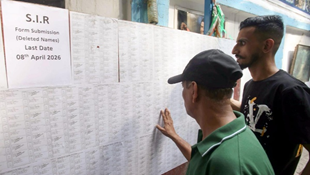
- The ongoing debate around the Special Intensive Revision (SIR) of electoral rolls has exposed a deeper structural crisis of urban electoral disenfranchisement, calling for urgent attention from institutions and society.
Background: Understanding Universal Adult Franchise in Urban India
I. Meaning of Universal Adult Franchise
- Universal adult franchise refers to the right of every citizen above a prescribed age (18 years in India) to vote in elections without discrimination based on caste, class, gender, religion, or economic status. It reflects the democratic principle of “one person, one vote, one value”, ensuring political equality.
II. Pre-Independence Roots: A Contested Right
Under colonial rule, the right to vote was severely restricted tied to property ownership, tax payment, and literacy effectively confining political participation to a narrow elite and excluding the vast majority of Indians, particularly the poor, Dalits, and women.
- Government of India Act, 1919 (Montagu-Chelmsford Reforms): This Act introduced limited franchise but restricted voting to a small propertied class, excluding the overwhelming majority of Indians from political participation.
- Government of India Act, 1935: The franchise was widened marginally extending to approximately 14% of the total population but continued to exclude the poor, most women, and the landless, reflecting the colonial logic of exclusion.
- Constituent Assembly Debates (1946–1949): The Constituent Assembly, under the leadership of Dr. B.R. Ambedkar, decisively rejected the colonial tradition of restricted franchise and adopted universal adult suffrage without any qualification of property, literacy, caste, religion, or gender a revolutionary democratic commitment for a newly independent, largely illiterate nation.
III. Post-Independence Evolution: Deepening the Franchise
India’s first General Elections (1951–52) were a defining moment in world democratic history, as approximately 17.3 crore voters exercised their right to vote for the first time, making it the largest electoral exercise undertaken by any democracy at that time.
- Expansion of Franchise through 61st Constitutional Amendment Act, 1988: The voting age was lowered from 21 years to 18 years, bringing approximately 5 crore additional young citizens into the electoral fold and significantly deepening the democratic base.
- Electronic Voting Machines (EVMs), 1998: The nationwide introduction of Electronic Voting Machines improved the accessibility and efficiency of elections, particularly for first-time and differently-abled voters.
- Systematic Voters’ Education and Electoral Participation (SVEEP) Programme, 2009: The Election Commission of India launched this programme specifically to enhance voter registration and participation among marginalised and underrepresented groups, including urban migrants and slum dwellers.
- Indrajit Gupta Committee Recommendations: This led to the adoption of Electors Photo Identity Cards (EPIC) to prevent impersonation while ensuring the genuine voter is not excluded.
IV. Constitutional and Legal Framework
- Article 326 of the Constitution of India: This is the primary constitutional provision that guarantees the right to vote through elections to the Lok Sabha and state legislative assemblies to every citizen of India who is not less than 18 years of age and is not otherwise disqualified.
- Article 324 of the Constitution of India: This article vests the superintendence, direction, and control of elections in the Election Commission of India (ECI), an independent constitutional body responsible for ensuring free and fair elections.
- Article 325 of the Constitution of India: This article explicitly prohibits the exclusion of any person from the electoral roll on grounds of religion, race, caste, or sex, directly reinforcing the non-discriminatory character of the franchise.
- The Representation of the People Act, 1950: This legislation governs the preparation, maintenance, and revision of electoral rolls, prescribing the qualifications for voter registration and the procedure for inclusion and deletion of names making it the primary statutory framework directly relevant to the SIR controversy.
- The Representation of the People Act, 1951: This Act governs the actual conduct of elections, including qualifications for candidates, offences, and the resolution of election disputes through Election Tribunals and High Courts.
V. Key Judicial Pronouncements
- Mohan Lal Tripathi v. District Magistrate, Rae Bareli (1992): The Supreme Court held that the right to vote, though a statutory right, is not an ordinary right, it is a constitutional right of the highest significance, and any arbitrary deletion from the electoral roll without due process violates the principles of natural justice.
- People’s Union for Civil Liberties (PUCL) v. Union of India (2003): The Supreme Court recognised the right of voters to know the criminal antecedents, assets, and educational qualifications of candidates significantly expanding the quality and substance of democratic participation beyond mere registration to informed voting.
- Lily Thomas v. Union of India (2013): The Supreme Court struck down Section 8(4) of the Representation of the People Act, 1951, holding that a Member of Parliament or a state legislator convicted of a crime and sentenced to two or more years of imprisonment is immediately disqualified reinforcing that the integrity of the electorate and the elected must go hand in hand.
Significance of Universal Adult Urban Franchise in India
In the urban context, universal adult franchise assumes greater importance due to the presence of diverse, mobile, and economically vulnerable populations, making electoral inclusion essential for equitable governance.
- Voice for the Marginalised: Universal franchise acts as a crucial equaliser by enabling slum dwellers, migrant workers, and informal sector populations to elect representatives who address basic needs such as housing, water, sanitation, and livelihoods, thereby making urban governance more inclusive.
- Instrument of Economic Justice: The right to vote translates political equality into economic demands, allowing vulnerable groups to seek better wages, social security, and redistribution of resources, thus linking democracy with material outcomes.
- Ensuring Accountable Urban Governance: Urban Local Bodies such as municipal corporations become truly representative and accountable only when all sections, including migrants and marginalised communities, actively participate in elections.
- Representation of Migrant Population: With India’s urban population projected to reach around 600 million by 2031 (World Bank), ensuring voting rights for migrant workers is essential so that governance reflects the needs of those who sustain urban economies.
- Strengthening Democratic Legitimacy and Social Cohesion: Inclusive electoral rolls build trust in institutions and strengthen the social contract, while exclusion of minorities and vulnerable groups leads to alienation and weakened legitimacy.
- Gateway to Other Rights: Being enrolled as a voter often facilitates access to welfare schemes, housing benefits, and identity-linked services, making the right to vote a foundational enabler of broader socio-economic rights.
Challenges to Urban Franchise and Democratic Integrity
1. Exclusion of the Urban Poor through the SIR Process: The Special Intensive Revision (SIR) of electoral rolls, though intended to ensure accuracy, has in practice resulted in the exclusion of urban poor, migrant workers, and marginalised communities due to its reliance on strict documentary proof of residence.
- Massive Deletion Trends: Recent data illustrates a staggering scale of voter removal across major industrial and metropolitan hubs:
- Ghaziabad (UP): ~36.67% of voters removed, primarily affecting the mobile workforce.
- Lucknow (UP): ~30.88% of names deleted post-revision.
- Patna (Bihar): A massive 16.5 lakh names removed from draft rolls.
- Mumbai (Maharashtra): Under the 2025 SIR, 14 lakh names were deleted; approximately 50% of informal housing residents are currently unregistered or removed.
- Gulshan Colony (Kolkata): An extreme case where 90% of voters were found missing from the rolls.
- Disproportionate Impact on Marginalised Groups: Vulnerable groups such as Dalits, minorities, and informal workers face a dual burden, as they struggle both with initial registration and with higher rates of deletion, leading to deepened disenfranchisement.
2. Selective Filtration through Rigid Documentation: The SIR process results in a selective filtration of the electorate, where documentation requirements exclude the poor and mobile populations.
- Rigid Documentation Requirements: Proofs such as long-term residence records (e.g., from 2002/2005) are often impossible for migrants and slum dwellers to provide.
- Migration as a Structural Barrier: Since internal migration is central to urbanisation, requiring stable residence disproportionately excludes migrant workers, who form the backbone of urban economies.
- Informal Settlements and Data Reality: With nearly 40% of urban population living in slums (World Bank), the absence of formal address proof makes mass exclusion inevitable under current systems.
3. Compromised Secrecy of the Ballot: The principle of secret ballot, essential for free and fair elections, faces challenges in urban contexts.
- Booth-Level Disclosure: Voting patterns revealed at the booth level can, in smaller or dense localities, allow inference of community-wise voting behaviour, exposing voters to pressure, intimidation, or retaliation.
4. Urban Youth Exclusion and Participation Gap:
- Around 28% of India’s urban population is below 18 years, making them ineligible to vote. When combined with non-registration and deletions, this creates a significant gap between total population and actual electoral participation, weakening democratic representation.
5. Weak Urban Electoral Infrastructure:
- Low Voter Registration: Urban areas record lower registration rates due to high mobility, limited outreach in informal settlements, perceived weak link between voting and benefits.
- Absence of Migrant Voting Framework: The lack of a portable voter registration system forces migrants to remain registered in their home constituencies, leaving many effectively disenfranchised in practice.
Global Best Practices in Inclusive Electoral Participation
- Canada: Proactive Enumeration Model: Canada follows a door-to-door enumeration system, where election officials actively reach out to citizens, especially in low-income and transient communities, thereby reducing the burden of registration on individuals and ensuring wider inclusion.
- Brazil: Compulsory Voting with Accessibility: Brazil combines compulsory voting with targeted outreach in slums and informal settlements, resulting in high electoral participation and demonstrating that administrative support can overcome structural exclusion.
- Estonia: Digital and Remote Voting Systems: Estonia enables online voter registration and remote voting, allowing citizens to vote from anywhere, thus ensuring continuous electoral access for mobile and migrant populations.
Way Forward: Strategies for an Inclusive Franchise
- Reform the SIR Process Towards Inclusion: The Special Intensive Revision (SIR) must shift from a documentation-heavy model to a proactive outreach approach, with officials conducting registration drives in slums, labour markets, and informal settlements.
- Simplification of Residence Proof: Following the philosophy of former Chief Election Commissioner T.N. Seshan, an address should be defined as “where the person resides,” allowing for self-declaration or community verification for slum dwellers.
- Introduction of Totalizer Machines: To ensure the Confidentiality of the Franchise, the Election Commission should adopt Totalizers that aggregate results from several Electronic Voting Machines before declaration.
- Introduce Portable Voter Registration for Migrants: Amendments to the Representation of the People Act, 1950 should enable a portable registration system, allowing migrants to vote at their place of work or current residence without losing their original registration.
- Integrate Electoral Rolls with Digital Databases: Linking voter rolls with Aadhaar, MGNREGA records, urban local body data, and the National Population Register (NPR) can enable automatic and continuous updating, reducing exclusion.
- Ensure Due Process Before Deletions: Legal provisions should mandate that every voter deletion is preceded by: Individual notice, Field verification, Grievance redressal mechanism. This will prevent arbitrary mass deletions.
- Strengthen Secrecy of the Ballot: The system should ensure anonymisation or aggregation of booth-level data to prevent inference of community voting patterns, thereby protecting voter confidentiality.
- Enhance Role of Civil Society: Civil society organisations and academic institutions should be empowered to monitor electoral roll processes, audit deletions, and ensure transparency and accountability.
Conclusion
Universal adult franchise is not merely a constitutional guarantee but the foundation of India’s democratic identity; however, it loses meaning when administrative processes exclude vulnerable citizens from participation. Therefore, it is both a constitutional obligation and democratic necessity to reform urban electoral systems, ensure proactive inclusion, and protect the equal right to vote for every citizen, as the strength and legitimacy of democracy ultimately depend on the breadth and integrity of its franchise.