
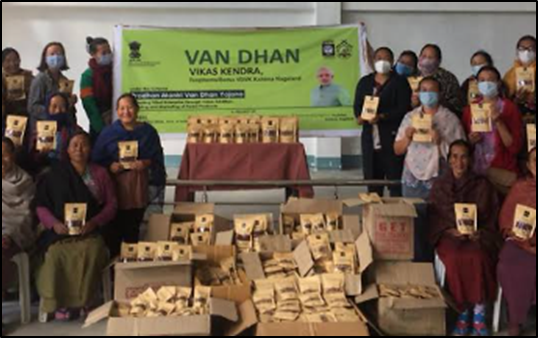
About Van Dhan Vikas Kendras (VDVKs)
- Van Dhan Vikas Kendras (VDVKs) are community-based centres aimed at promoting value addition and entrepreneurship among tribal communities dependent on Minor Forest Produce (MFP).
- The VDVK model is based on the Van Dhan Yojana, launched on 14 April 2018.
- Tribal gatherers are organised into Self-Help Groups (SHGs) and clustered into VDVKs.
- A typical VDVK comprises 15 SHGs with around 300 tribal members, with at least 60% members belonging to Scheduled Tribes.
- VDVKs help tribal communities move from raw produce collection to processing, value addition, branding and marketing.
I. Key Functions & Support
- Skill Development: Training in scientific harvesting, sustainable collection and value addition.
- Primary Processing: Provision of equipment such as cutting and sieving tools, decorticators, dryers and packaging equipment.
- Infrastructure Support: Facilities can be established in beneficiaries’ homes, government buildings or Gram Panchayat buildings.
- Working Capital: Financial support facilitated through banks, financial institutions and NSTFDC.
- Storage & Transportation: Support provided on a rental basis.
- Market Linkages: Connecting tribal products with local, national and digital markets.
- Branding & Promotion: Support through exhibitions, festivals, artisan melas and e-commerce platforms.
II. Importance of VDVKs
- Tribal Income: Enables tribal communities to earn higher returns through value addition rather than distress sale of raw MFP.
- Women Empowerment: Women play a major role in the collection, processing and marketing of MFP.
- Entrepreneurship: Promotes community-owned tribal enterprises.
- Rural Employment: Creates opportunities in processing, packaging, transportation and marketing.
- Sustainable Forest Economy: Encourages sustainable harvesting and utilisation of non-timber forest produce.
- Market Access: Helps tribal producers overcome dependence on middlemen and access wider markets.
III. Van Dhan Yojana & PMJVM
- Van Dhan Yojana: Launched on 14 April 2018, it forms the foundation of the VDVK model.
- PMJVM: Launched in 2021-22, it provides a broader framework for strengthening the tribal MFP value chain.
- PMJVM integrates VDVKs with:
- MSP procurement
- Skill development
- Technology and infrastructure
- Branding and marketing
- Digital and e-commerce platforms
- Research and development
- TRIFED plays a key role in providing market intelligence and marketing support for tribal products.
Conclusion
Van Dhan Vikas Kendras are transforming tribal communities from raw MFP collectors into value-adding entrepreneurs. By combining skill development, processing, infrastructure, finance and market access, VDVKs can strengthen tribal incomes, women’s empowerment, rural employment and a sustainable forest-based economy.
| This concept has been elaborately discussed in the Pradhan Mantri Janjatiya Vikas Mission (PMJVM). |