
Important for UPSC Prelims: Geography & Environment
About Western Ghats
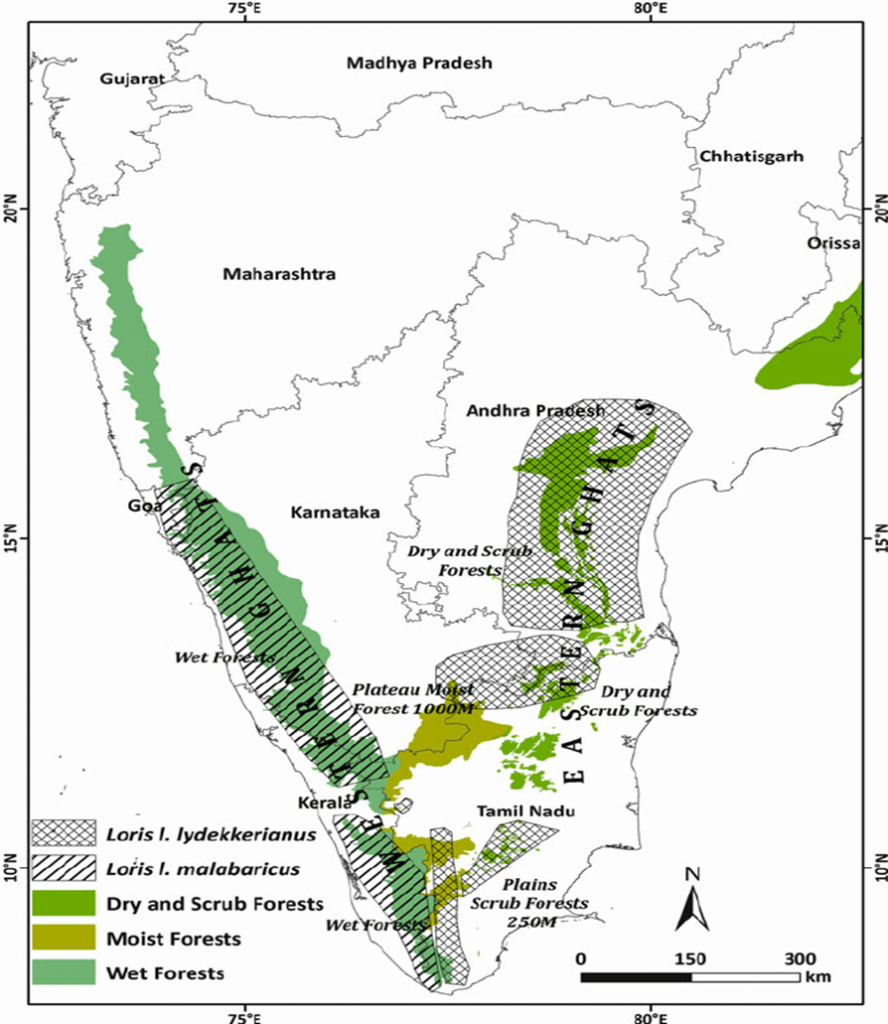
The Western Ghats, also known as Sahyadri Hills, are a mountain range running parallel to India’s western coast. It is one of the world’s most important biodiversity regions due to its high species diversity and endemism.
- UNESCO Status: Declared a World Heritage Site.
- Biodiversity Status: One of the 36 global biodiversity hotspots.
- Length: Around 1,600 km.
- Area Covered: Approximately 1.4 lakh sq. km.
Geographical Extent
- The Western Ghats extend from the Satpura Range in the Gujarat–Maharashtra region in the north to Kanyakumari in Tamil Nadu in the south.
- They pass through five major states: Maharashtra, Goa, Karnataka, Kerala, and Tamil Nadu.
Regional Names
- In different regions, the Western Ghats are known by different names. In Maharashtra, they are called Sahyadri.
- In Tamil Nadu, they are known as Nilgiri Malai, while in Kerala, they are referred to as Sahya Parvatham.
Physiography & Important Features
- The Western Ghats represent the faulted western edge of the Deccan Plateau.
- They are often considered block mountains, formed due to faulting and upliftment of land blocks.
- The major rock types found in the Western Ghats include Basalt, Granite Gneiss, Charnockites, and Khondalites.
Highest Peak
- Anamudi Peak, located in Kerala, is the highest peak of the Western Ghats.
- With an elevation of 2,695 metres, it is also the highest peak in India outside the Himalayan region.
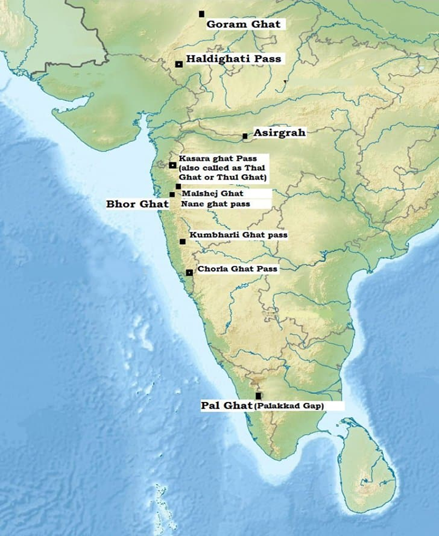
Important Passes of Western Ghats
| Pass | Connects |
| Thal Ghat | Mumbai–Nashik |
| Bhor Ghat | Mumbai–Pune |
| Palakkad Gap | Coimbatore–Palakkad |
| Naneghat | Pune region–Junnar |
| Amboli Ghat | Maharashtra–Karnataka |
Rivers Originating from Western Ghats
- The Western Ghats are the source of several important Peninsular rivers.
- East-flowing rivers: Godavari, Krishna, Kaveri, Tungabhadra, Bhima, Kabini.
- West-flowing rivers: Periyar, Bharathappuzha, Netravati, Sharavathi, Mandovi.
Climate & Vegetation
- The Western Ghats influence the Indian monsoon by intercepting south-west monsoon winds and causing heavy rainfall on western slopes.
- Western slopes: Tropical evergreen and moist forests with rosewood, mahogany, and cedar.
- Eastern slopes: Dry and moist deciduous forests with teak, sal, and sandalwood.
Biodiversity Significance
- The Western Ghats are a global biodiversity hotspot with high endemism due to geographical isolation.
- Endemic species: Nilgiri Tahr, Lion-tailed Macaque.
- Around 325 threatened species are found here.
Protected Areas
- The Western Ghats have 2 Biosphere Reserves, 13 National Parks, and several Wildlife Sanctuaries.
- Nilgiri Biosphere Reserve is the largest protected area, while Silent Valley National Park (Kerala) is known for its tropical evergreen forests.
Ecological & Economic Importance
- Hydrological Importance:
The Western Ghats are the source of major Peninsular rivers and support water supply and agriculture in southern India. - Climate Regulation:
They influence monsoon patterns and act as a major carbon sink by absorbing CO₂.
Economic Importance
Rich in minerals like iron ore, manganese, and bauxite. They also support plantations of tea, coffee, rubber, pepper, and cardamom.
- Tribal Communities:
The Western Ghats are home to several indigenous communities dependent on Non-Timber Forest Produce (NTFP).
Major Threats
- The Western Ghats face threats from mining, quarrying, deforestation, sand mining, habitat fragmentation, hydropower projects, plantation expansion, human–wildlife conflict, and climate change-induced extreme weather events.
Conservation Efforts
Gadgil Committee (2011)
Recommendations:
- Entire Western Ghats should be declared as Ecologically Sensitive Area (ESA).
- Development activities should be regulated through graded zones.
- Kasturirangan Committee (2013)
Recommendations:
- Only 37% of Western Ghats to be declared ESA.
- Complete ban on mining, quarrying and sand mining in ESA areas.
- Favoured a balance between conservation and development.
Conclusion
The Western Ghats are a crucial ecological region that supports biodiversity, water security, climate regulation, and livelihoods. Conservation of this fragile ecosystem requires balancing environmental protection with sustainable development.
| These terms have been mentioned in the following article: Five New Allographa Species Discovered in the Western Ghats by Subiman |