
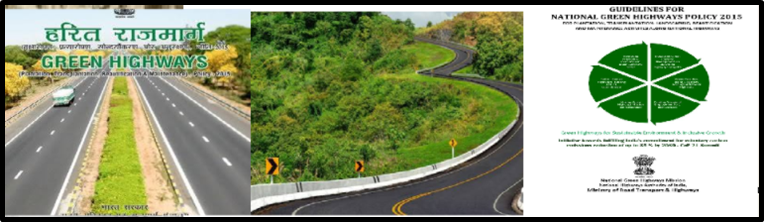
About Green Highway Policy
- The Green Highways (Plantation, Transplantation, Beautification & Maintenance) Policy was promulgated on September 29, 2015, by the Ministry of Road Transport and Highways (MoRTH).
- The policy integrates transportation functionality with ecological sustainability, aiming to develop green corridors along National Highways in India.
Governance and Execution
- Nodal Agency: The National Green Highways Mission, with the National Highways Authority of India as the nodal agency, oversees planning, execution and monitoring.
- Execution Partners: State Forest Departments, Forest Corporations, private agencies, non-governmental organisations, Self-Help Groups and contractors implement plantations.
- Monitoring: A dedicated Plantation Cell monitors compliance and long-term plant survival.
Core Objectives of the Policy
- To evolve a policy framework for plantation along National Highways.
- To reduce the impact of air pollution and dust as trees and shrubs are known to be natural sink for air pollutants.
- To provide much needed shade on glaring hot roads during summer.
- To reduce the impact of ever-increasing noise pollution caused due to increase in number of vehicles;
- To arrest soil erosion at the embankment slopes.
- To prevent glare from the headlight of incoming vehicles.
- To create employment opportunities for local people.
Funding and Corpus Mechanism
- 1% Mandate: 1% of the project cost is reserved for highway plantation and maintenance.
- Annual Corpus: This generates around ₹1,000 crore annually for greening initiatives.
Conclusion
By 2023–24, over 402.28 lakh plants had been planted along National Highways. The Green Highways Excellence Awards (2025) further strengthened recognition of best practices in plantation, survival and landscaping.
| This CTC has been elaborately explained in the Article- NHAI Announces Winners of the ‘Green Highways Excellence Awards 2026’ |