
About
- Geothermal energy is energy derived from the natural heat inside the Earth.
- It is a renewable, low-carbon and weather-independent energy source.
- Unlike solar and wind, it can provide round-the-clock (firm) renewable power.
Key Features
- Heat Source: Mainly from radioactive decay of uranium, thorium and potassium, along with residual heat from Earth’s formation.
- Electricity Generation: Underground heat produces hot water/steam, which can drive turbines connected to generators.
- Sustainable Use: Used water can be reinjected into geothermal reservoirs.
- Applications: Electricity generation, district heating/cooling, agriculture, aquaculture and geothermal heat pumps.
India’s Geothermal Potential
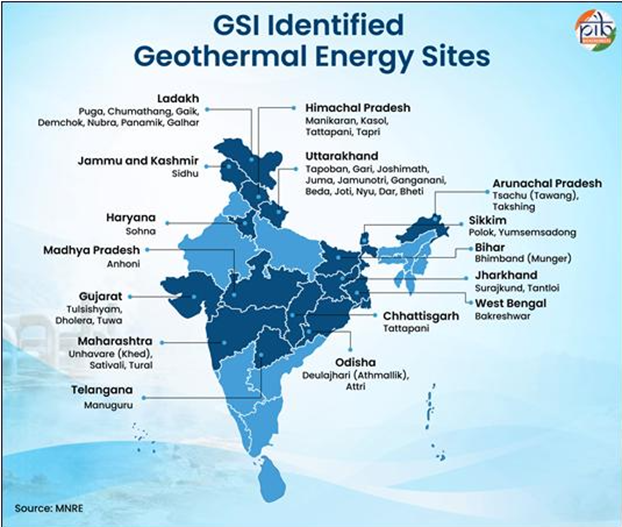
- 381 hot springs mapped by the Geological Survey of India (GSI).
- India has 10 identified geothermal provinces.
- Theoretical potential: ~10.6 GW.
- 42 sites identified as promising for power generation and direct-heat applications.
- Puga Valley, Ladakh is a key site for India’s geothermal development.
Conclusion
- Geothermal energy can complement solar, wind and hydropower by providing reliable, low-carbon and weather-independent energy, helping India diversify its clean-energy mix and advance towards Net Zero by 2070.
| This concept has been elaborately discussed in the following article — Geothermal Energy in India |