
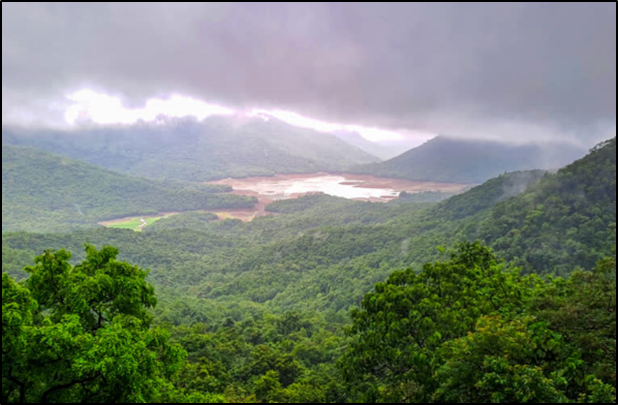
About Green India Mission (GIM)
The National Mission for a Green India (GIM) is one of the eight missions under the National Action Plan on Climate Change (NAPCC). It was launched to protect, restore and enhance India’s forest cover and ecosystem services while addressing the challenges posed by climate change.
Key Objectives
- Increase forest and tree cover and improve the quality of existing forests.
- Enhance carbon sequestration and contribute to India’s climate commitments.
- Restore degraded forest landscapes and ecosystems.
- Improve ecosystem services such as water regulation, soil conservation and biodiversity.
- Enhance the livelihoods and income of forest-dependent communities through participatory forest management.
- Promote community participation through institutions such as Joint Forest Management Committees.
Why is GIM Important?
- Climate mitigation: Forests act as major carbon sinks.
- Biodiversity conservation: Restoration of habitats supports wildlife and ecological connectivity.
- Water security: Healthy forests improve groundwater recharge and watershed functions.
- Disaster resilience: Forest ecosystems reduce soil erosion, floods and landslides.
- Livelihood security: Millions of rural and tribal communities depend on forests for fuelwood, fodder, NTFPs and other resources.
Conclusion
GIM represents an important shift towards integrating forest conservation with climate action and livelihood security. However, its success depends on moving from a “tree-counting approach” to an “ecosystem-restoration approach”, backed by adequate financing, scientific monitoring, community participation and outcome-based governance.
| This concept has been elaborately discussed under this article: Losing Forest for Trees: Why India Must Shift from Plantation to Ecological Restoration |