
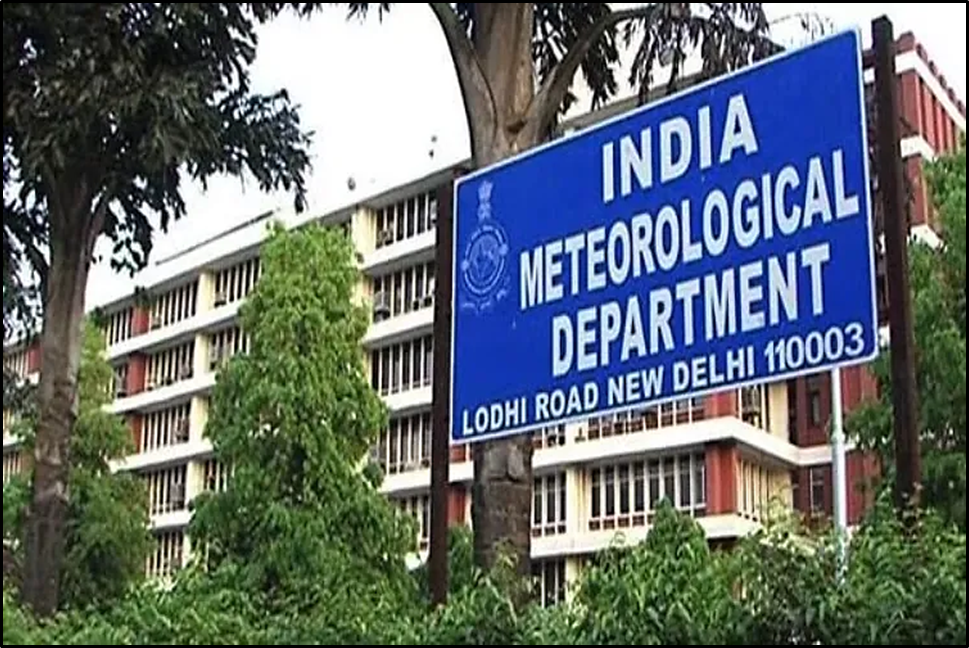
About (IMD)
The India Meteorological Department (IMD) functions as the principal government agency responsible for national meteorological services, atmospheric observations, and early warnings against severe weather phenomena.
Institutional Architecture & Governance
- Establishment & History: Established in 1875, completing 150 years of meteorological service.
- Nodal Ministry: Operates under the Ministry of Earth Sciences (MoES), Government of India.
- Headquarters: New Delhi.
- Observation Reach: Operates observation stations across mainland India as well as stations in Antarctica.
- Administrative Hierarchy:
- Head of the organisation: Director General of Meteorology (DGM).
- 6 Regional Meteorological Centres (RMCs): Located at Mumbai, Chennai, New Delhi, Kolkata, Nagpur, and Guwahati, each headed by a Deputy Director General.
Core Mandates & Functional Domains
- Sectoral Weather Forecasting: Provides tailored meteorological intelligence for sensitive sectors, including agriculture, aviation, maritime shipping, and offshore oil exploration.
- Early Warning Mechanism: Issues severe weather alerts for extreme hazards such as:
- Tropical cyclones
- Nor’westers and dust storms
- Heavy rainfall and snowfall
- Heatwaves and cold waves
- National Database & Research: Maintains official meteorological statistics for water resource planning and industrial projects, alongside conducting advanced atmospheric research.
International Role
- WMO Affiliation: IMD is designated as one of the six Regional Specialized Meteorological Centres (RSMC) under the World Meteorological Organization (WMO).
- Cyclone Warning & Naming: Holds the regional mandate to track, name, and issue advisories for tropical cyclones across the Northern Indian Ocean (NIO) region.
- Geographical Jurisdiction: Covers the Bay of Bengal, Arabian Sea, Persian Gulf, and the Straits of Malacca.
Flagship Modernisation & Forecasting Initiatives
- National Monsoon Mission (NMM, 2012): Deploys advanced dynamical prediction models to enhance monsoon forecasting accuracy across multiple time scales.
- Doppler Weather Radars (DWR): Utilises the Doppler principle to precisely measure rainfall intensity, wind shear, and storm velocity, enabling real-time tracking of cyclones and severe thunderstorms.
- Mausam Application: A dedicated digital platform for the rapid public dissemination of real-time weather forecasts, nowcasts, and severe hazard warnings.
Conclusion
As climate change intensifies extreme weather, the IMD’s shift towards advanced forecasting technology is critical for national disaster preparedness. By providing precise early warnings, it remains the essential backbone safeguarding India’s socio-economic resilience.
| This concept has been elaborately discussed in the following article: Rethinking Urban Resilience in the Era of Climate Change |